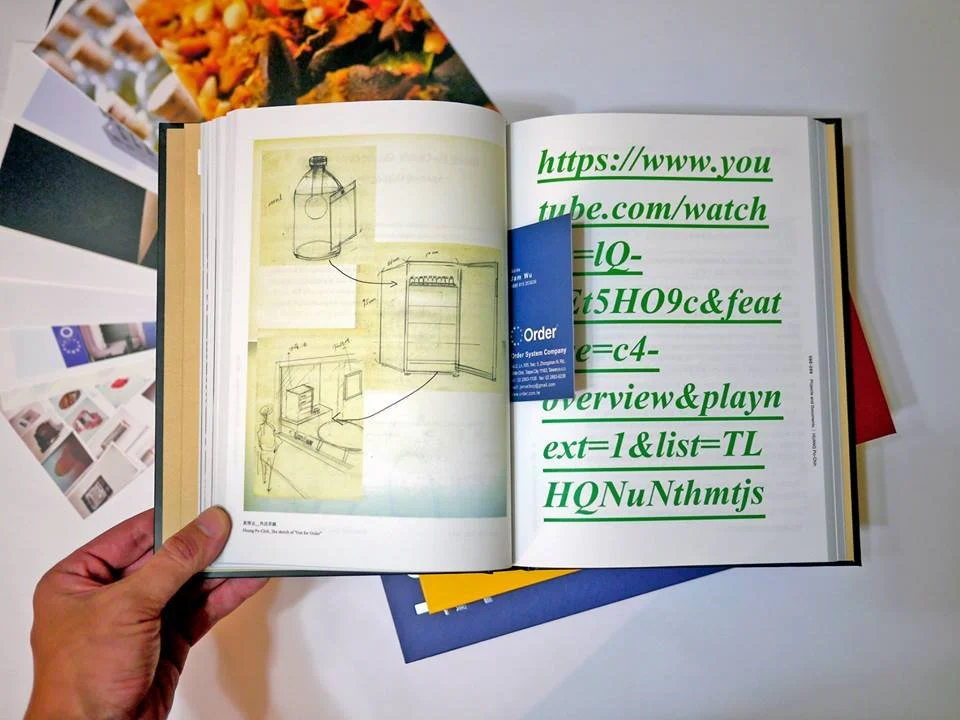
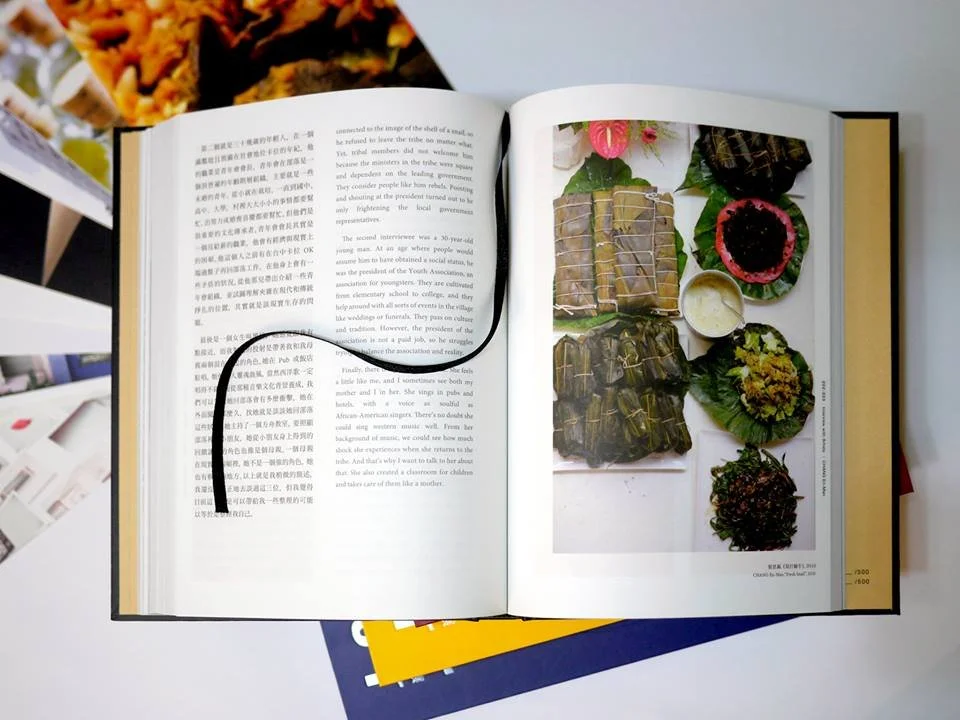
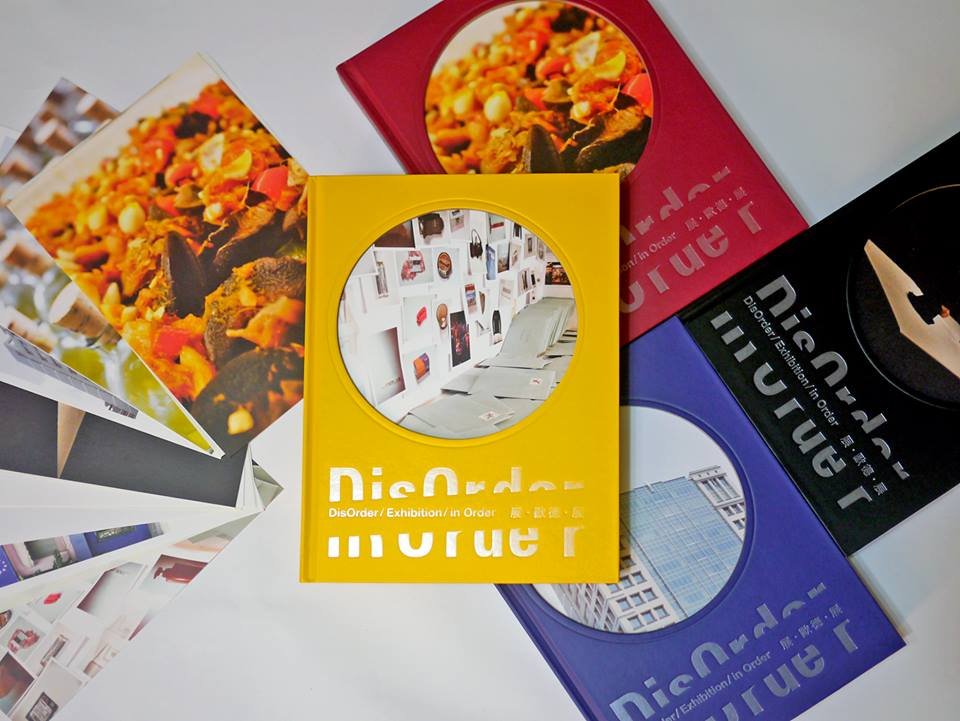
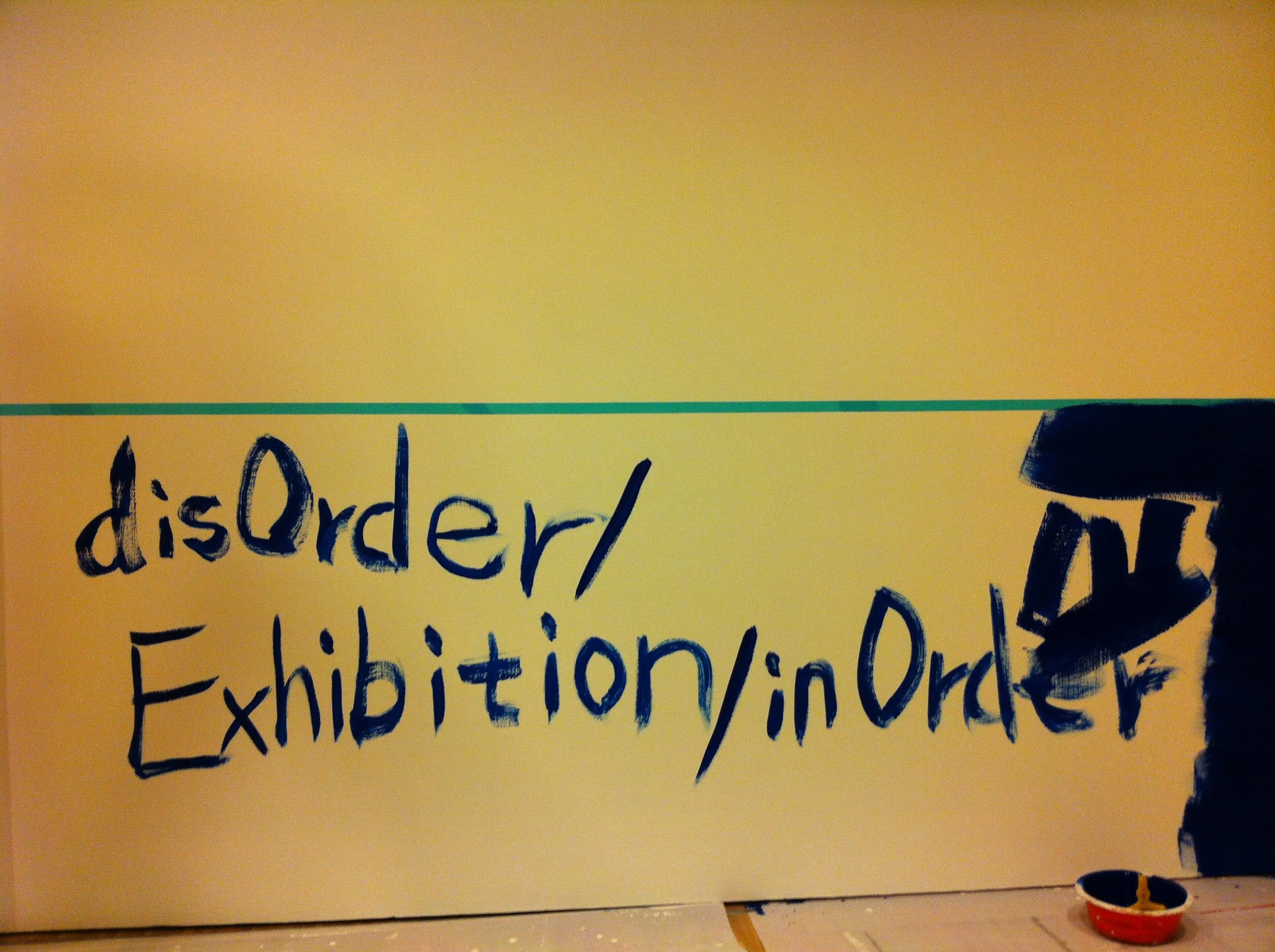
Disorder/ Exhibition/ in Order
Artists︱Jam WU、CHOU Yu-Cheng、LIN Yi-Chun、
CHANG En-Man、HUANG Po-Chih、LAI Chun-Chieh
Curator︱HSU Fong-Ray
Date︱2013.09.14 – 2013.10.13
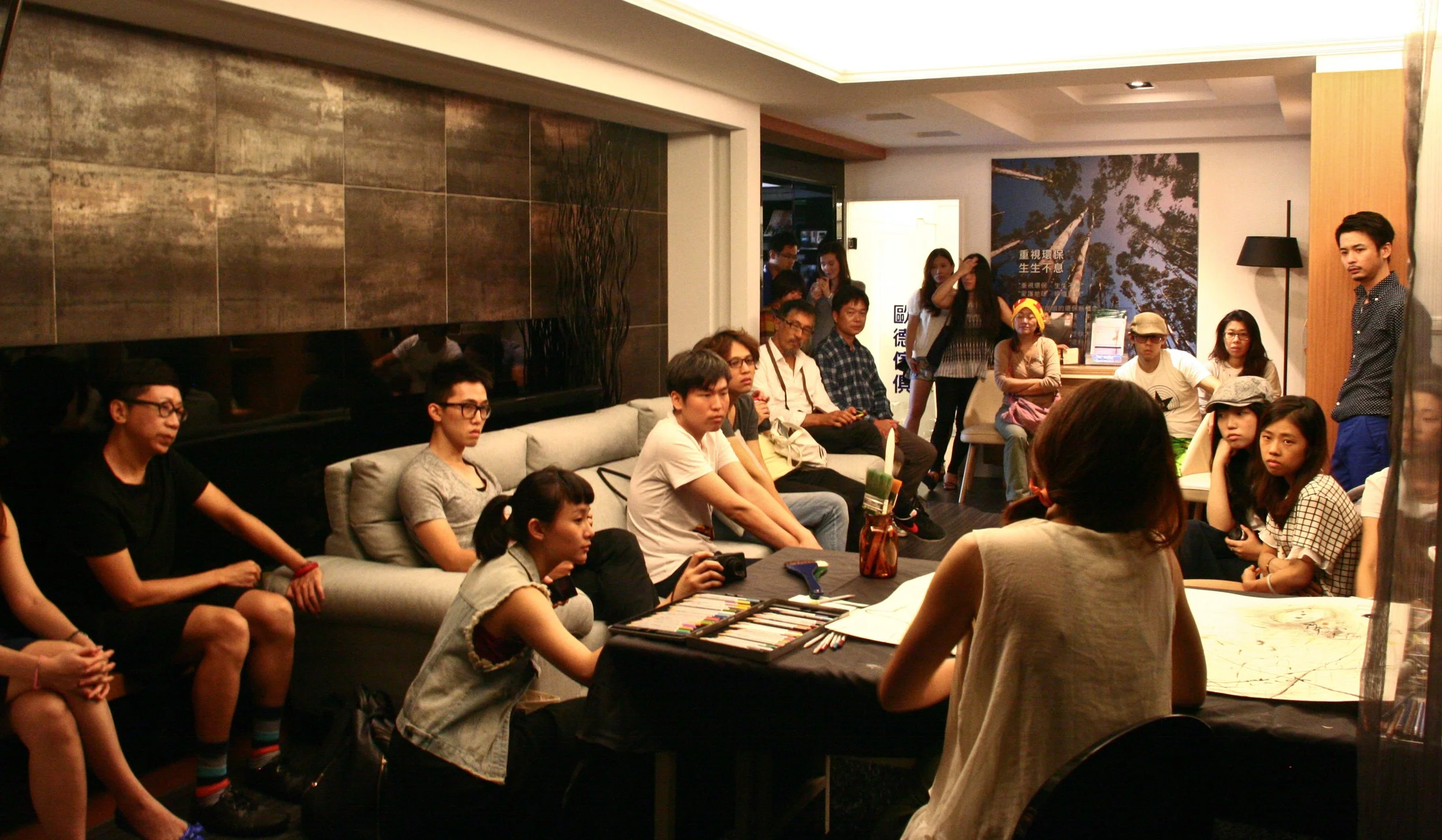
On-site Event︱Order System Company Zhongshan Branch. Every Saturday 14:00–18:30
Venue A Hong-gah Museum︱Venue B Order System Company Zhongshan Branch
Organized by︱National Culture and Arts Foundation、Chew’s Culture Foundation
Co-organized by︱Order System Company
Executed by︱Hong-Gah Museum
Sponsored by︱Taipei Contemporary Art Center
Curatorial Statement (Museum Edition)
Art production is not unlike other areas of production in that it requires production power, production relationships, and power conflicts in order to enter into a systematic mode of re-production activity. With the collapse of modernity, any discussion of media forms or a singular organizational method in contemporary art production from an ontological perspective has been rendered impossible. Paradigms of contemporary art have turned from internal structures to politico- economic structures of autonomous constructs, communication modes, and social networks. The uncertainty hidden in the process of this new understanding of art often reflects the unique characteristics of contemporary art that lie beneath the layer of social culture, with its phenomena of aphasia and powerlessness. Unable to communicate or coordinate with the living world, production participants abide by established socially normative routes of production. This serves to further highlight societal materialism and a system that has become ineffective and distorted, causing a fissure between the intrinsic public nature of the exhibition itself and the audience experience that is manifest in the assessment of art by professionally trained arts workers versus the assessment of those who do not have professional arts credentials. Absolute differences in knowledge, skill sets, and experience exist between the two. In the realm of art this is often attributed to a “knowledge gap”, but in reality, contemporary art is unable to come up with a general language and can not assimilate into contemporary social production relationships to integrate or communicate, and therefore, lapses into an aphasic state.
In realms of existence pervasively colonized by capitalism, contemporary art can no longer ignore the complexities that derive from its production mechanisms and social constructs. Its meaning is endlessly tossed around, along with technological advancements and organizational methods. The process of practicing artistic action has gradually removed itself from the experiential level, and lowered the self-preservation capability of the arts production system. This further underscores the importance of a establishing a strategy for communication and a relationship between the exhibition mechanism and the audience. With “exhibition as production” as a starting point, the current exhibition “DisOrder / Exhibition / in Order” has been built on a foundation of a renewed contemplation of possibilities in arts production and acts of communication. It attempts to transcend exclusive power arenas, to relax the artistic language and knowledge loop, in order to begin to construct experimental and playful curatorial methods.
The Predicament at the Conversion Site
In recent years, “artistic interventions” and “museums without walls” have become slogans in the art world in an attempt to connect with society, to insinuate into everyday lives through its own subjectivity and symbolism, and to establish a mono-faceted consumer experience of spectacle viewing. This intervention opens up two possible paths. The first is where the work and performance itself becomes a symbol and enters into the economic field, even when the content is critical of the fetishizing of objects, or of capitalism. In the face of enormous capital pressures, negotiating and translocating the subjectivity of the “exhibition” concept often slips into a mono-directional invasion that dissolves and dilutes, ultimately losing its power and lapsing into psychological fragmentation. Alternatively, when faced with the extreme impact of the political economy, art easily retreats and finds solace in its own nature where it creates a dualistic artistic lexicon that is independent of society, creating an obstruction to communication.
The field of art has always been an internalized, inverted economy that is difficult to define and analyze within the economic structure, and it operates under a unique logic system that revolves around symbols. This logic is entangled in a mutually irreducible state in the material orientation of the consumer economy. It’s position within the social structure is, perhaps as Pierre Bourdieu proposes in his discussion on double historicization, a cross-sectional view of its appearance of the history and structure of the field, through the relationship between each relevant element, as well as the relationship between culture and the fields of power. However, the current state of communication between the artistic language and society is precisely (and decidedly) the construction of an interdisciplinary relationship. This occurs within a dual existence of exhibition mechanisms and the viewing experience which gradually develops alongside the profession of historical accumulation. Of course, existing between the structures of these two different fields described above, the exchange between the meaning of a work of art and its value is difficult to measure and interpret with any consistency. The diversification and expansion of capital creates competition in the arts according to its legitimized regulations. This catalyzes the socialization of the field of art, creating numerous secondary fields such as commercial art, pure art and interdisciplinary art, etc. In turn, this affects mutations internal and external to the field of art. Under these special circumstances, art for art’s sake takes shape as a privileged right to interpret expert knowledge, and to create according to the norms and principles specific to the world of art (as opposed to the real world of social systems). Thus, mastery of artistic knowledge gradually becomes a condition of segregating audiences that enter the field of art. Even while touting the freedom of access, the reality in the world of art is the construct of a selective entry and a system of exclusion. Events that occur in the field of art have gradually shifted toward a specific historic connection (Western Art History, decontextualized translocation, globalized fragmentation, etc.) to become a formalized historical structure that severs the relational exchange between art and society. As a result, it has become increasingly difficult to speculate on its real-world communicative effectiveness.
Production and Reading under Spatial Deference
In the process of constructing artistic autonomy, the purification process for the history of specific fields often becomes a temporary conclusion, playing an authoritarian role in the right to knowledge. It transplants this analytical framework into a specific time and space; affixing that space and the significance of its language. However, once the oppositional reading of the language of art and life is realized, it easily forms a sort of barrier, and loses the social praxis of its significance. A look back at the avant-garde reaction to modernity, which is embodied in the elimination of the distance between art and life, reveals a precise expression of social praxis. What the avant-garde negated in the autonomy of art was not artistic forms or styles, but a system of art independent from the world of life and internalized as a state unrelated to the practice of living. The objective in ridiculing and resisting was not simply a wish for art to become a certain universal knowledge, or for artistic creation to be equipped with a degree of social meaning and public function, but to begin from artistic systems by targeting the “process” of art’s effect on society, and to determine its content and interpretation. Whether normative or non-normative in structure, the content of work created in the artistic operating production and their resonance with actualities of life becomes a self-regulatory strategy. This need opens up the dialectic of artistic language. A state of maintenance for art is achieved through its validation from various production arenas, without limitations of form.
However, under the framework of a capitalist society, the economic systems provide a “state of reality” for social operations and development. This state makes it difficult to guide an entire society through the standards of a singular social field of art. In this complex state, it becomes impossible to reveal reality. No matter how the art framework declares its autonomy and detachment from societal networks, it is still unable to wipe away the fact that this sort of production condition is guided by the social environment to become an accompanying subjective existence. This also reflects a political discomfort in the socialization of art and the contradictions in the power formation, distribution, and application in this mode of production. The link between production and exchange is uncoupled as language becomes unhinged. If, according to Karl Marx, this prioritizes production superiority in the production mode, then Marx may be unable to offer concrete suggestions for the contemporary condition. But this further highlights paradigm shifts and organizational dimensions driven by technological rationality. As a container and conduit for products, the historicity and interdisciplinary connectivity of space itself is often ignored, and the fact that space is not a conceptual product is often dismissed. It is equally a product, but the inability to create a vertical content-fill using the singular aspect of time has been largely due to the fact that spatial politics has been an active agent in the production process during the progression of history. It is actually a basis for the development of materialism to date, through the continuous production and reproduction of space and economic considerations. (Eg. public spaces, commercial spaces, or urban planning, etc.) These types of spaces and everything related to them become the mediators and means for the surplus values of production. (Henri Lefebvre) Hence, the strategy for spatial deference is to temporarily dislocate and destabilize the language production of space itself. The spatial production conditions that capitalism utilizes should be contextualized within the environmental structure. The purpose and intent of the field of art are identical to those of any product for exchange, and must be understood to be the product of strategic and political intentions rather than a pure form of material content. The deconstruction and organization between two spaces (in this instance, the Hong-Gah Museum and Order Furniture Corporation) further hints at a social relationship and experience that is regulated through the systemic production and politicization of art. The fluidity in the subjective reading vis-à-vis content increases, and continuously seeks out possibilities for self-preservation and significance. This is the deference of meaning in deconstructing space, and moreover, a reorganization of language systems.
Progressive Communication in Arts Production
The exhibition of contemporary art is rarely seen as a production process, but rather a spatial display of a set of case-closed documents. This is precisely the paradoxical phenomena of arts production, and key to the difficulty in measuring artistic value and its subjugation as an informal structure. If the objective of production relations was purely seen from the perspective of a commodity with surplus value as an index, then it becomes merely a strategic action where participants of the production activity cannot obtain meaning, and furthermore, where producers are unable to consolidate their production tools, knowledge and subjects in order to precisely establish a value for production power (including the acquisition of technology, knowledge and experience). The approach where production is viewed as a tool then becomes a type of dominant ideology that creates a hierarchical social relationship. The act of abiding by established socially normative routes of production highlights the social objectification as well as the ineffectiveness and distortion of the system. This causes a fissure between the audience experience and the public nature of the exhibition itself; such as critiques from the professional art audience, versus critiques from those without a formal arts education. Absolute differences in knowledge, technique and experience exist between them, and are glossed over as “gaps” in the field of art. In actuality, contemporary art is not able to find a universal discourse to form contemporary societal production relationships, nor able to integrate or communicate, and so lapses into a state of aphasia.
A reexamination of artistic language within the context of this structure reveals that the development of its logic can perhaps be argued from its subjective initiative (dynamism). This initiative (dynamism) is the manifestation of a certain mode of communication that in turn coordinates and produces consensus through contact with the socio-cultural aspect. Here, the critical recognition of reality is one of the conditions that must be satisfied. The reasoned critique of these tools consolidates the individual body’s need for self-preservation in the production relationship.
Perhaps as suggested by Jürgen Habermas, a linguistical order and consensus that is constructed through communicative action would provide possibilities for systemic integration and connection. But when this progressive production transforms into a type of experiential intellection structure, its implications of political integration, regulation, conflict and feedback is, in reality, unable to provide a stable template for language construction. Hence, on the one hand, the unconventional use of space in this exhibition raises questions about the existing social order, and on the other hand reflects on the contradictions in the production mechanism of contemporary art. From this, two approaches for discussing the production mode and state of contemporary art exhibitions are derived. The relationship of arts production is highlighted through the political application of audience participation in arts production, in response and feedback to the current framework. This is the sublation of integrated operations of specific ideologies in real life applications. Perhaps these experimental processes make it even more difficult for the audience to establish artistic intent, or in fact, they disturb the existing themes and textual reading concepts and methods, but a thematic deconstruction reveals blind spots and gives restructuring power to the audience. Perhaps this provides possibilities for presenting the appearance of artistic production mechanisms and the socialized manifestations of the exhibition.
DisOrder /Exhibition/ in Order
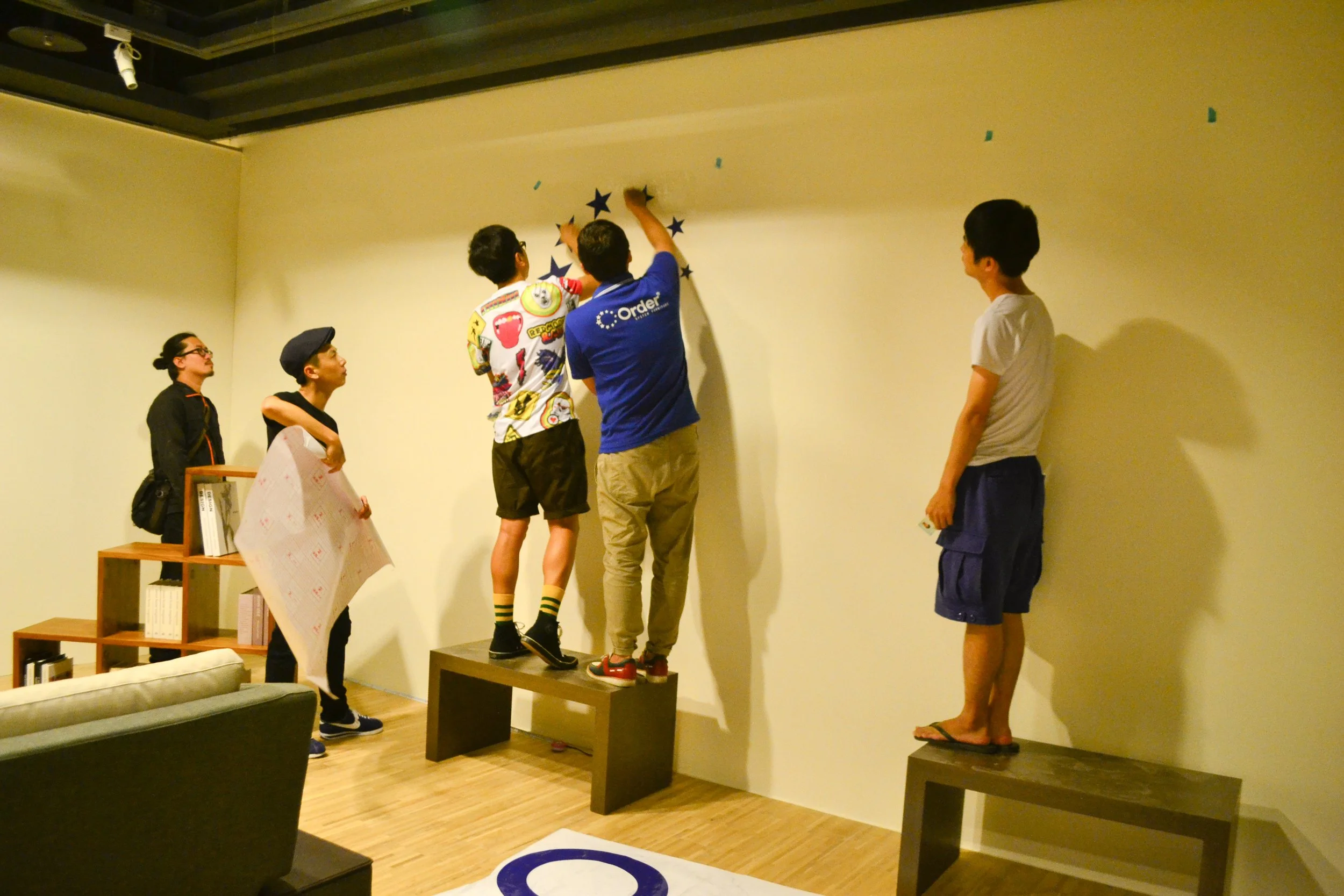
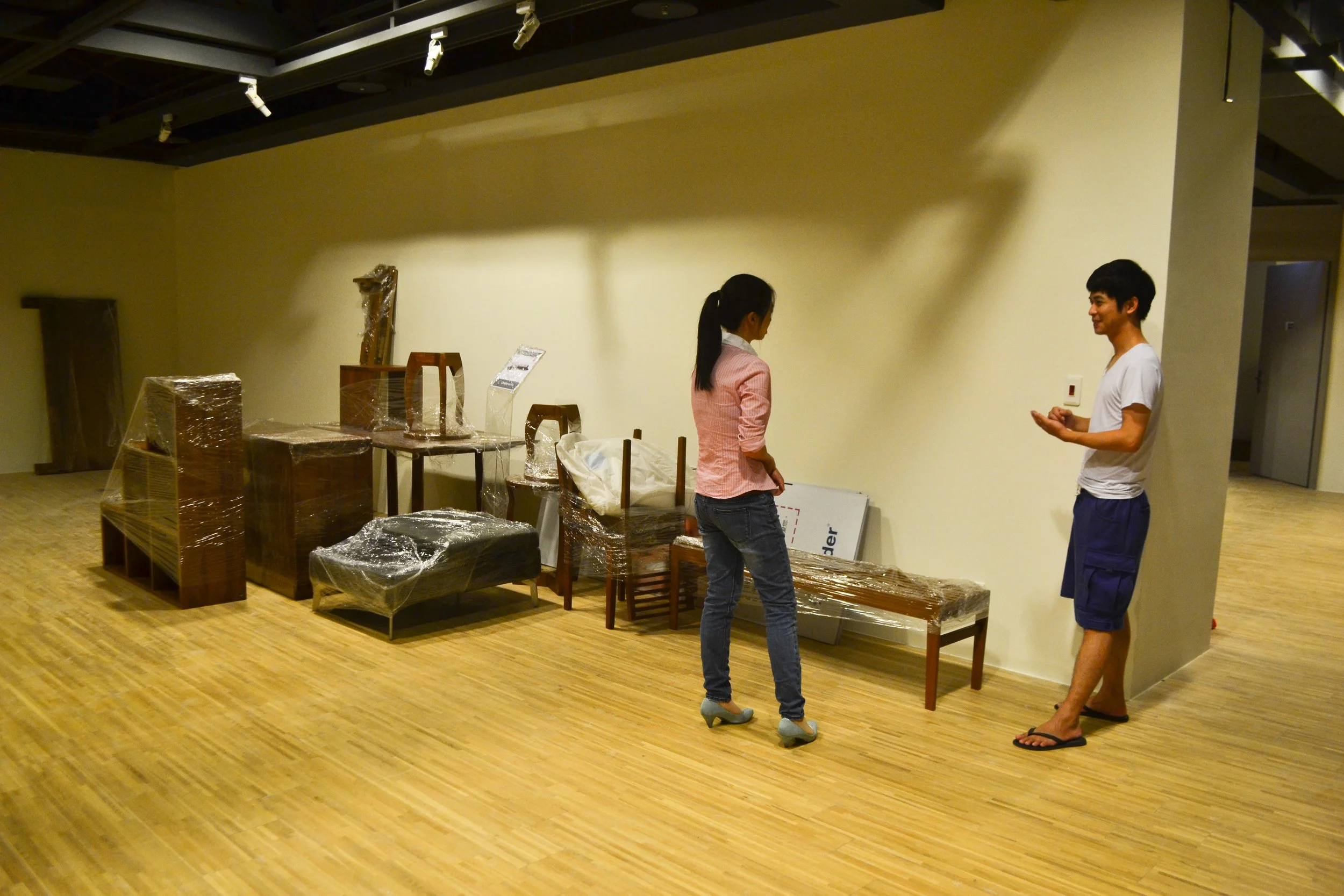
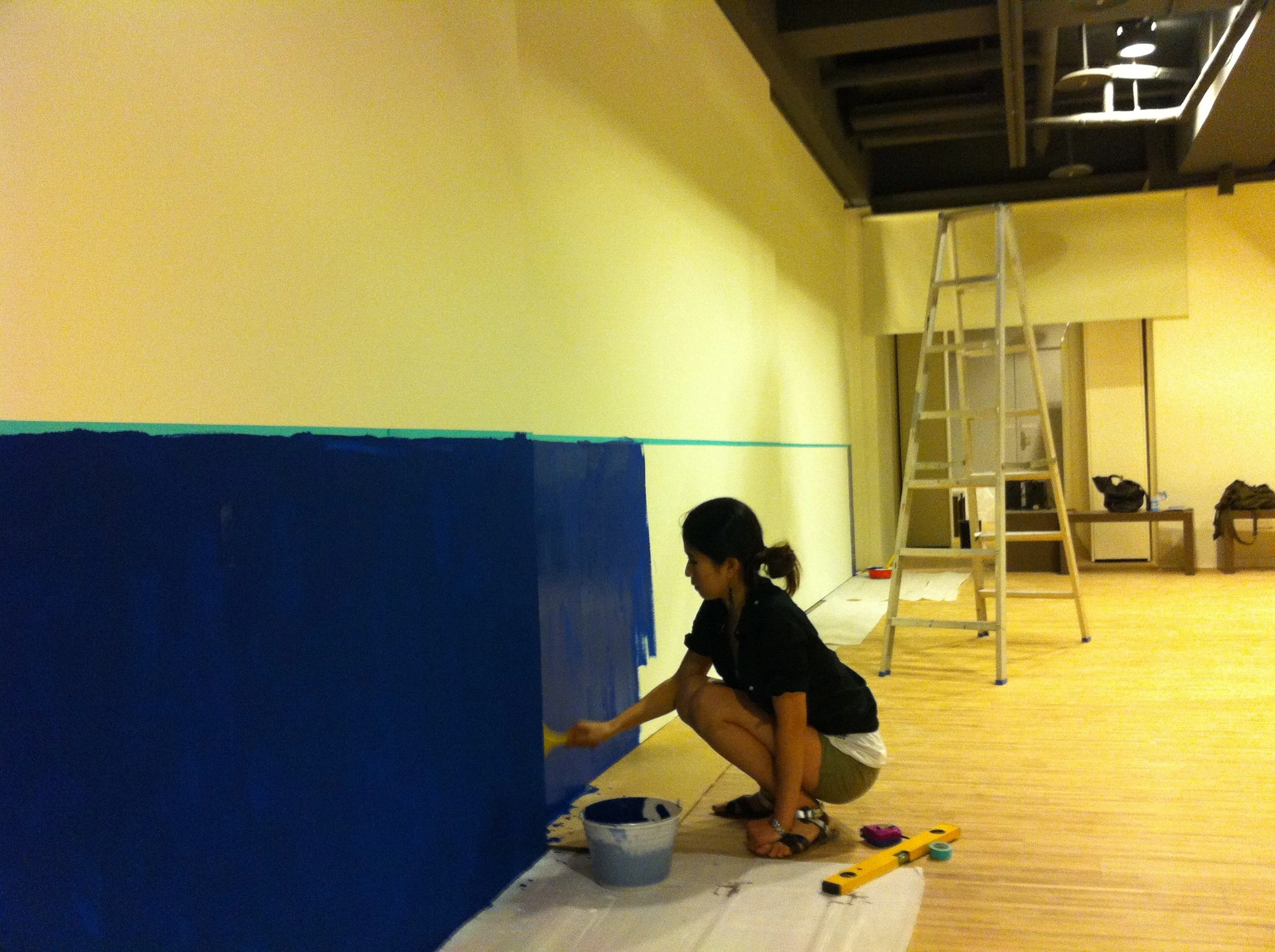
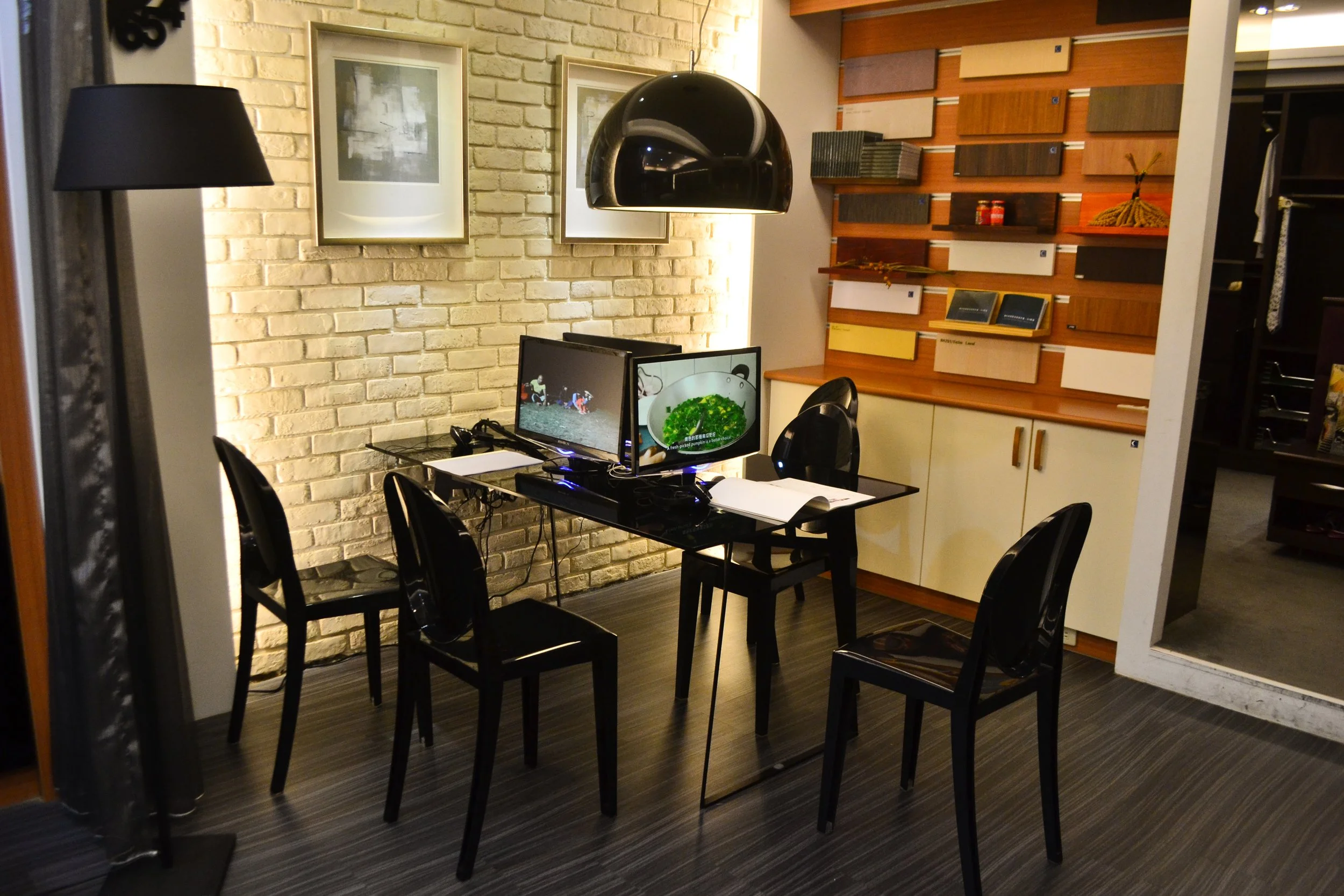
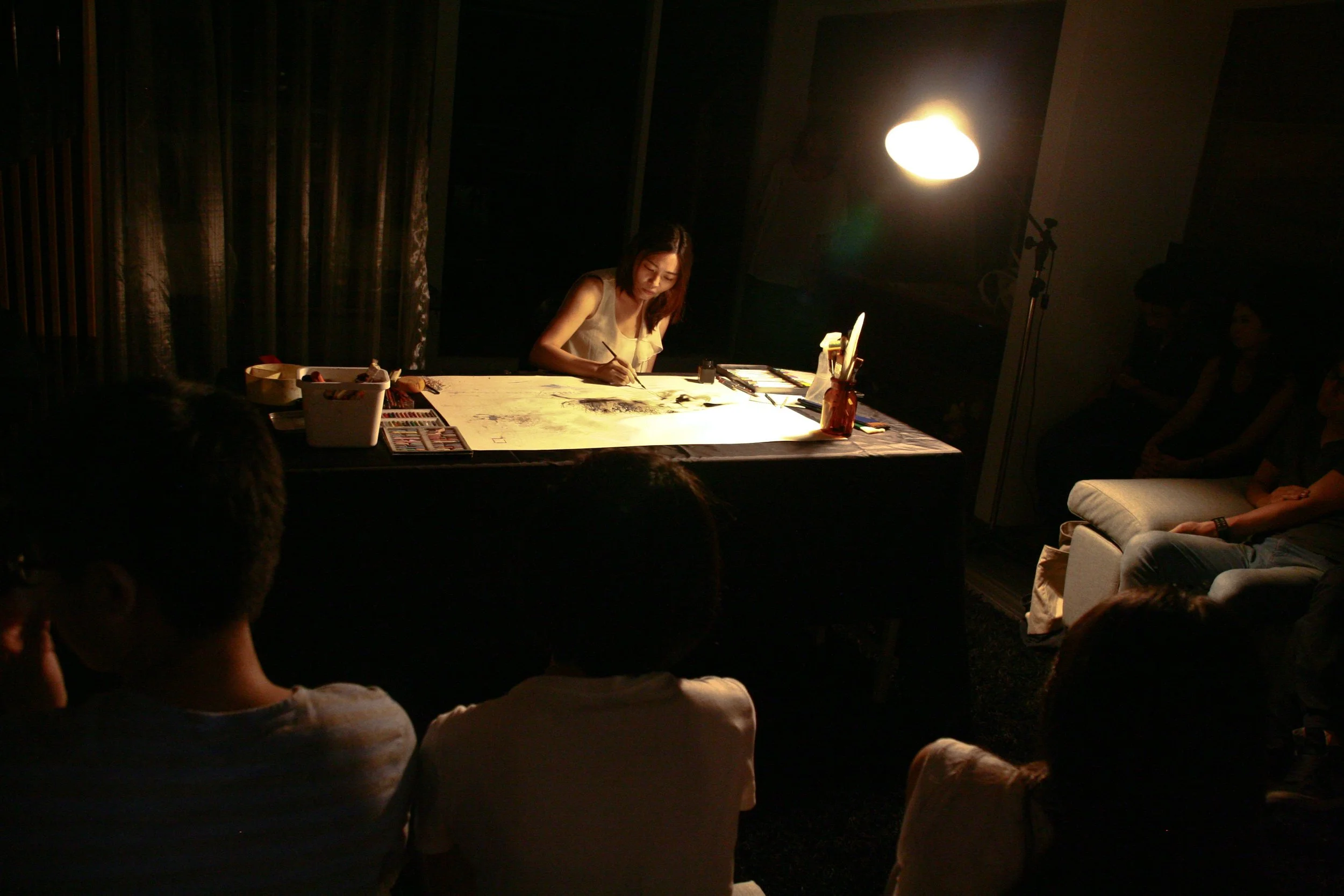
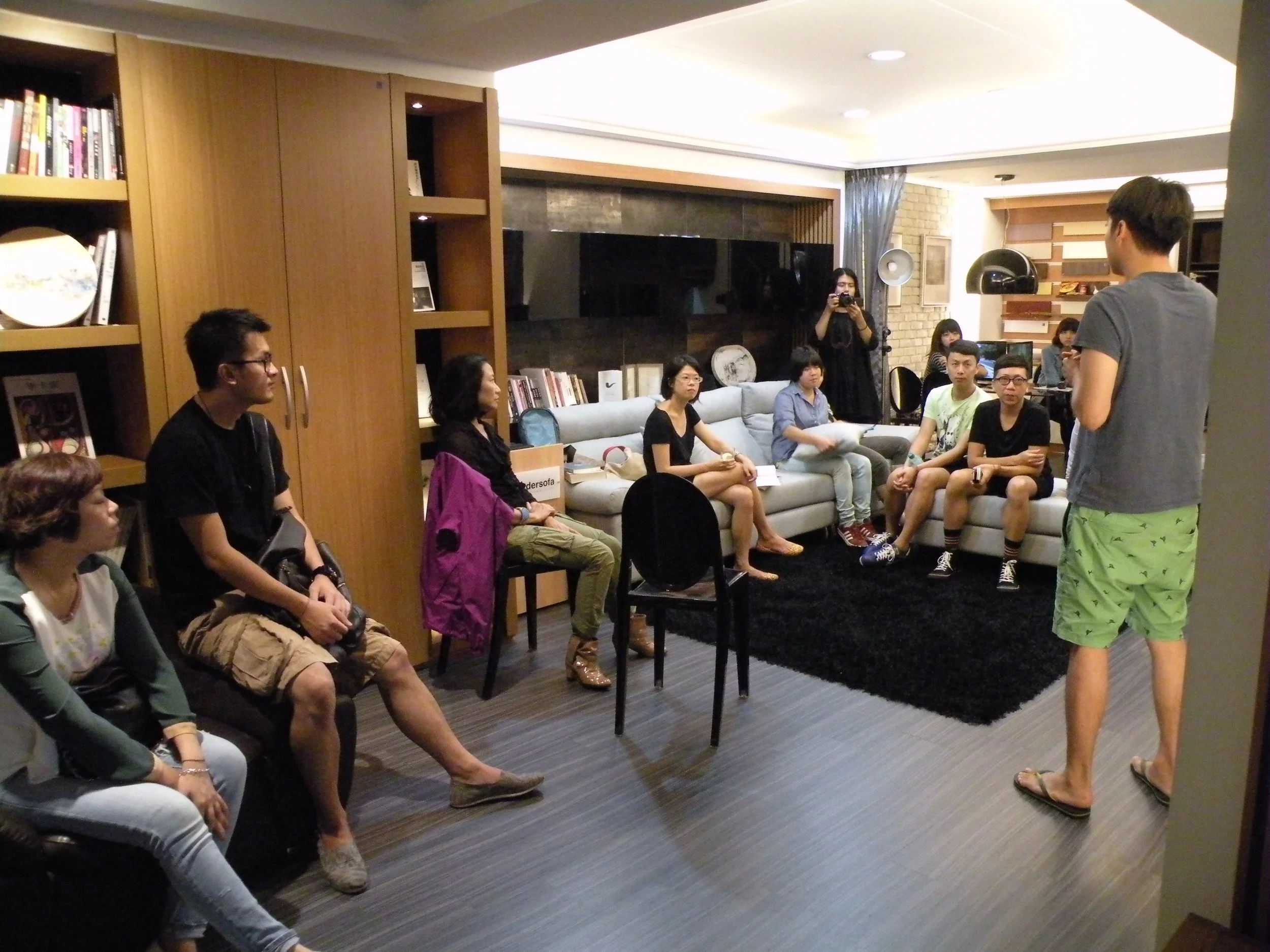
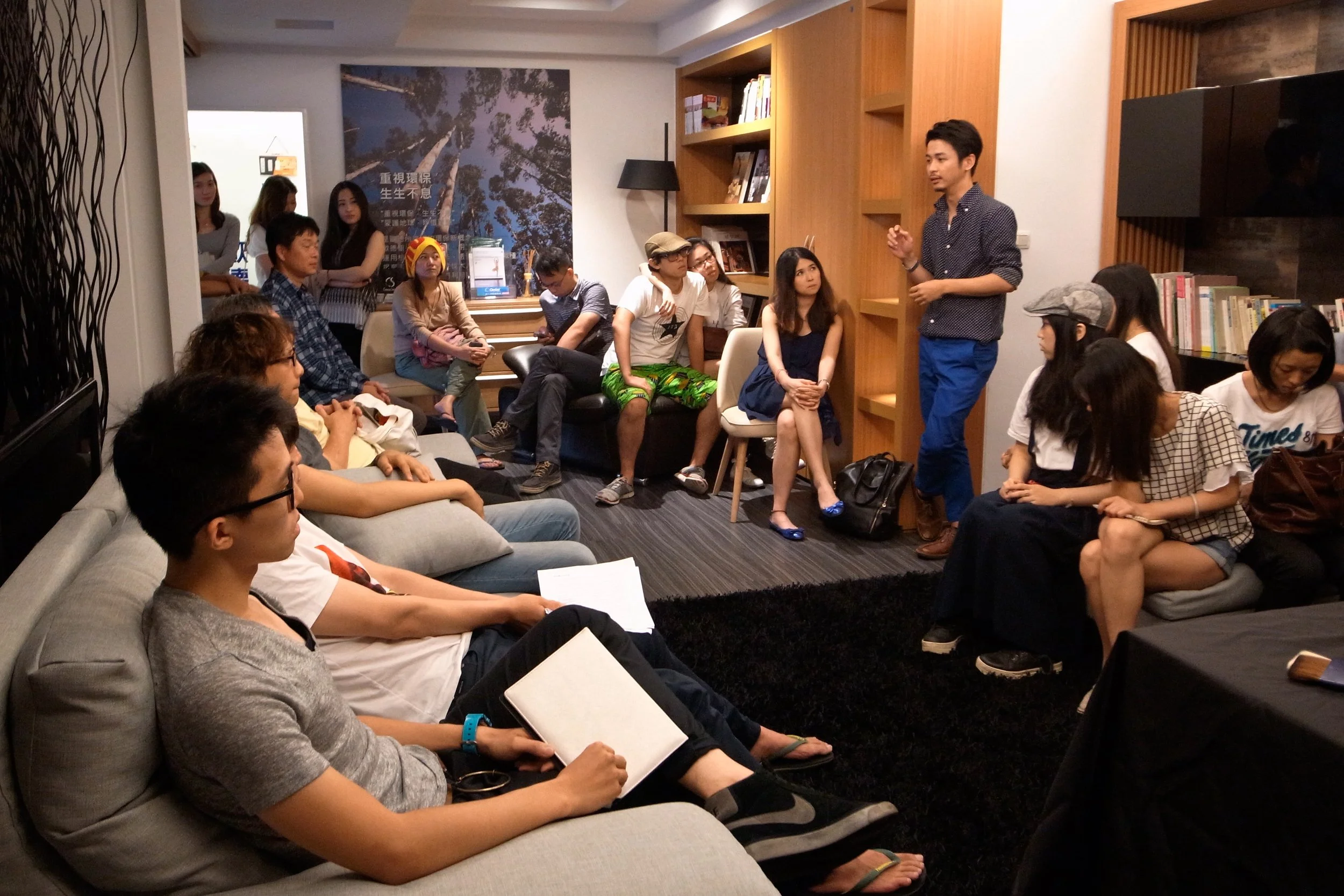
This exhibition takes place in the spaces of the Hong-Gah Museum and the Shihlin showrooms of the Order Furniture Corporation. The exhibition space at Hong-Gah Museum will be translocated into the Order Furniture exhibition space, which becomes the museum in an exchange capacity. The “found objects” here do not challenge art as they do in the avant-garde movement, but instead they question production within the museum system. However, there are as many production systems as there are varieties of exhibition spaces. When two types of spaces are translocated, they reconnect the integrated artistic society as mutual doubles, and explore ways in which the lexicon of contemporary art communicates with and relates to the public under the production framework in a temporary exhibition mechanism. The DisOrder /Exhibition/ in Order exhibition aims to bring art into the quotidian consumer system concealed within a furniture shop (selling fantasies of living spaces) by changing the method of reading and production of experience. The relational construction is realized through a spatial politic that approximates the relationship and consciousness of artistic production, and by challenging specific ideologies and imaginings under a structural context. At the same time, the museum exhibition space will be translocated into a commercial space alongside found objects (furniture) with its transaction behaviors as an attempt to depict the open dialectic of art within a communicative language, while the curatorial system serves to mediate discussions of the deployment of contemporary art production.
Venue A
Hong-gah Museum
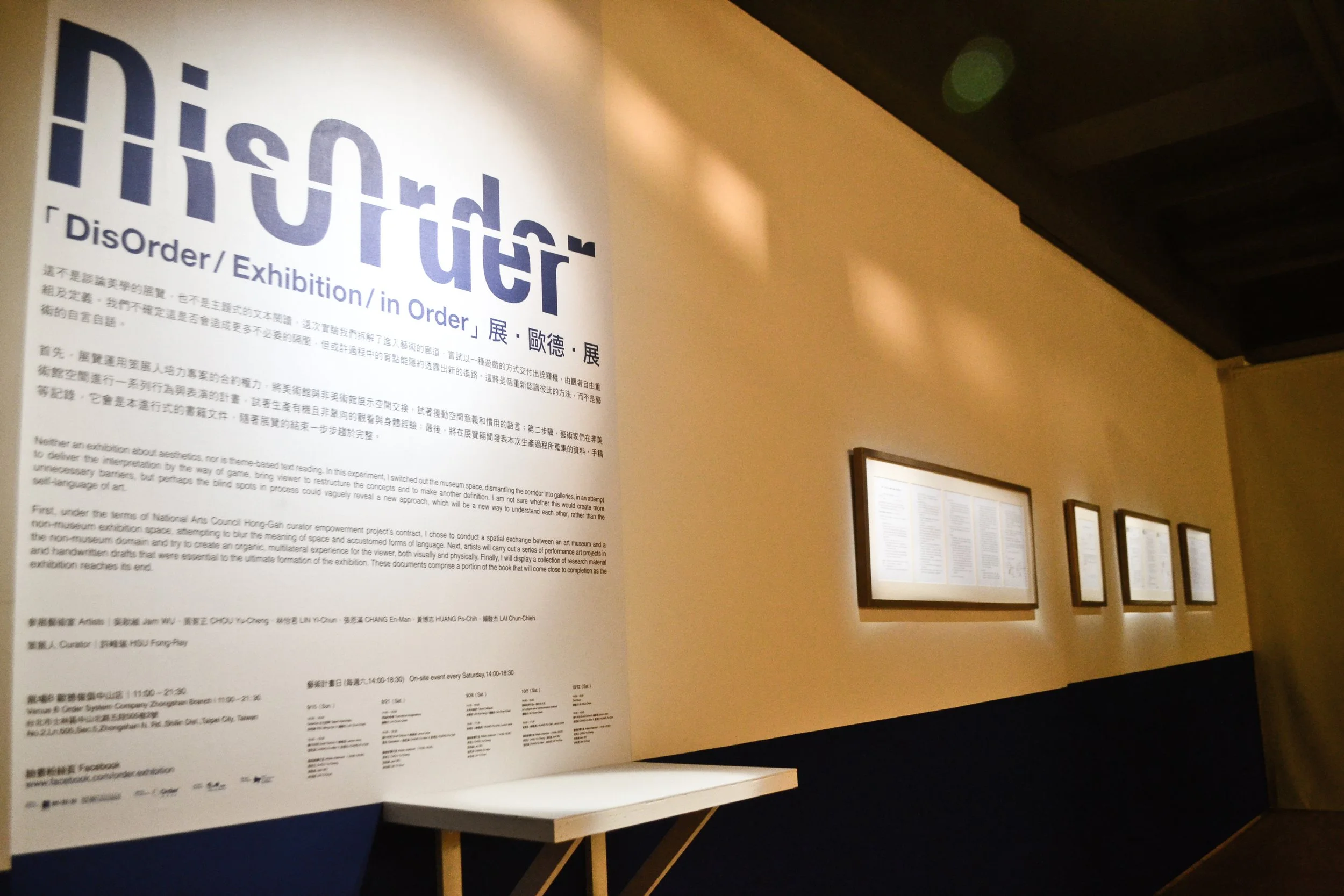
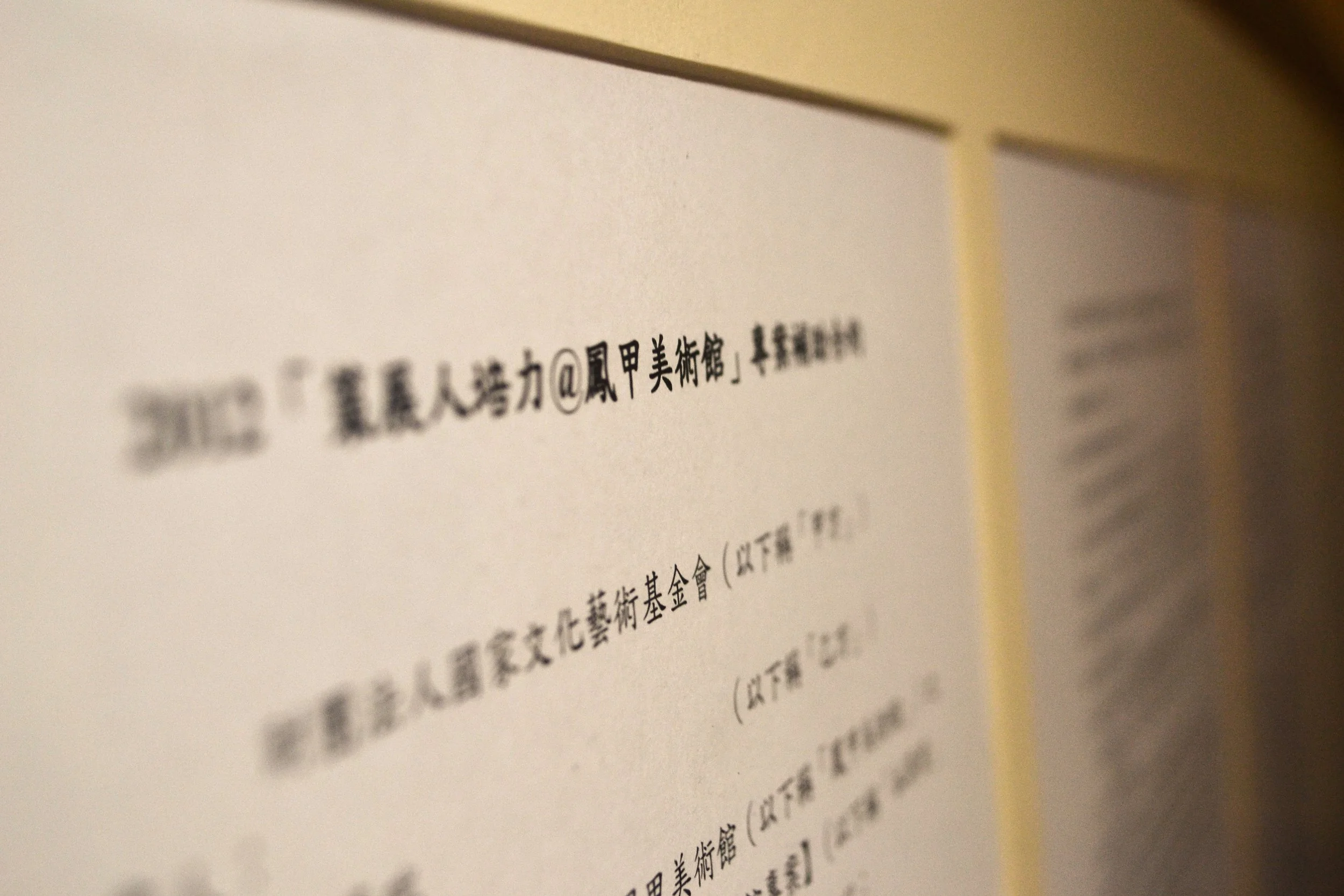
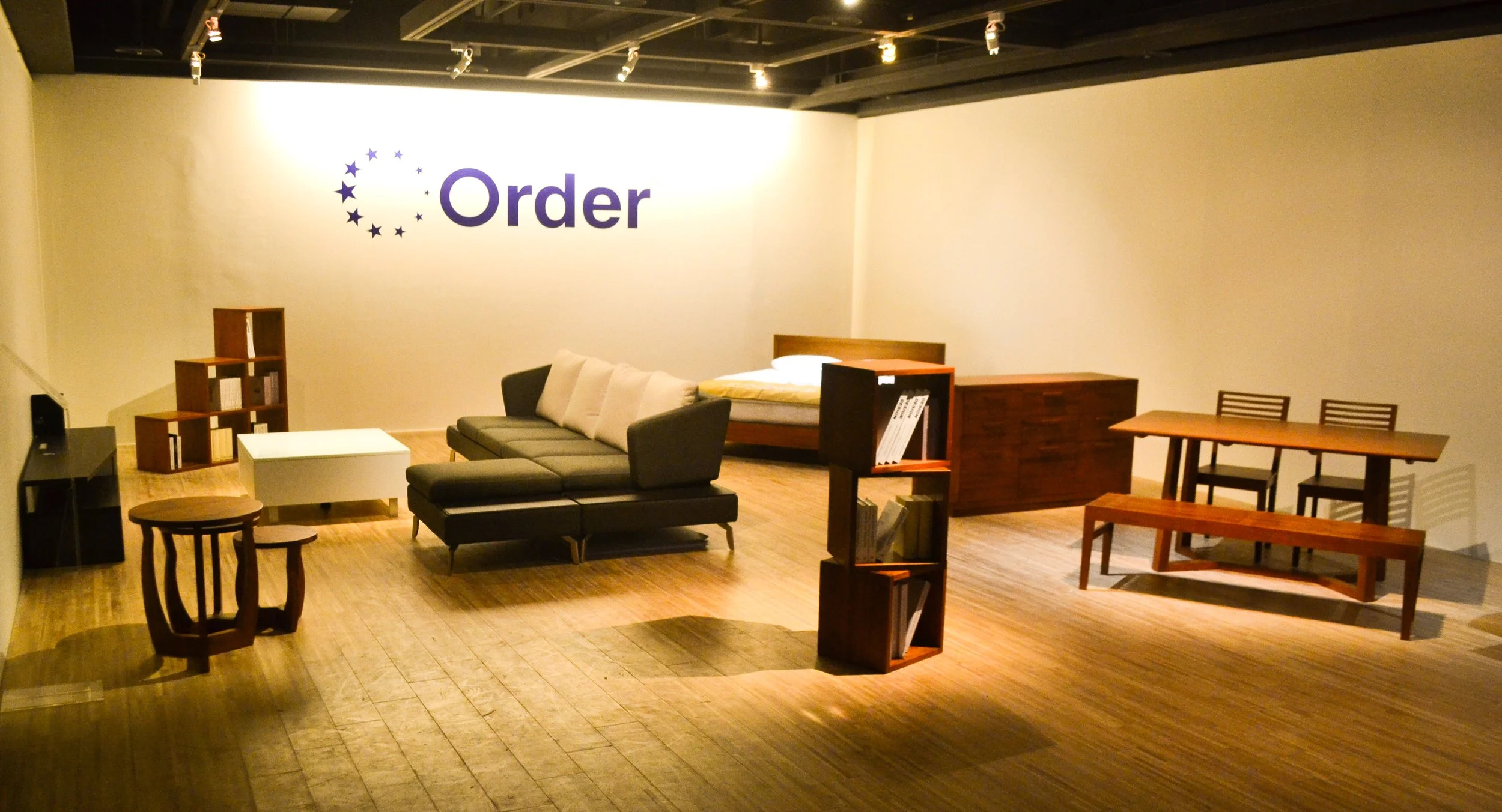
Venue B
Order System Company Zhongshan Branch
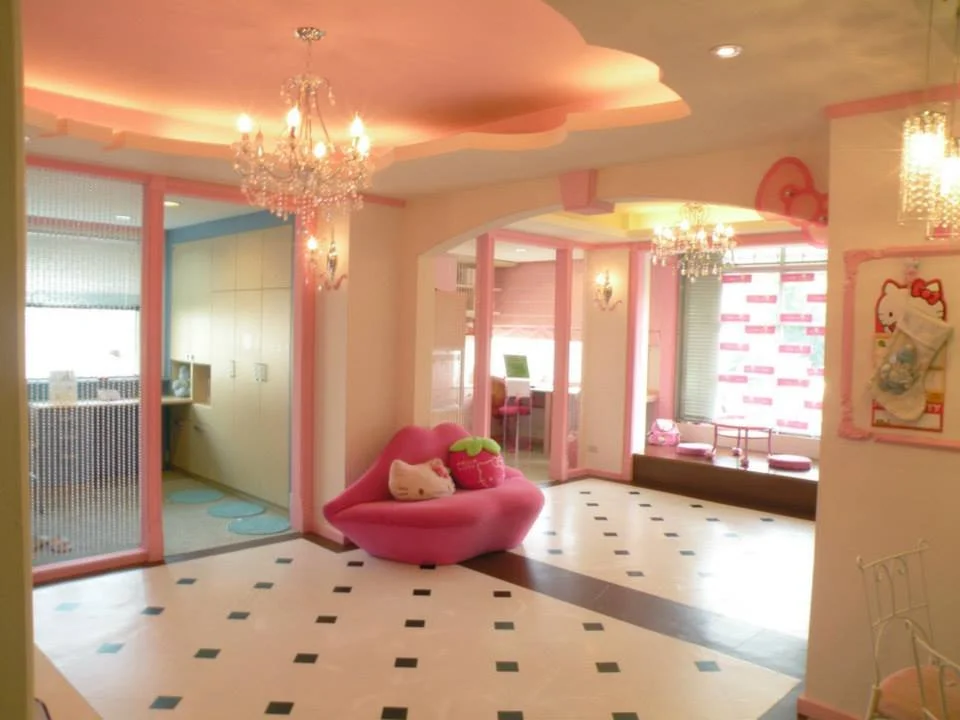
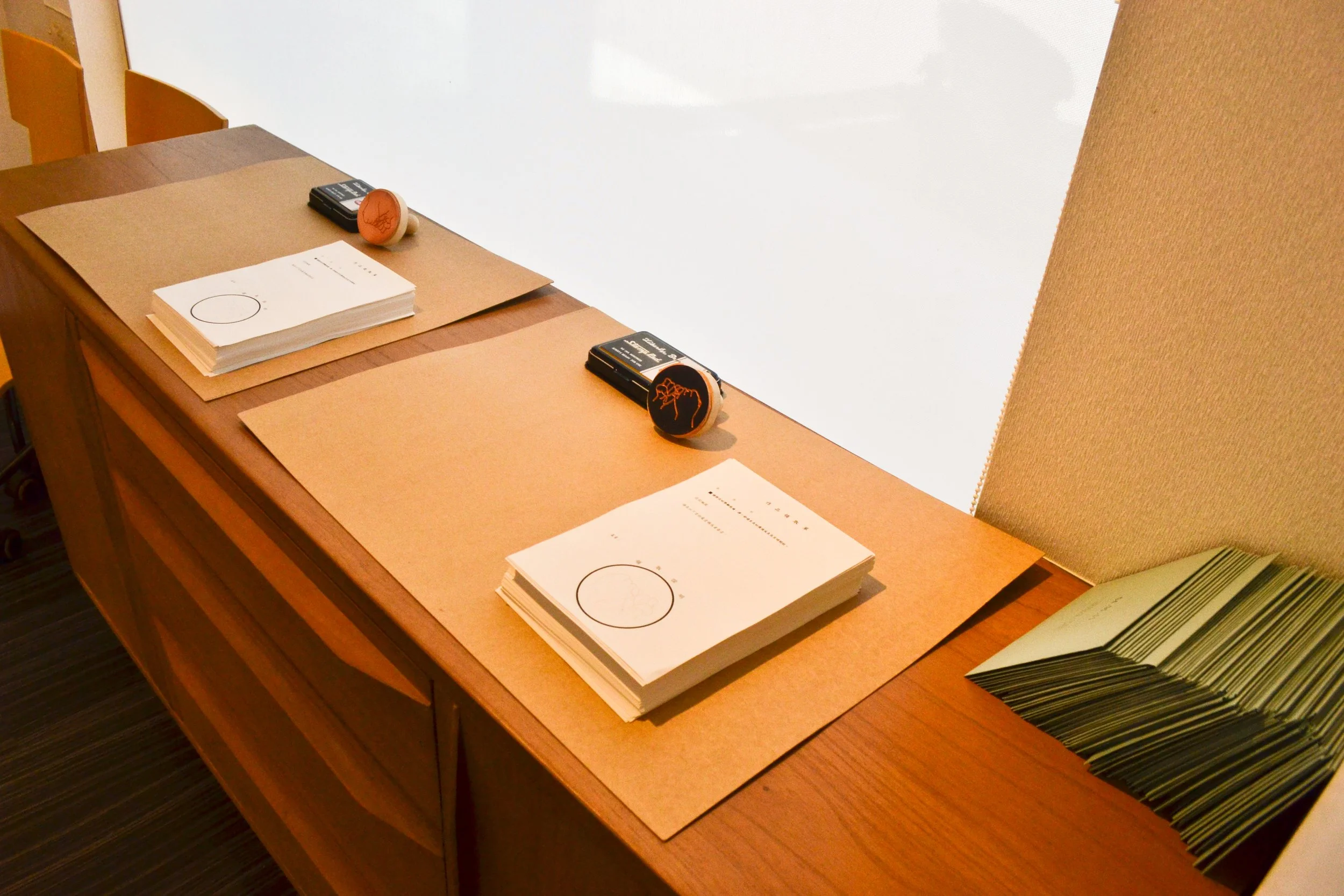
Dear My Friend“Neither an exhibition about aesthetics, nor is theme-based text reading. In this experiment, I switched out the museum space, dismantling the corridor into galleries, in an attempt to deliver the interpretation by the way of game, bring viewer to restructure the concepts and to make another definition. I am not sure whether this would create more unnecessary barriers, but perhaps the blind spots in process could vaguely reveal a new approach, which will be a new way to understand each other, rather than the self-language of art.”For the understanding of art, the first impression of most people might be a group of crazy people, doing the things they don’t even know how to tell and to classify those matters in to category, thus, they collectively called it art. You might be accustomed to watch the paintings of Picasso or Monet hanging on the restaurant wall, and the room corner with contrast color collage poster of Marilyn Monroe, of course, I believe you will not be surprised that someone put a urinal in museum as an art work. However, there is nothing strange with the name of art, then the really strange things start: when we walk into museums starring at the work out of our understanding, searching for the white note cards might be the first motion we will do. Sometimes we are happy to get the answer, more often we are disappointed to leave; you start complaining about that you can’t realize the art comment in art magazine; even now, while the so-called artists began to criticize the political, social and cultural, what you are thinking about is why they are not just good enough to engage in arts? That why I write this letter to you.The exhibition is a presentation after the acquisition of National Arts Council HONG-GAH curator empowerment project in 2012. First, I use the contract to make exhibition as a work, exchange the right of space using to the furniture store, trying to disturb spatial meaning and idiomatic language. After space exchange, artists will convert art creation into some acting artistic style plans and activities, showing a more organic context, hope to manufacture a double-side viewing and body experiences through more participation. Finally, we will collect the manuscripts of exhibition production process together into a book at the exhibition reception, it is a progressive document, and it will be completed with the end of exhibition step by step.Through these accidental places, I want to use language and manner that we are accustomed to realize the not strange art and to understand these crazy artists more. Knowing these crazy people might be a risky for you, so I try to introduce them in words, which more or less can reduce your uncertainty, of course, you are able to participate our gathering and experience some not strange experiences together in September is what I want to see the most.First I want to introduce you Jam WU, I call him brother-butterfly. We give the boys who wearing in colorful style with knot tie on neckline, and living as a dancer in particular TV station a name, brother-butterfly. But why do I call him that? Because he had created some powerful images based on paper cut, and the most impressive one to me is the butterfly. His works were loved by everyone, he could live by that, at least, he did not have to worry about meals. But in fact he did not like people call him brother-butterfly and only focused on the strong visual images from his paper cut. Actually, viewer ignored that he was not only doing the paper cut, but also trying to tell a truth about lost culture and emotions, his ultimate goal is back to cultural identity by art creation. Recently, he put down the scissors, finding a new job in the furniture shop as a business commissioner. Sometimes I think he is capricious, but later I find that, although he put down the scissors, but he does not abandon the concept of shear. I think he is not only selling, doing market research or to introduce the brand in furniture store, but also trying to reconvert the relationship between original identity of artist and social production.The second friend named Huang Po-Chih, I know him and Jam at same time, similar with Jam, he put the popular works aside then doing something inexplicable. Po-Chih concentrated on bring agricultural products into commodity by transformation of art these two years, it is not mass-produced merchandise sell in a large enterprise or interlock convenience stores. In capitalism society, a global manufacturer, channel, transaction and other issues are likely to be the exploitation sources of first producers, so Po-Chih simplified these procedures, trying to pull into the distance from production to transaction and caring for the farmers and the land they own in the most direct way. Yet, he allowed me to see a different appearance of products. Po-Chih always told me about his thoughts, and we also discussed how to practice it more specific, but I am very busy recently, directly taking fifty thousand from National Arts Council grants to sponsor his next project, be honesty, I am not sure what it could really help, perhaps you could give him more ideas when you come to visit us. The third friend named Chang En-Mon, we call her sister-Mon, and she is an aboriginal living in city. Mention about her, I would always think about her snail cuisine which subverted my thought of cooking ingredients and resolved my sticky impression of snail. To her, snail cuisine is an object makes her close to family and tribe emotion, can you imagine a snail travel from eastern to the whole island? Creeping track along the coastline just like sister-Mon painted on canvas for home miss, this is a gentle revolution that snail is climbing out of an imagination of aboriginal culture, and ultimately snail dedicated his body, became our dishes on the table and our chat medium. This may sound abstract, but when you eat snail cuisine made by sister-Mon, you will know that. The fourth one named Lai Chun-Chieh, we often quarreled, as an art critics, he is who you always complained to me. I asked him frequently: “Could viewers really understand your art comment? Or your writing only reduces their desire of reading? ” Yet, we started an intense debate and discussion, though we often ended the discussion with hunger and cuisine. This time he told me about a project that he wanted to prove there is a variety of artistic language with multiple appearances to communicate with readers, so he invited some friends intend to carry out in the form of performances, this project named “Storyteller,” you could come to join his performances. But I have to tell you that he is not idol, but he has connotation of knowledge, so do not expect the show with singing, dancing, and a good looking man. But I can guarantee that you will be involved in a performance and discussion, and I am convinced that will subvert your imagination of artistic language usage.The fifth friend named Yu-Cheng CHOU, he is a partner of my work team, but he often abroad for exhibitions, so we did not meet each other recently. He often did the “not strange” art I has mentioned earlier, of course, he will not put urinal into museum, but occasionally he is the kind of person you complain about: “Why not just be good at doing arts?” but the object he faced is the art system. Simply speaking, he was approaching to present arts in a way with no strange, so he told me about his project happily, he asked for the boss of furniture store to rent some art works from bank, changing Hello Kitty theme space into a museum, then you can come here to see these works, meanwhile, eat snail cuisine and join Chun-Chieh’s performance. The last friend named Lin Yi-Chun, she is a lovely young girl who worried about the future and her artistic development recently, so she always thought about the images of future. As this, she took out a previous work which is a letter seal on “Tomorrow”, each letter represented her imagination of future. She hopes people who get her letter could expand the journey of imagination with her, and these letters will be disappeared with the process of exhibition, eventually back to our lives through daily behavior.See you on 14, September, 2013.Best
2013.08.14 Ray 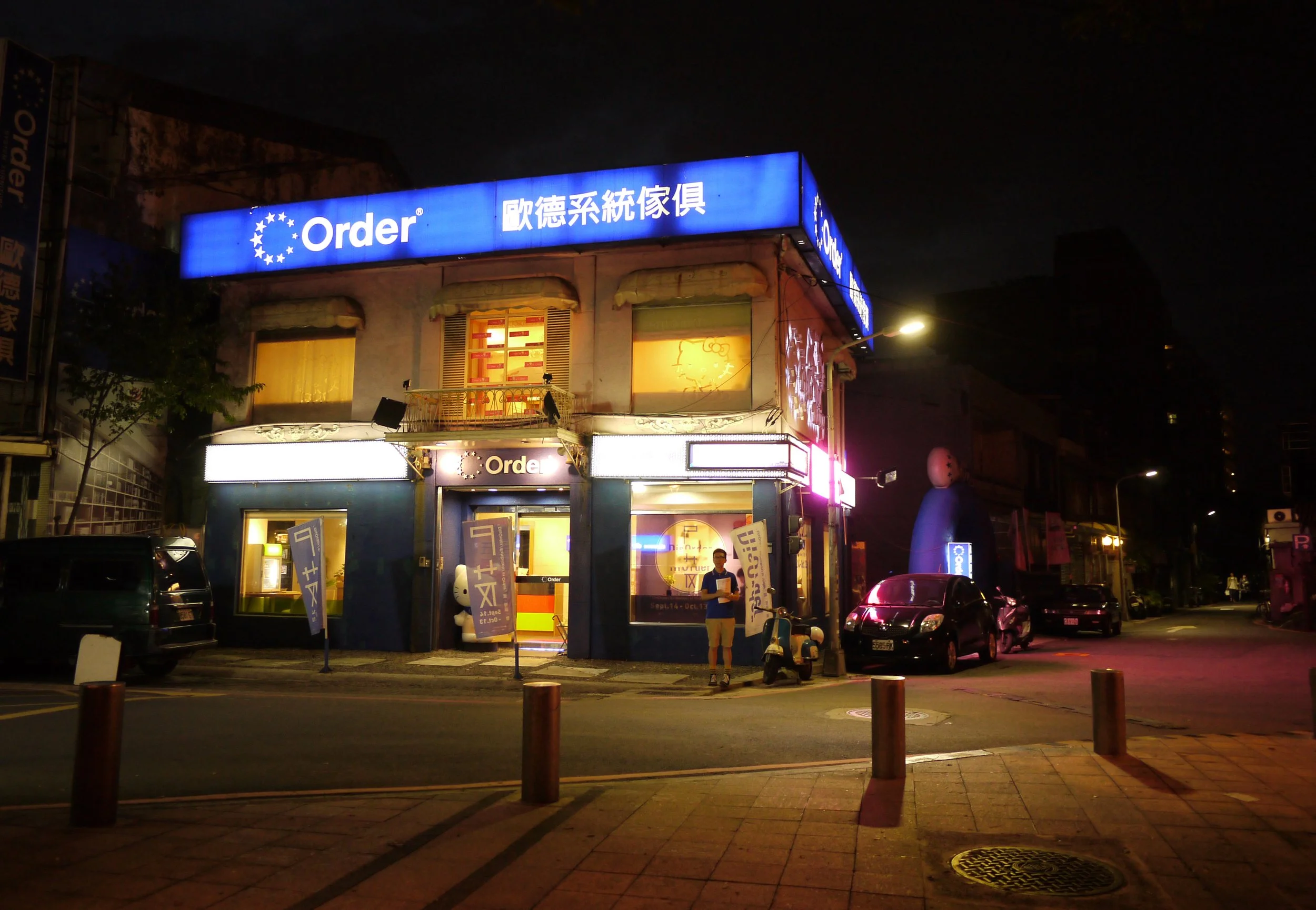
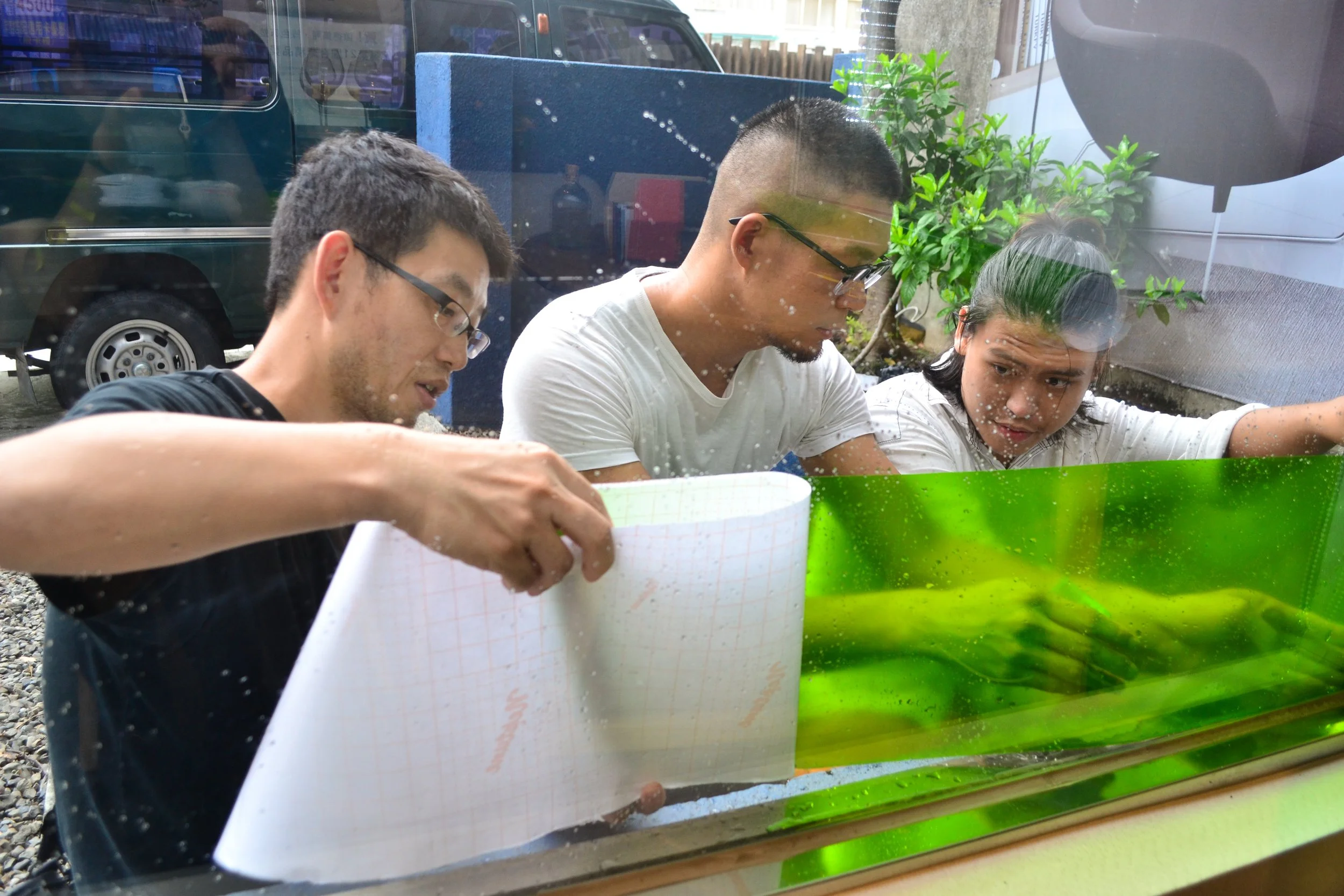
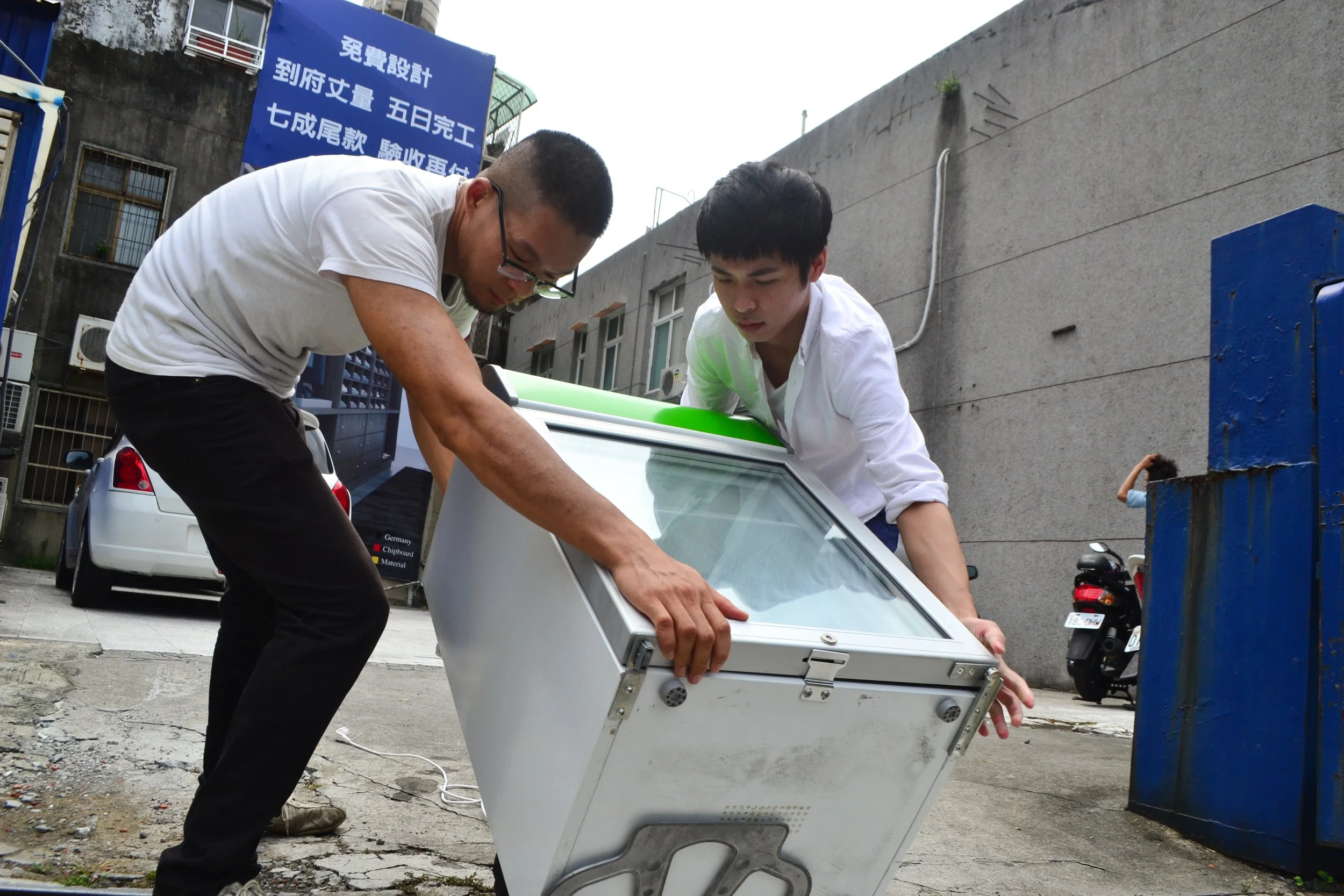
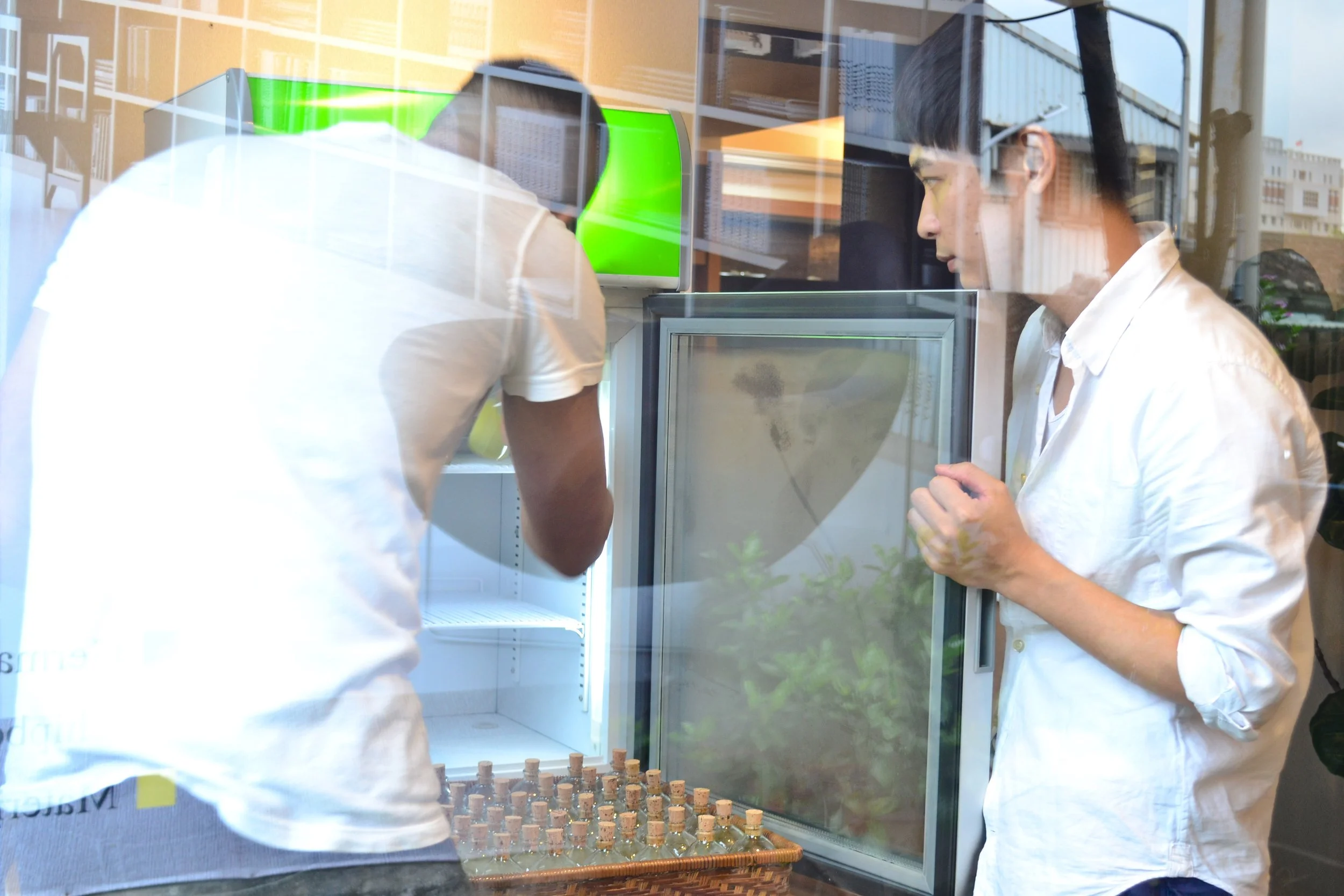
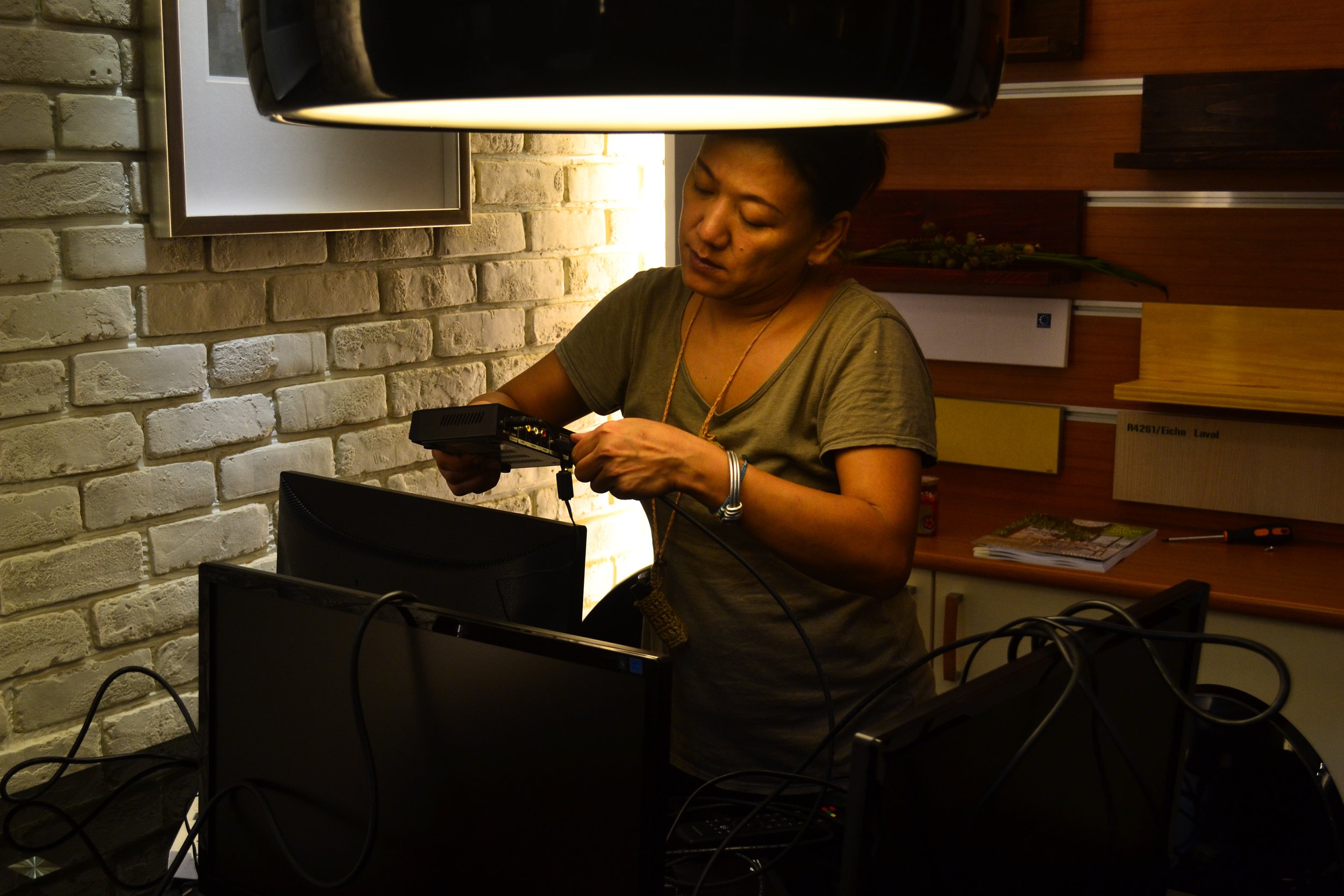
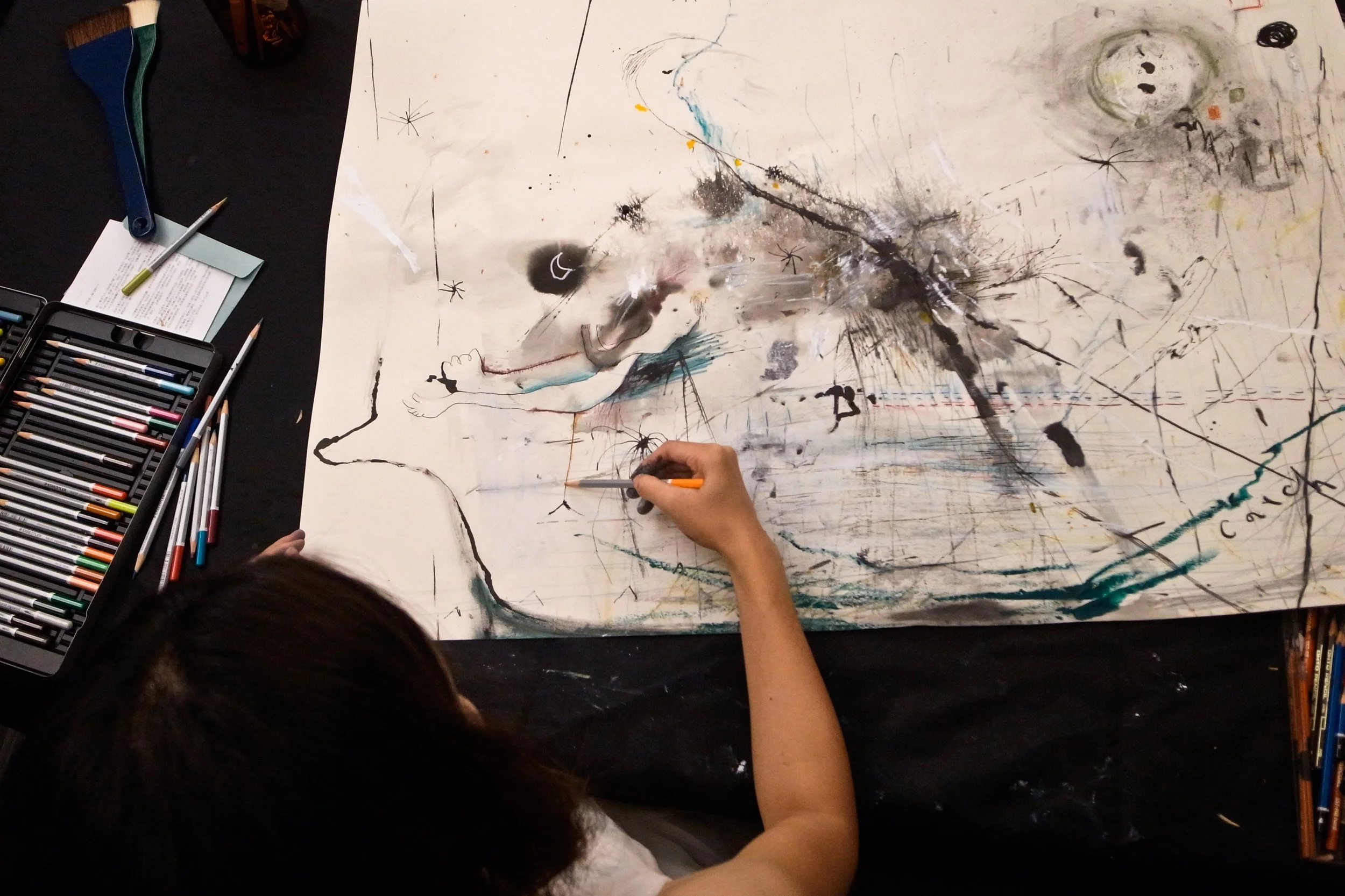


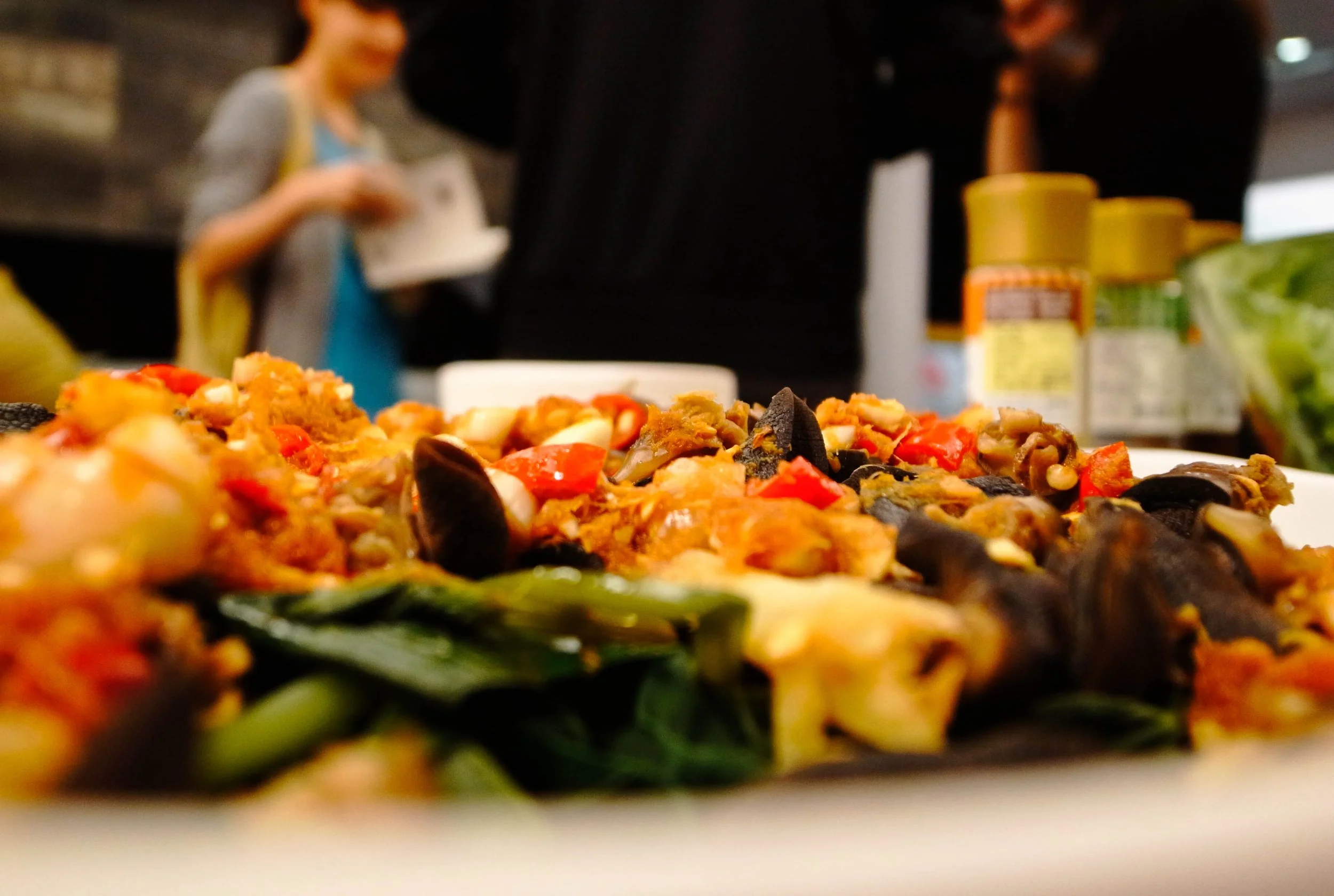
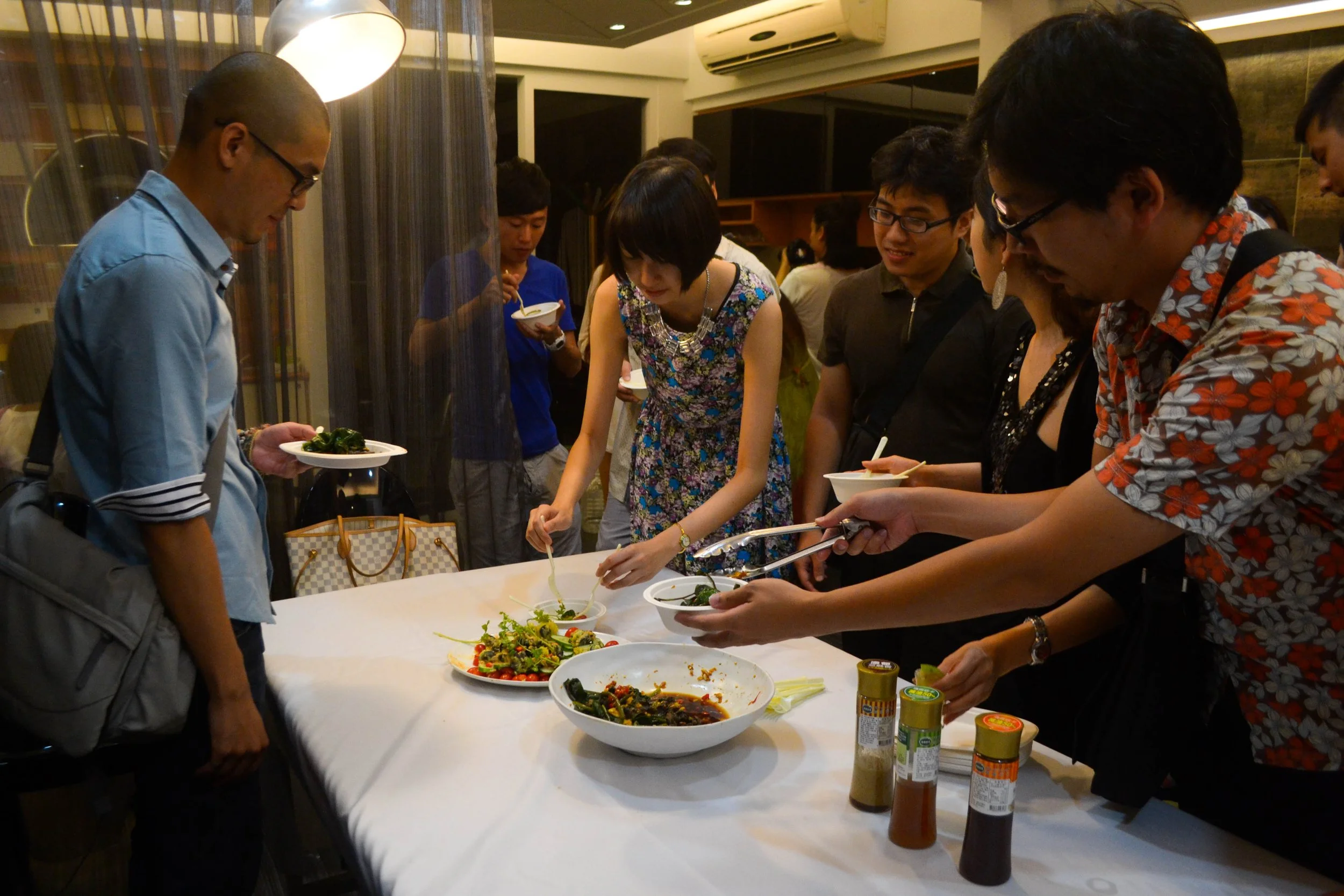
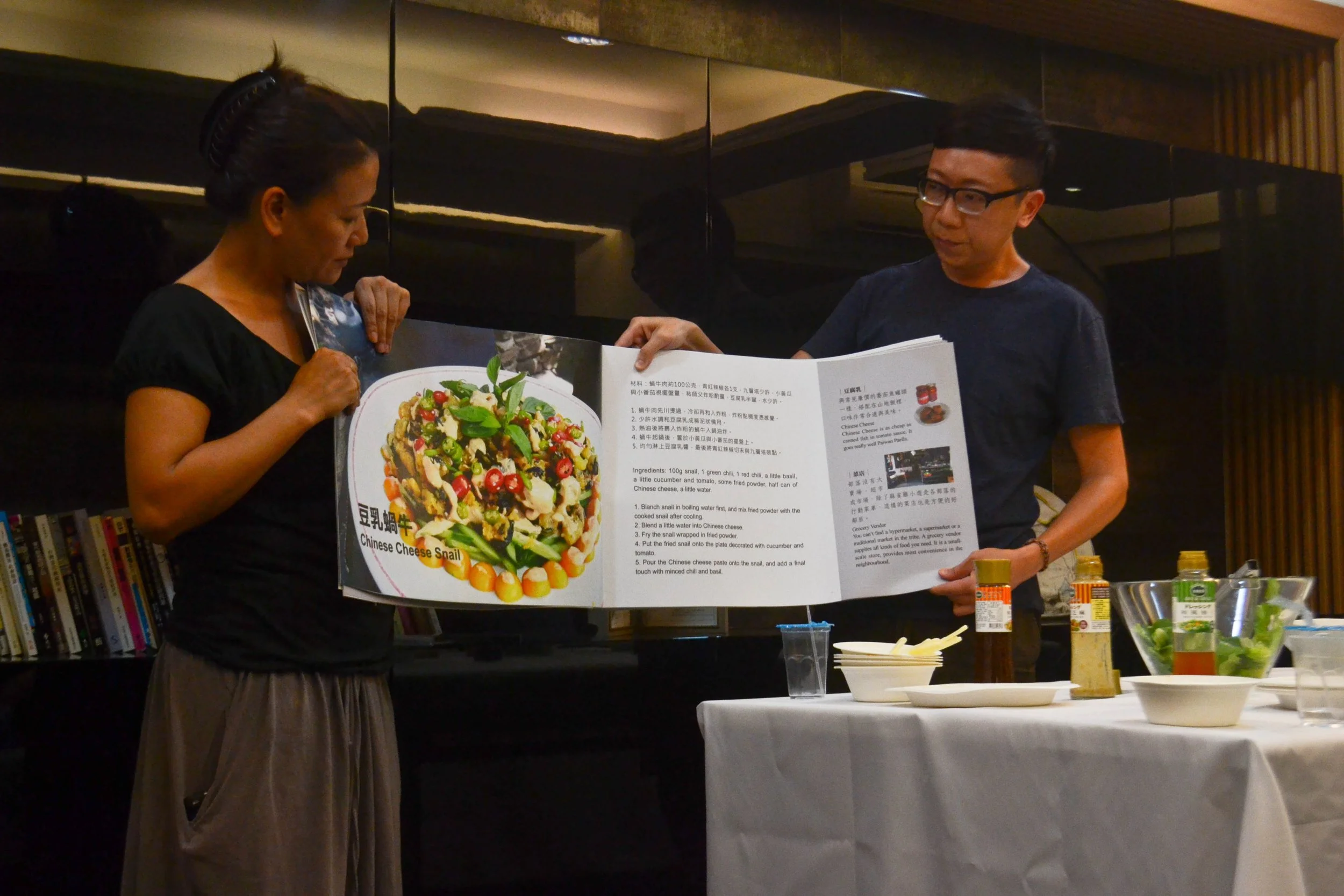
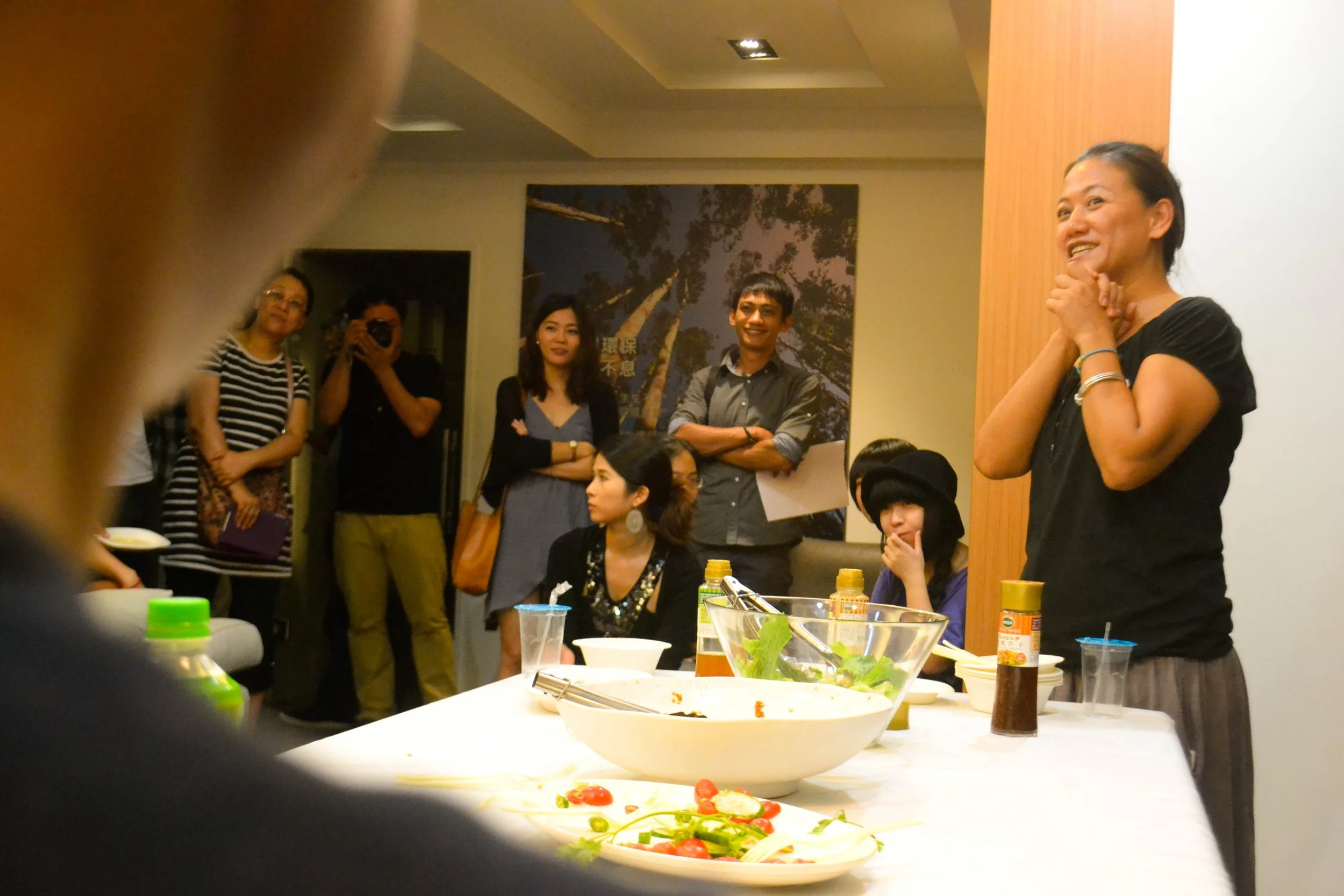
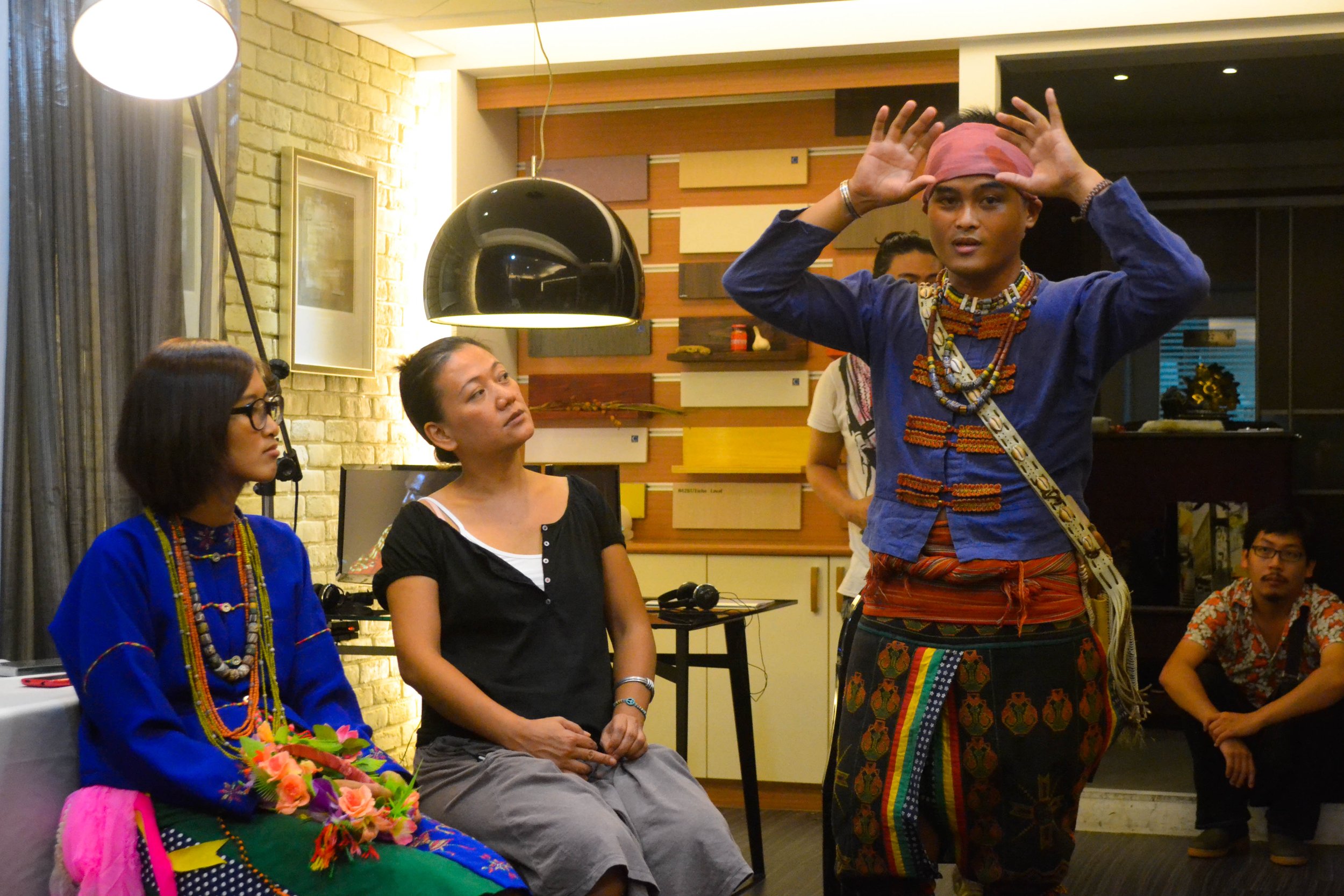
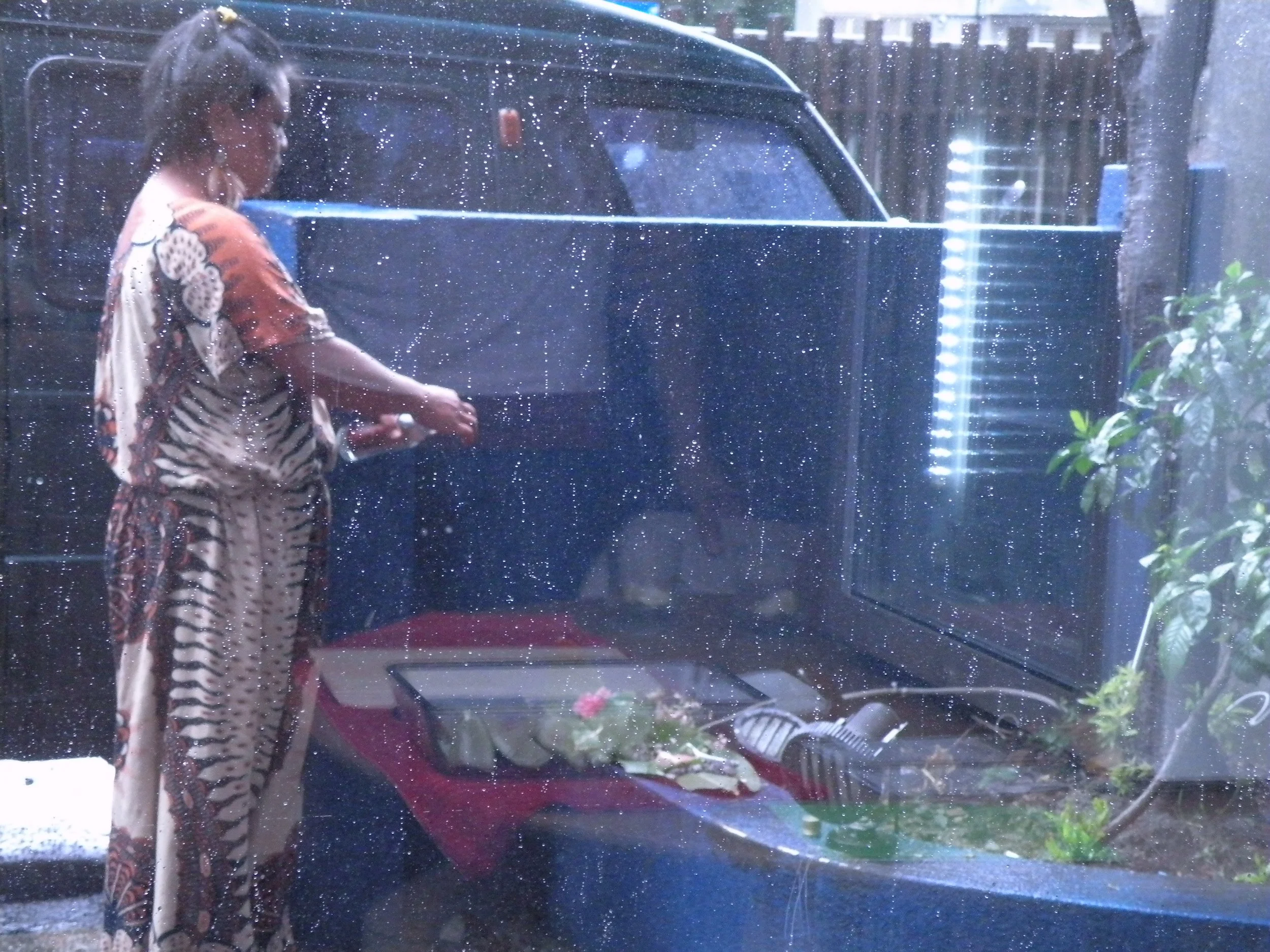
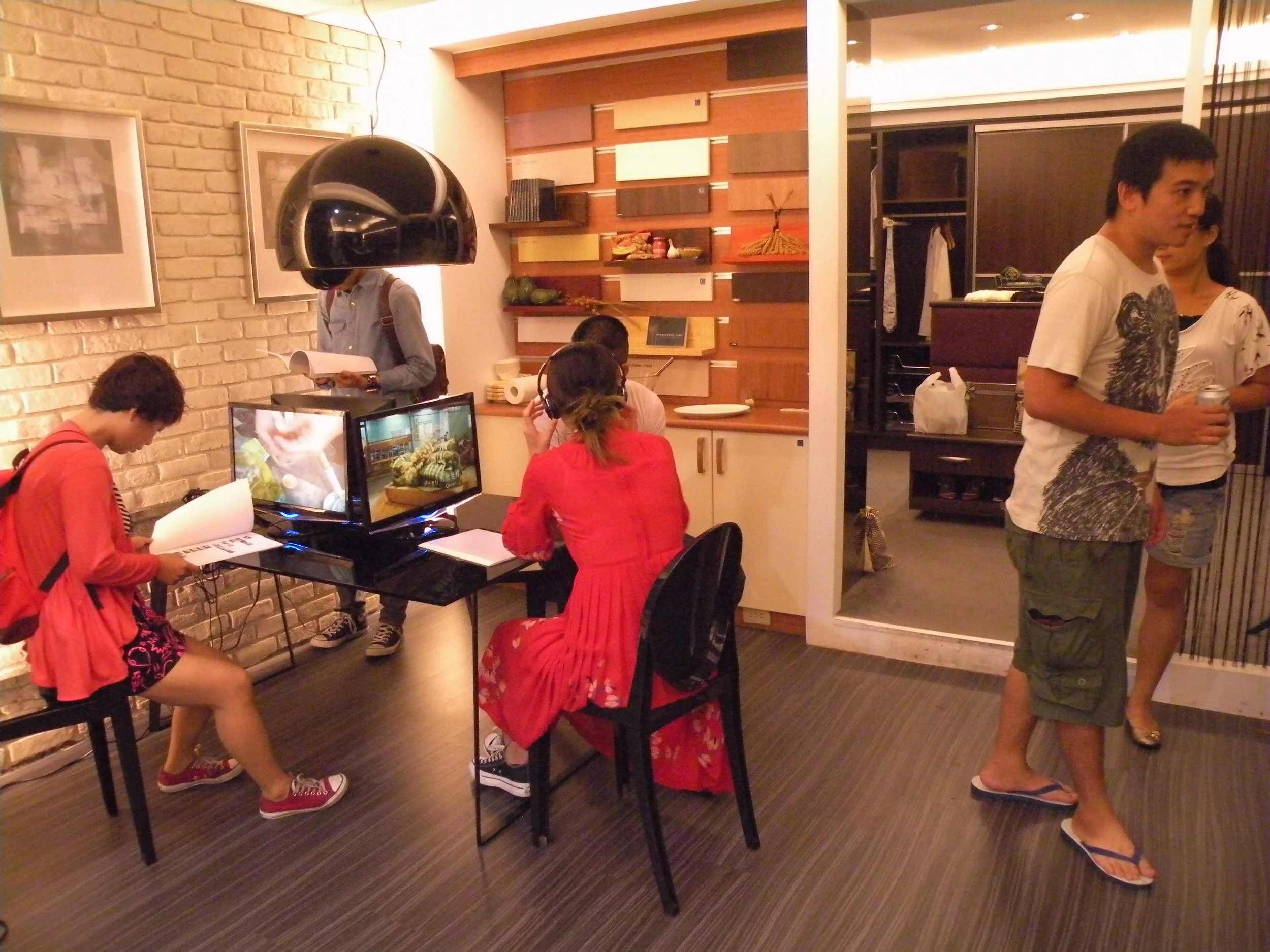
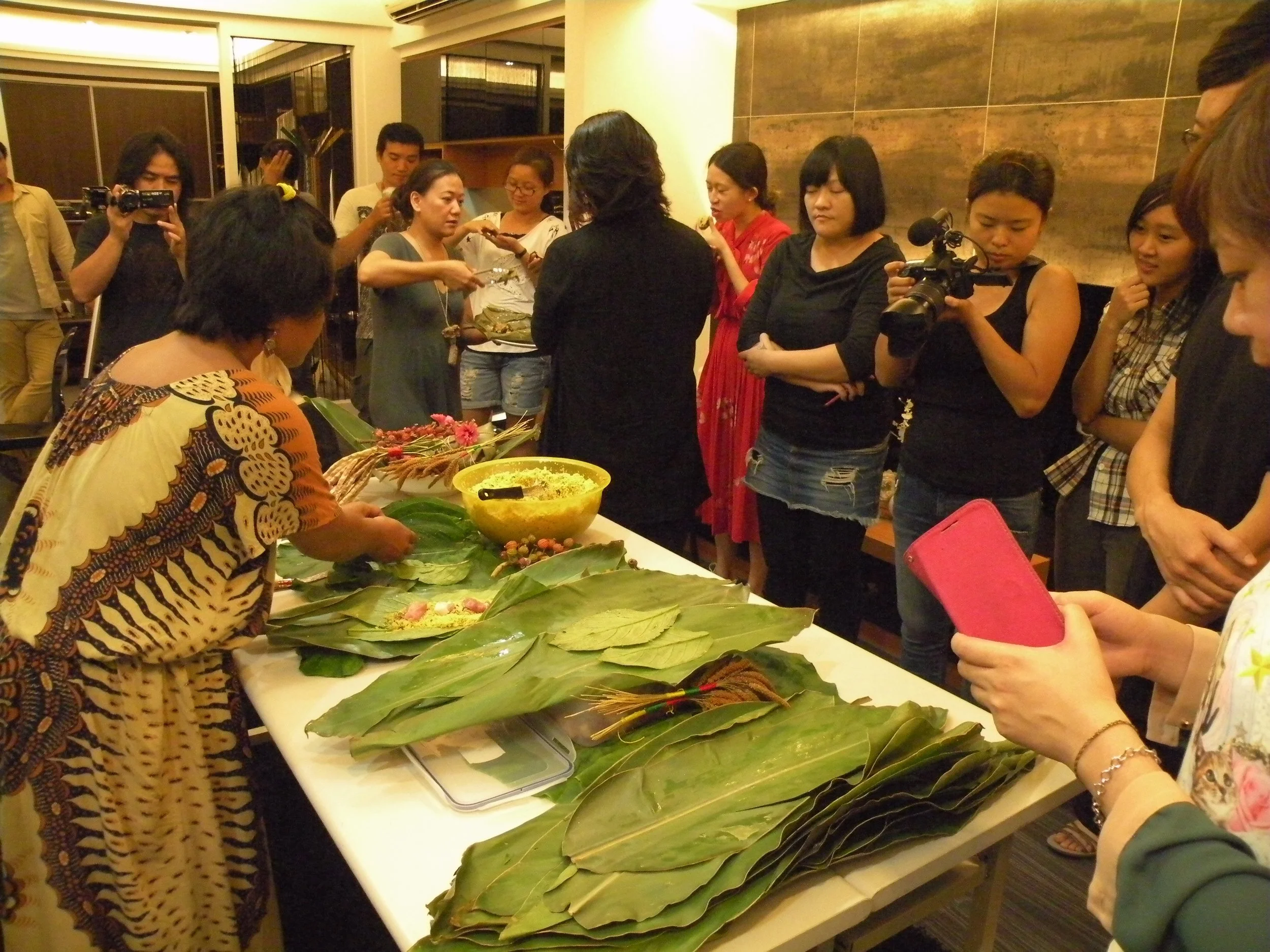
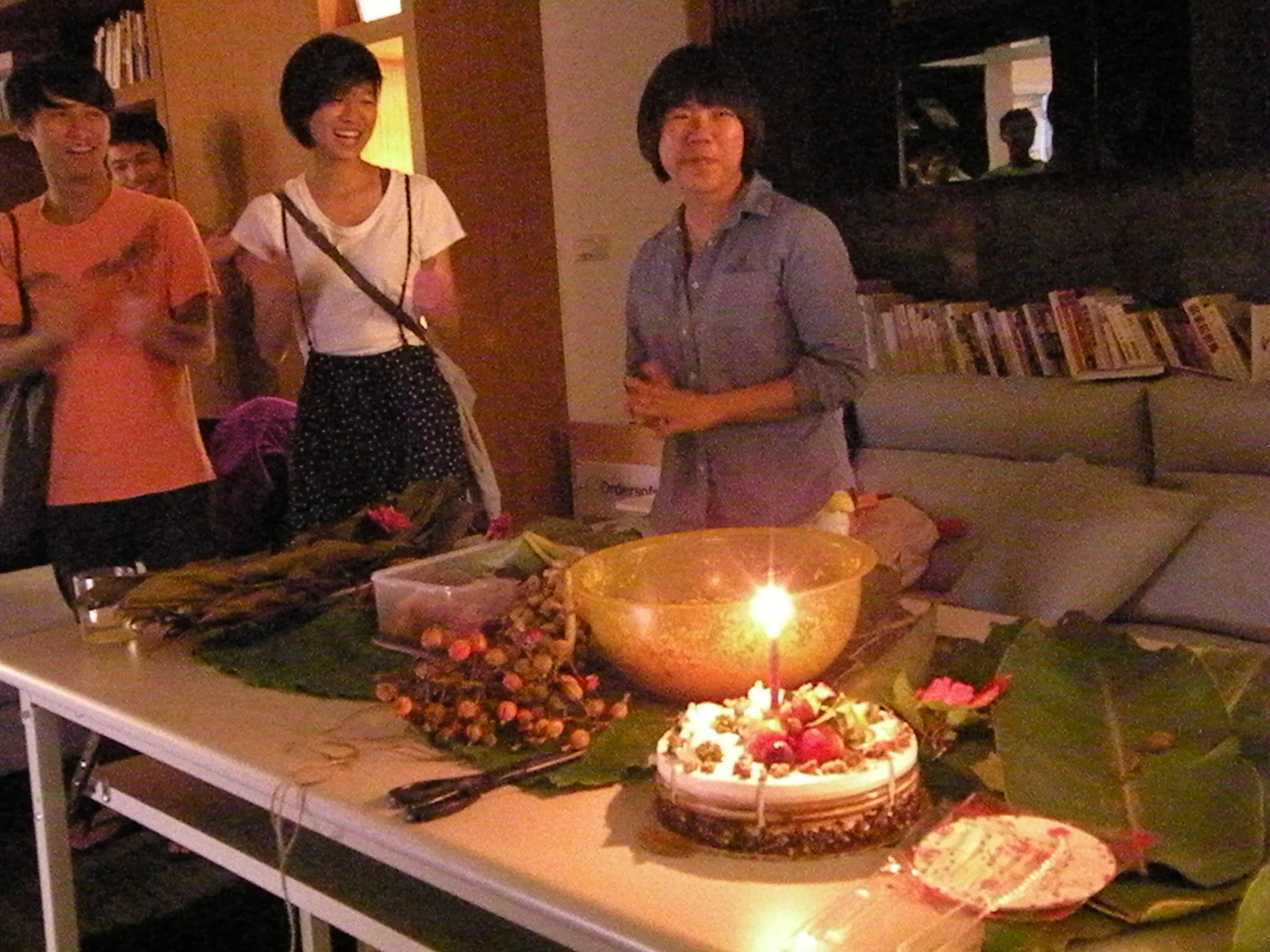
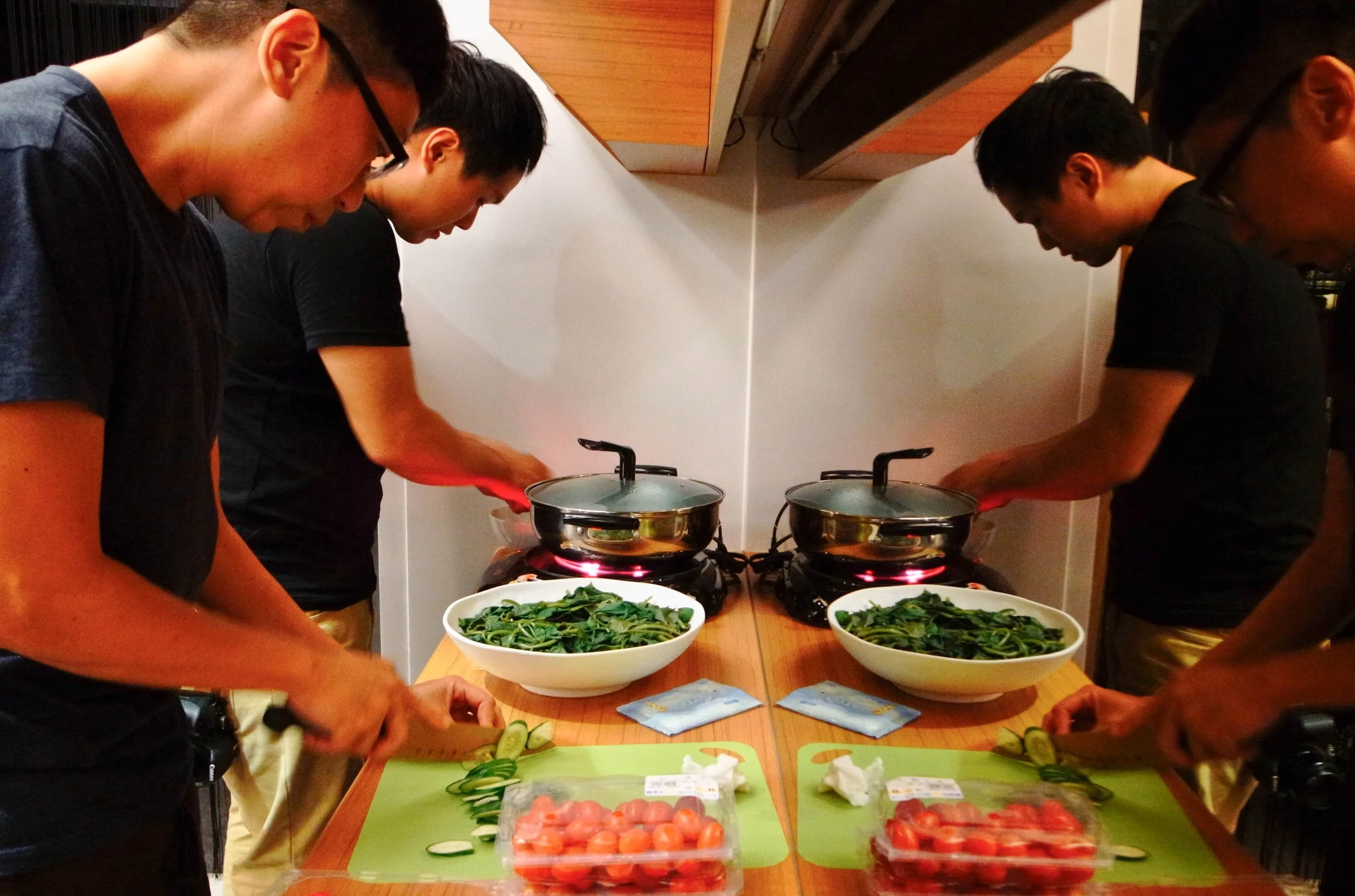
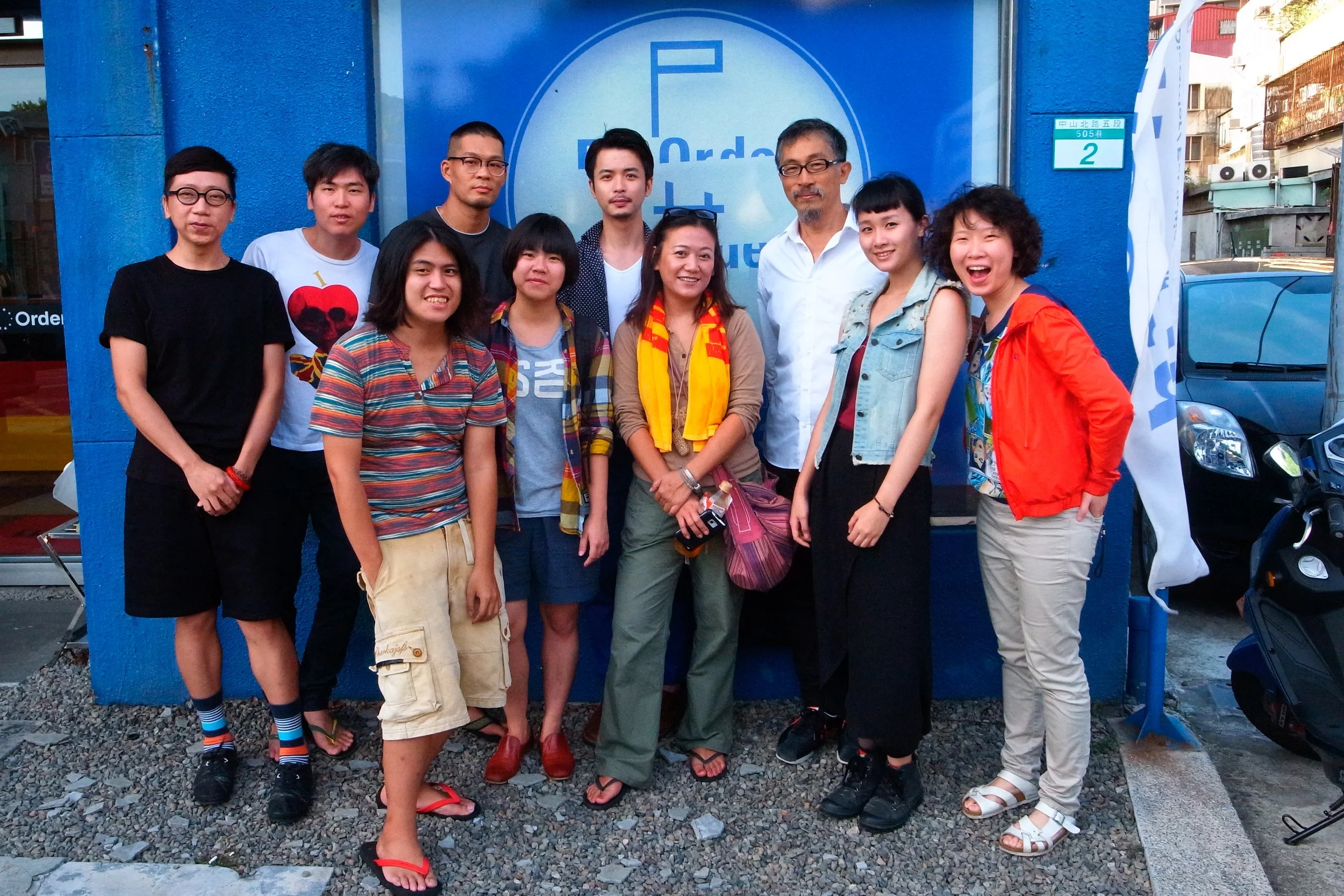
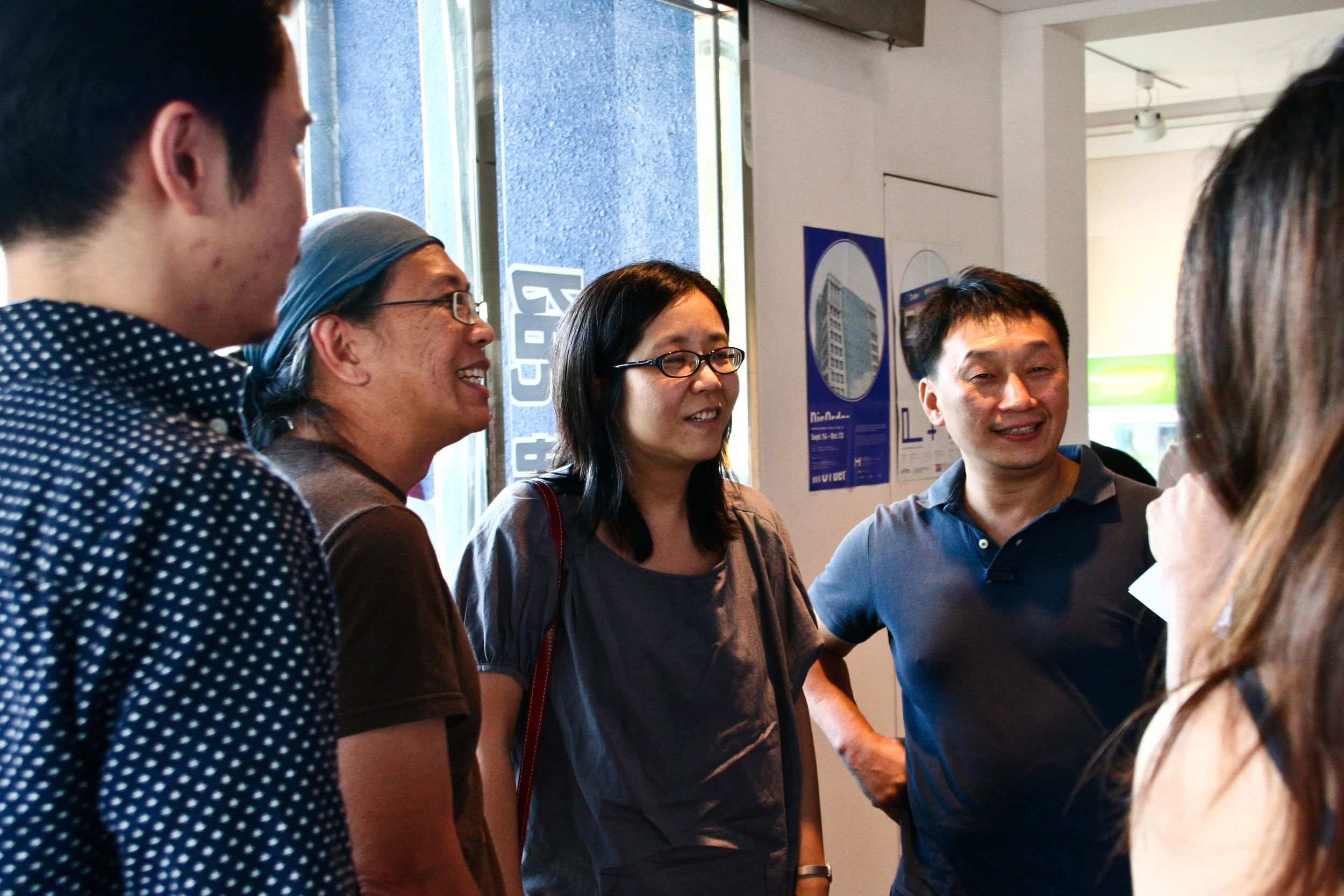
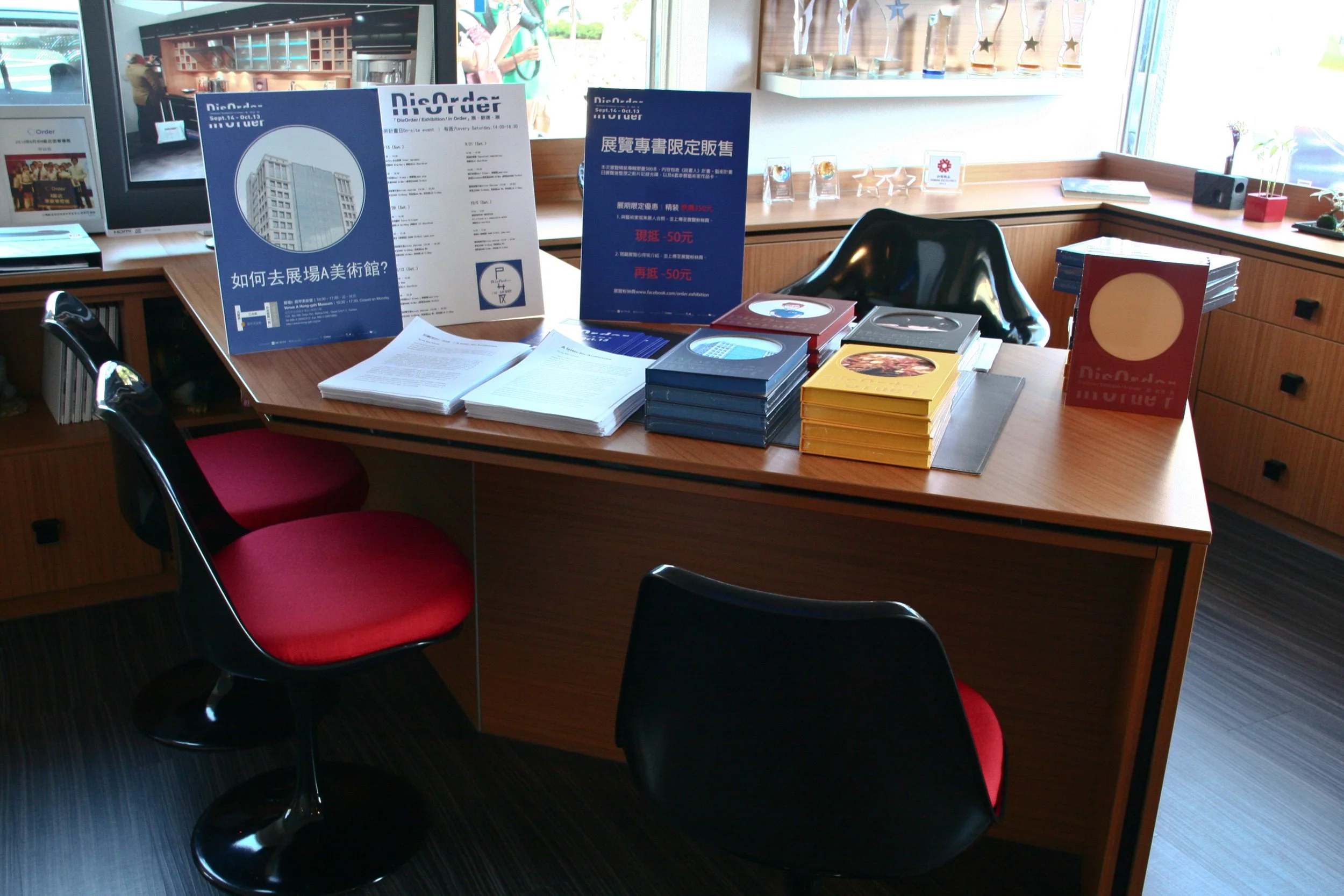
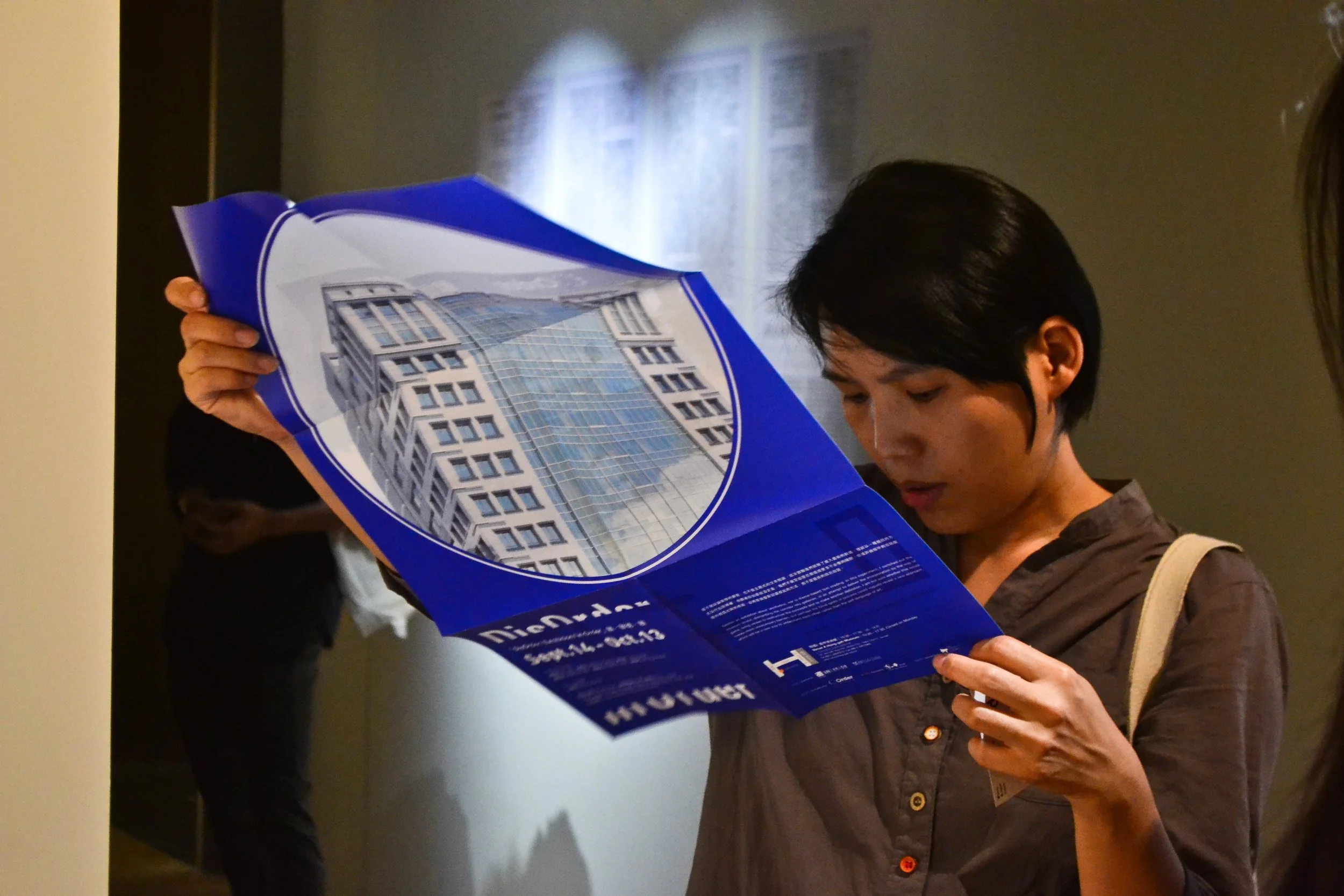
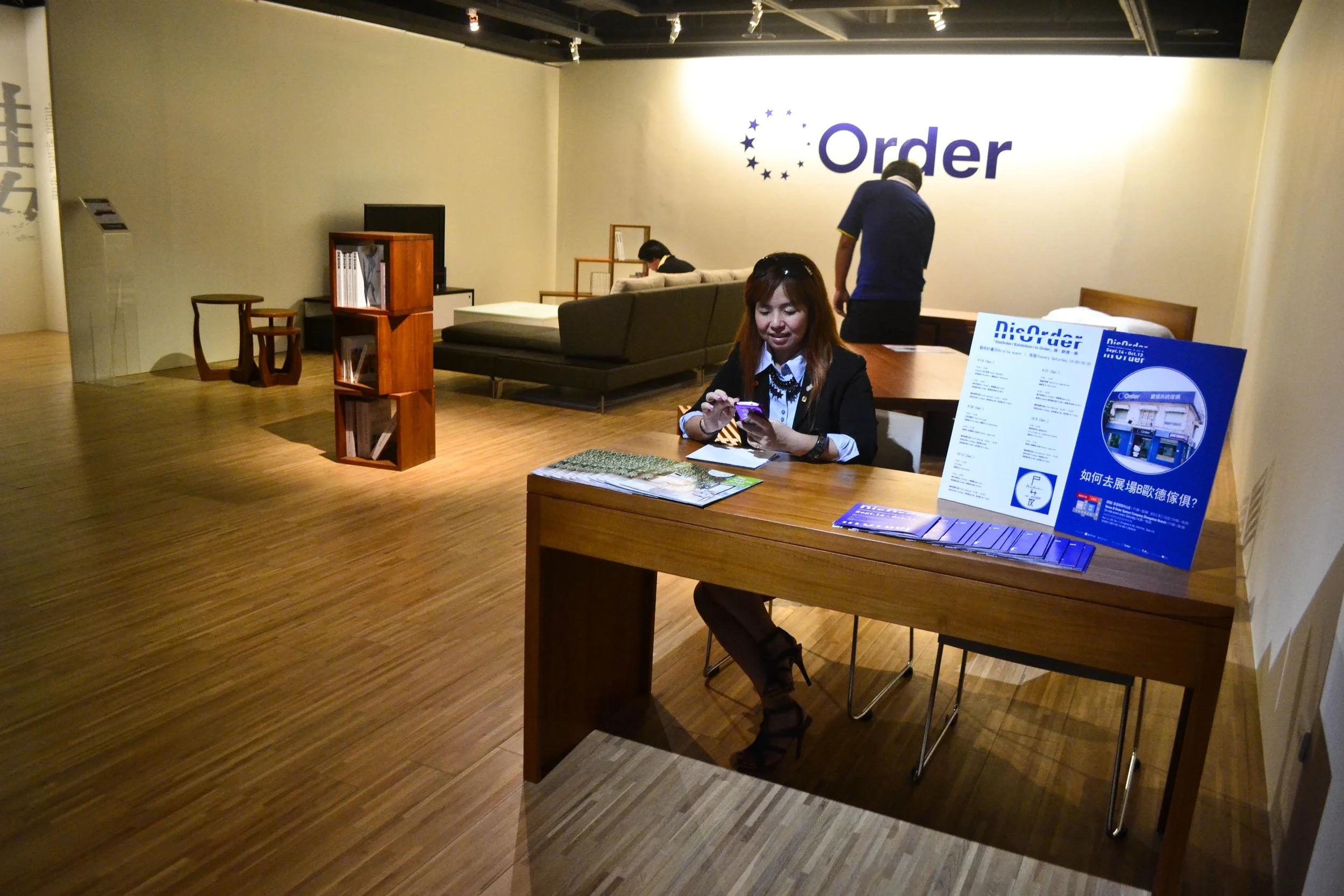
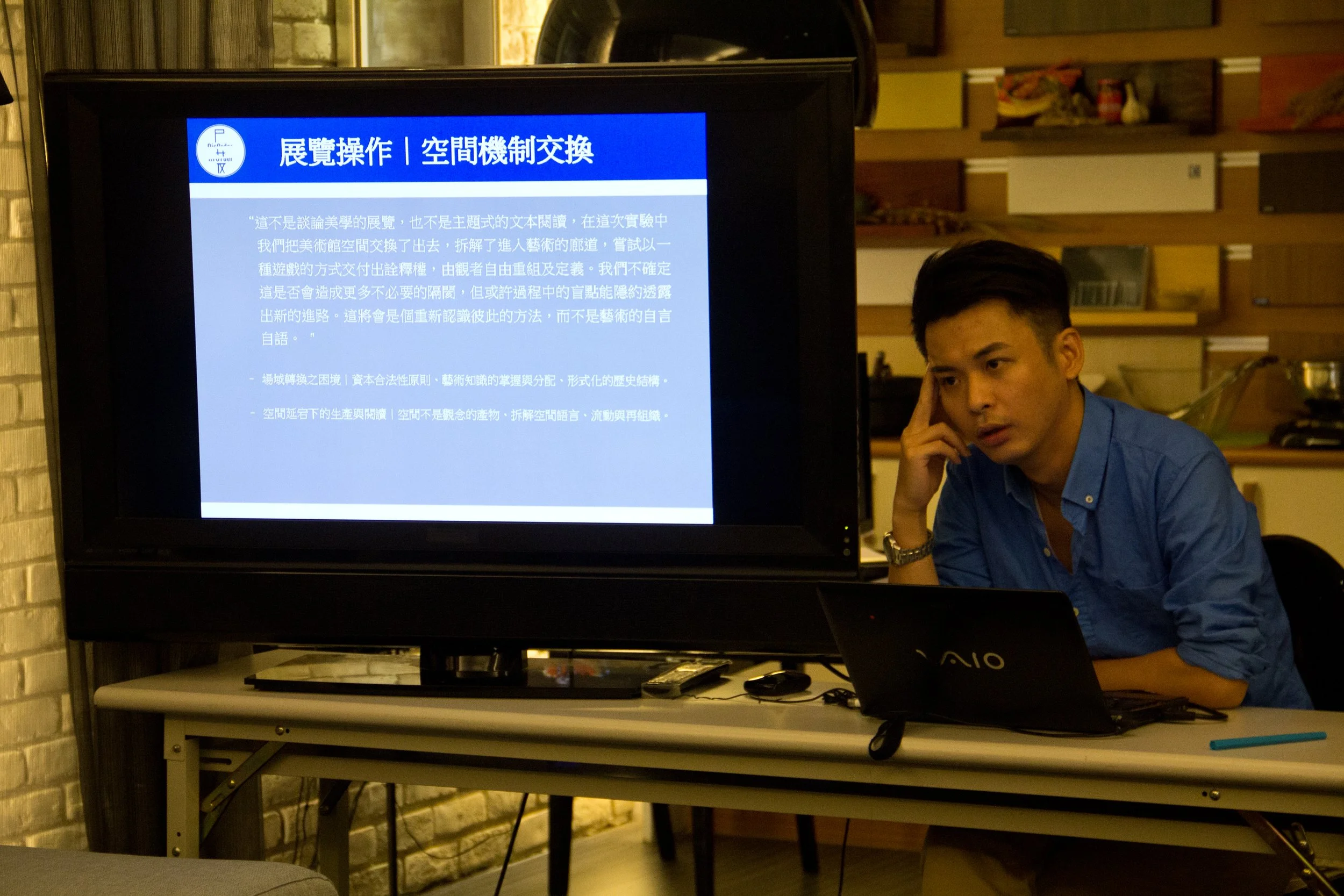
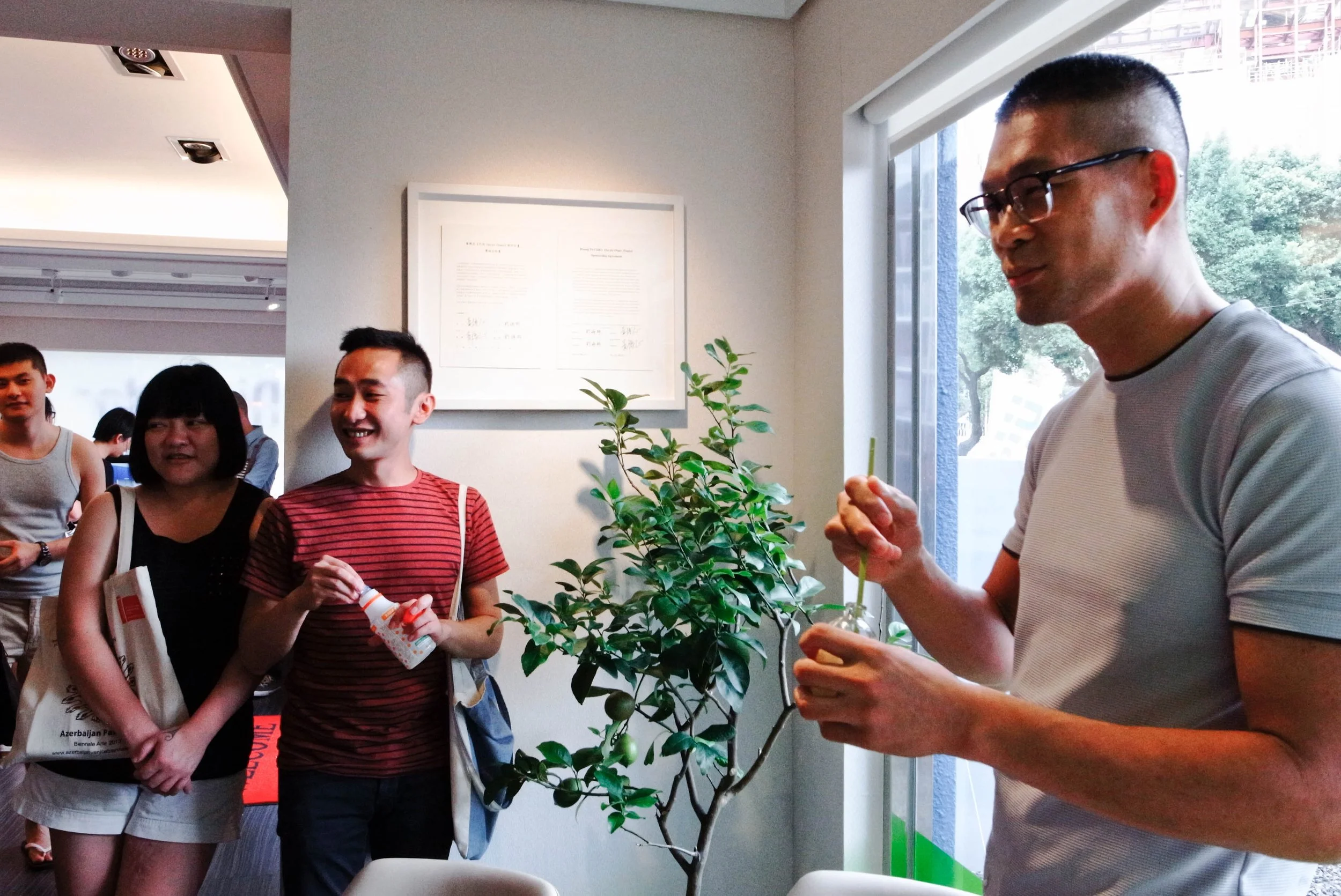
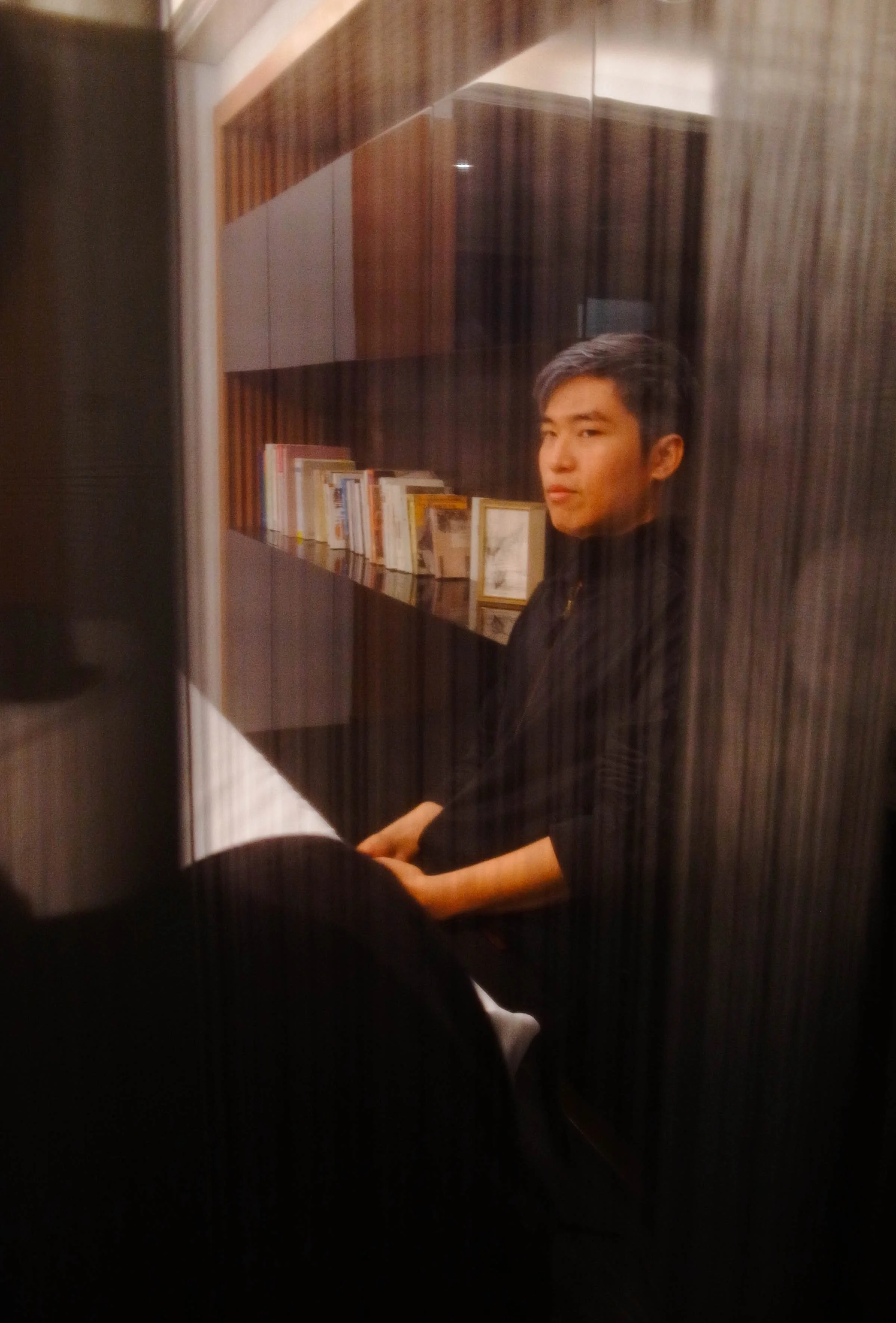
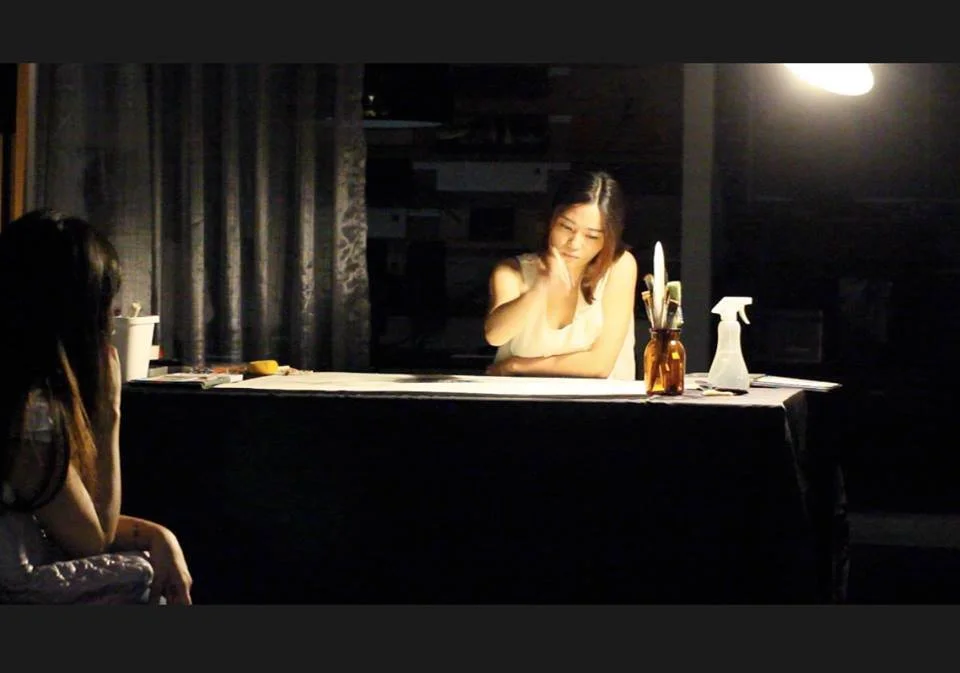
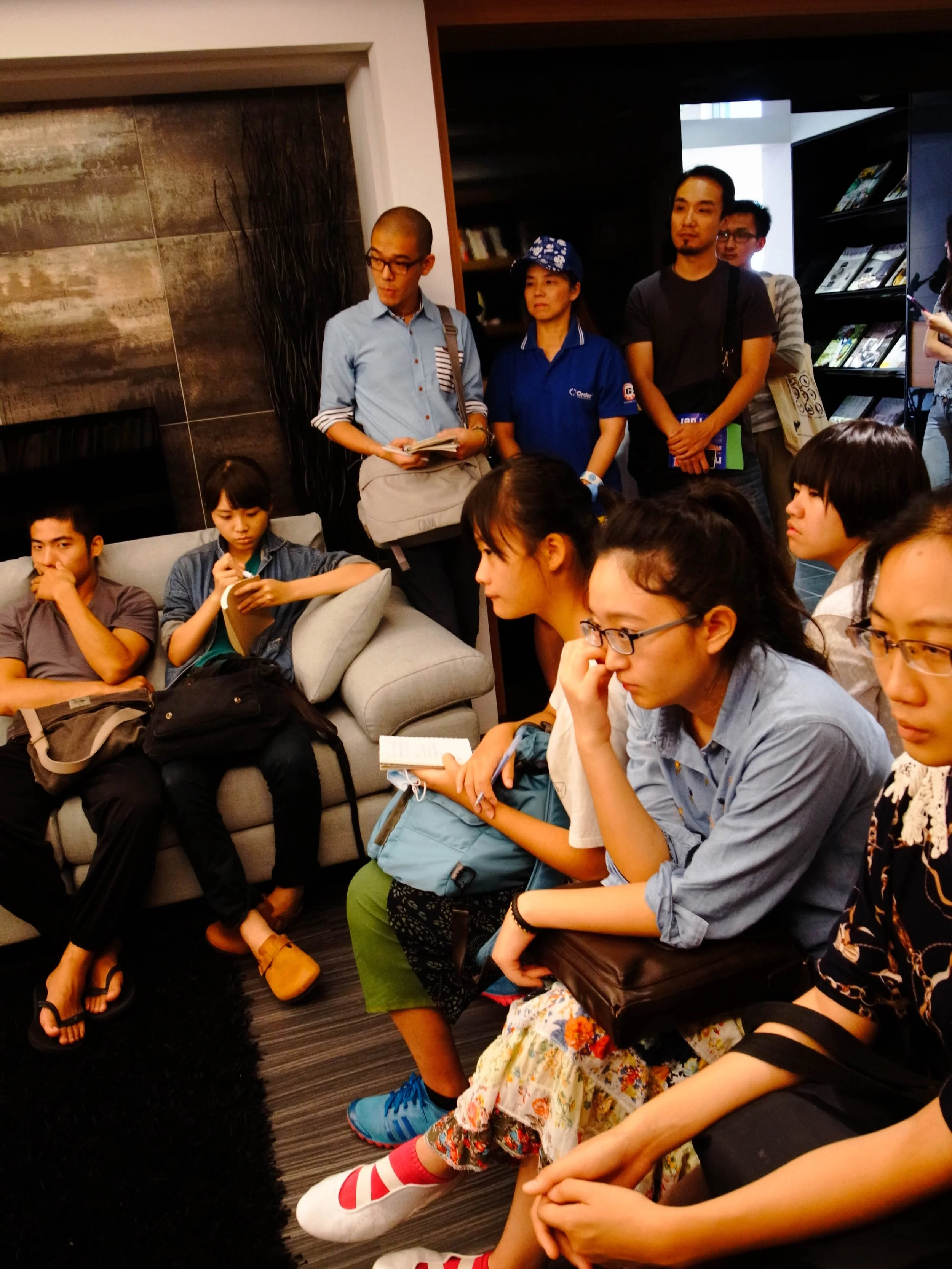
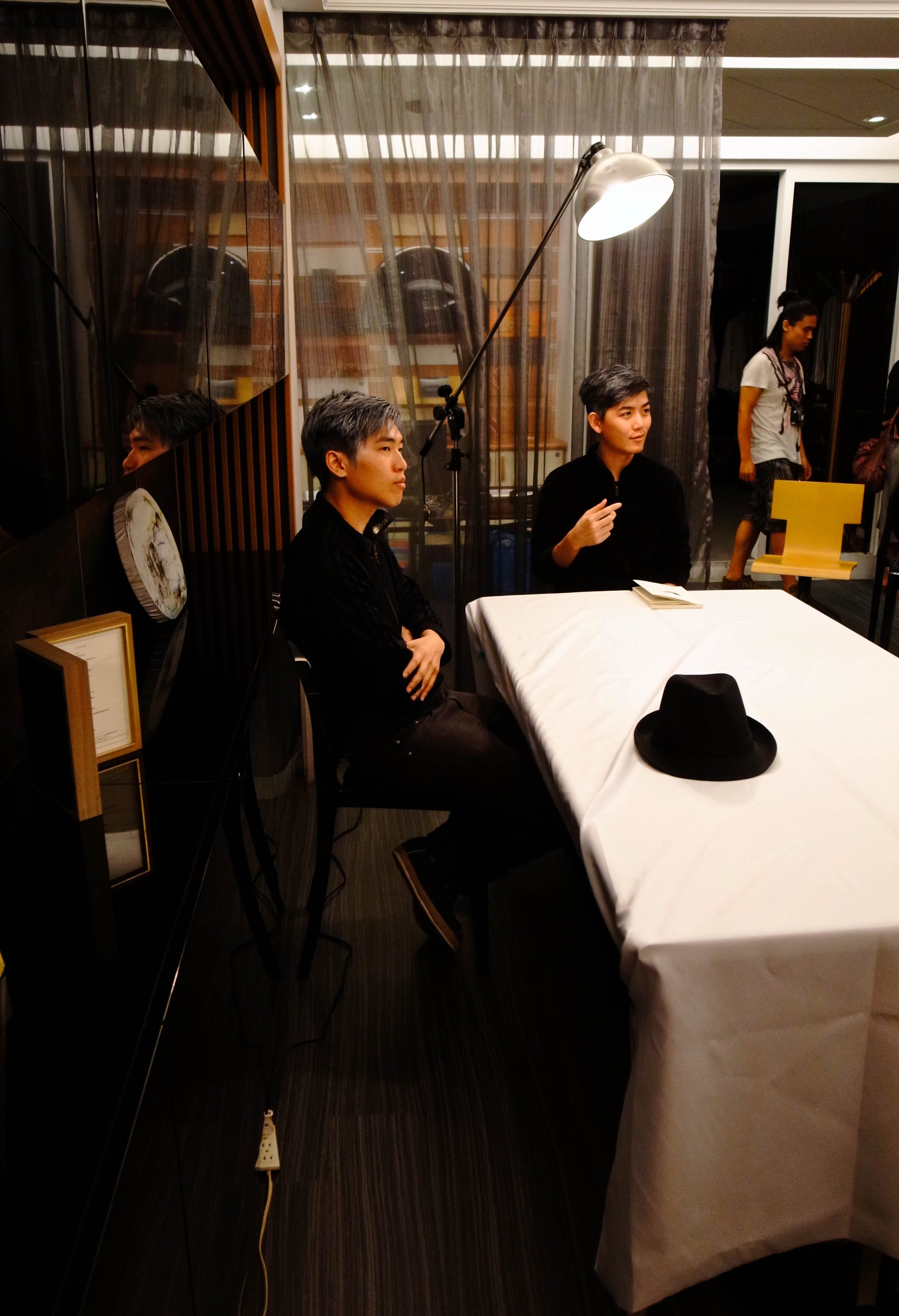
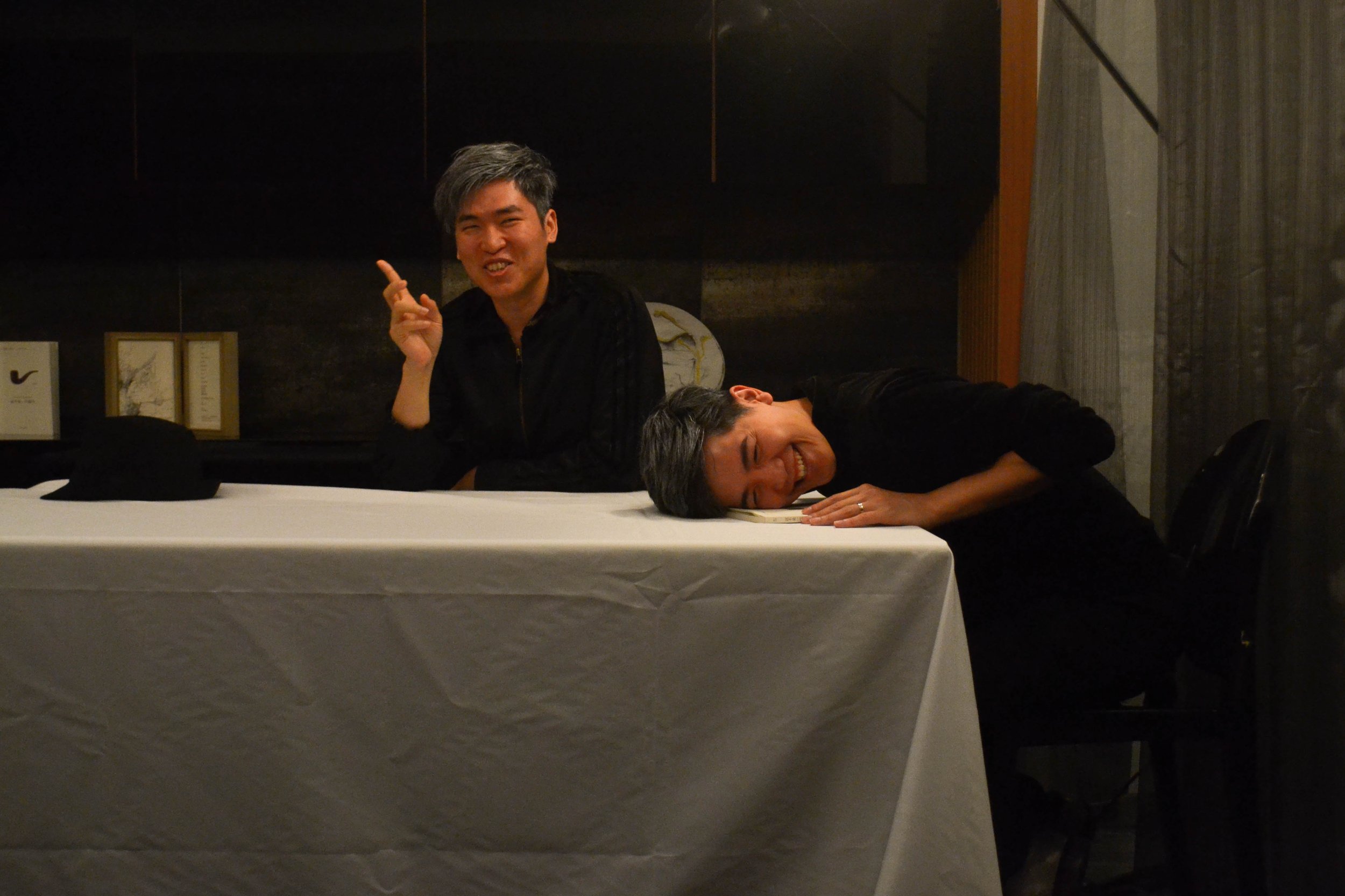
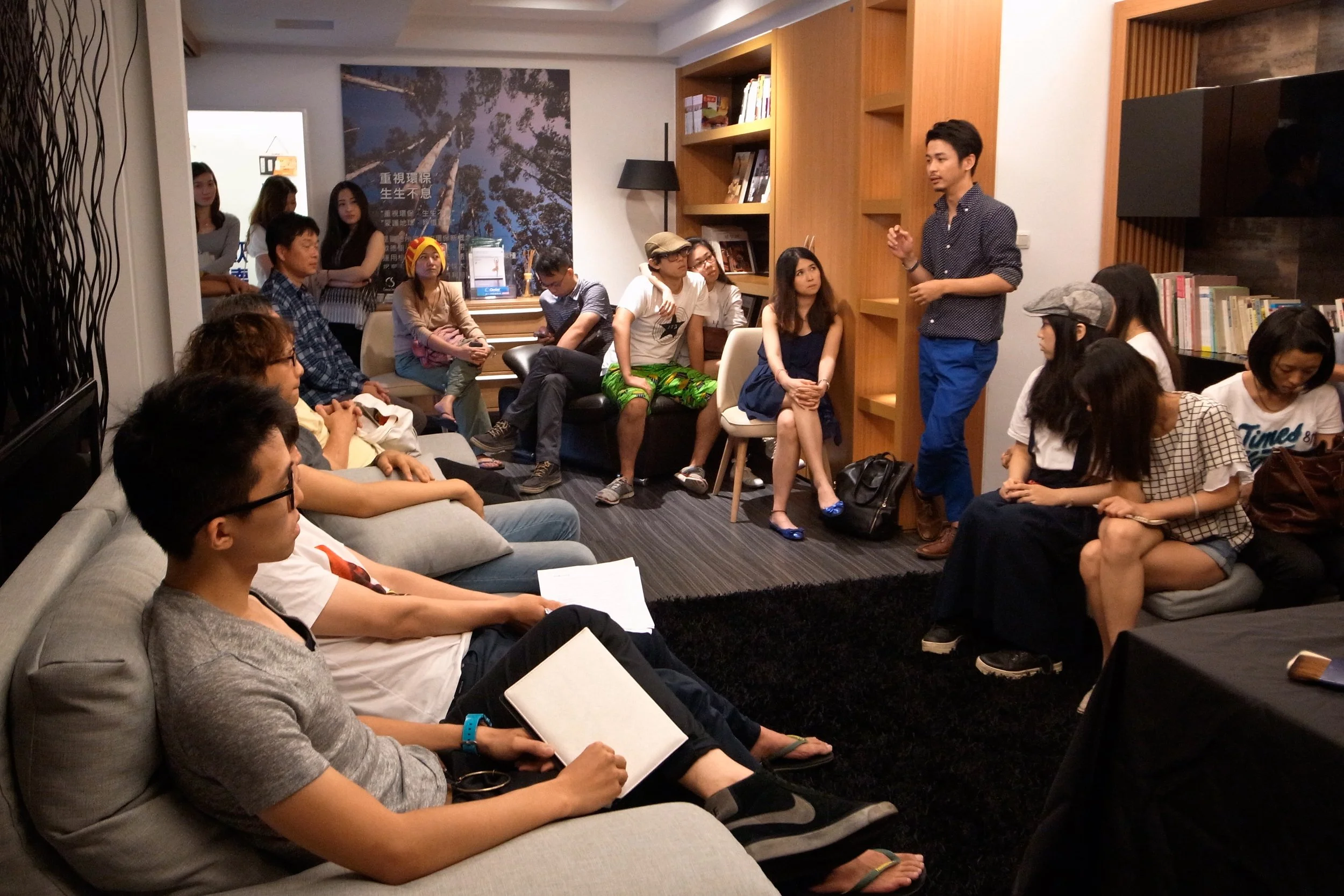
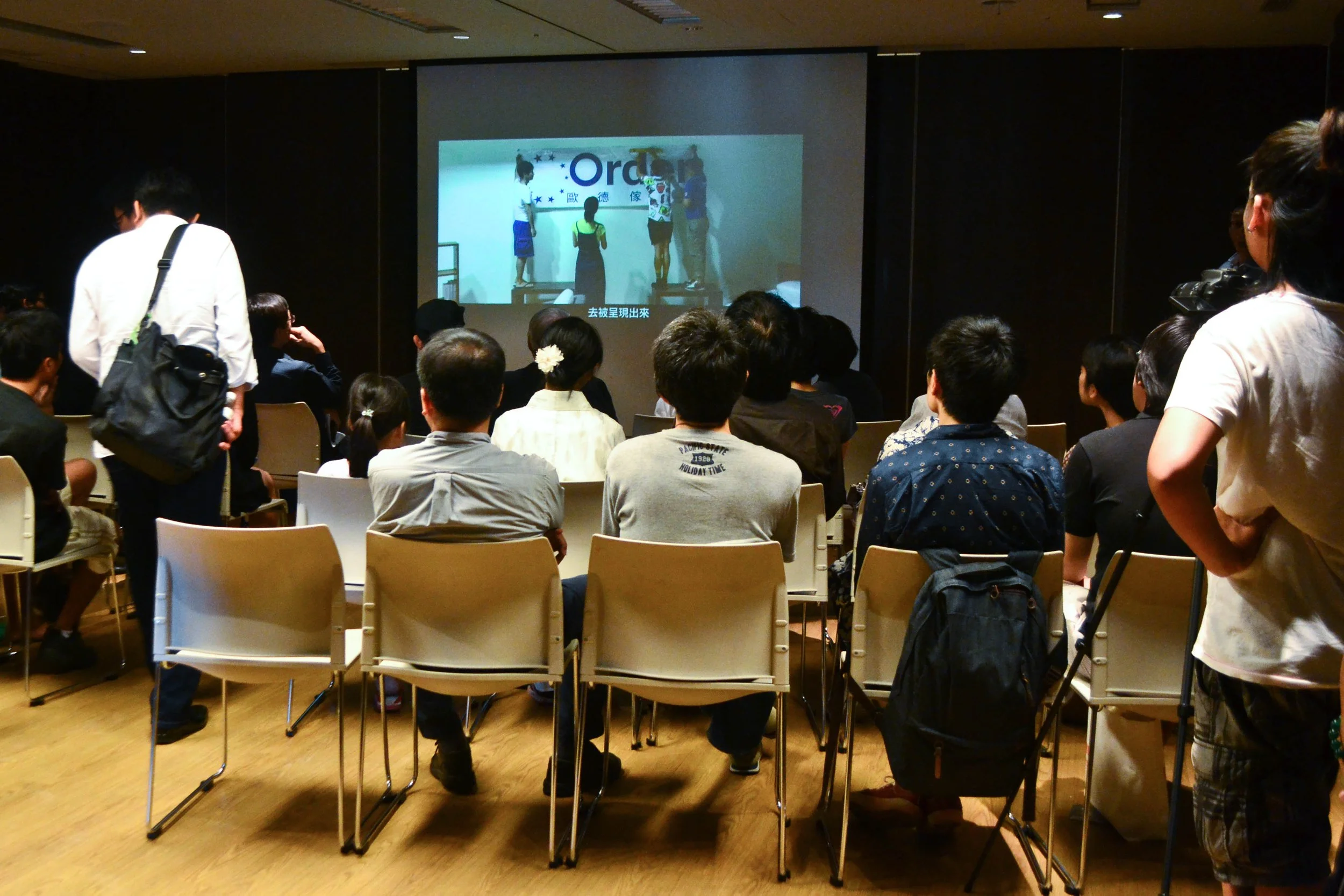
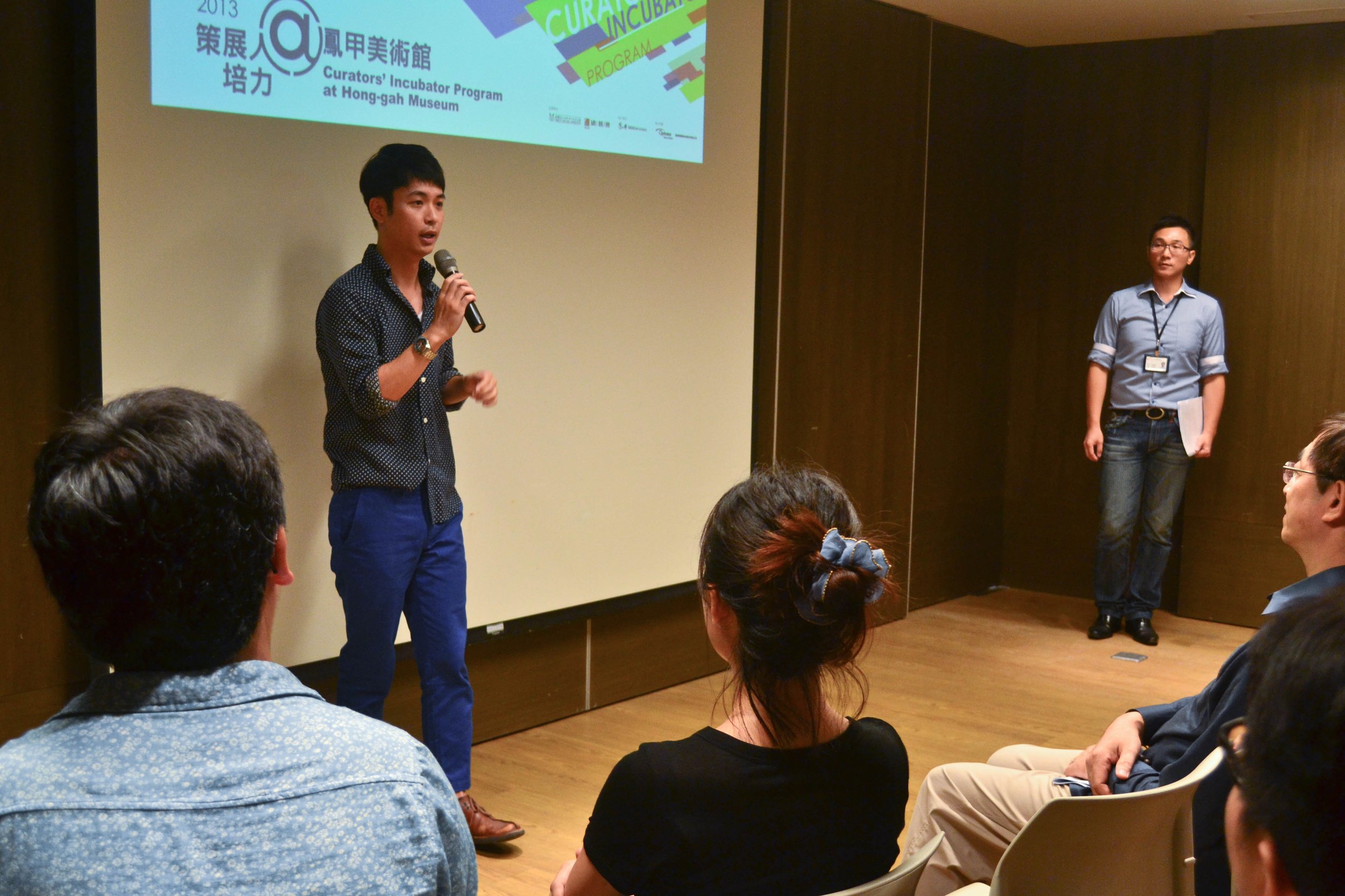
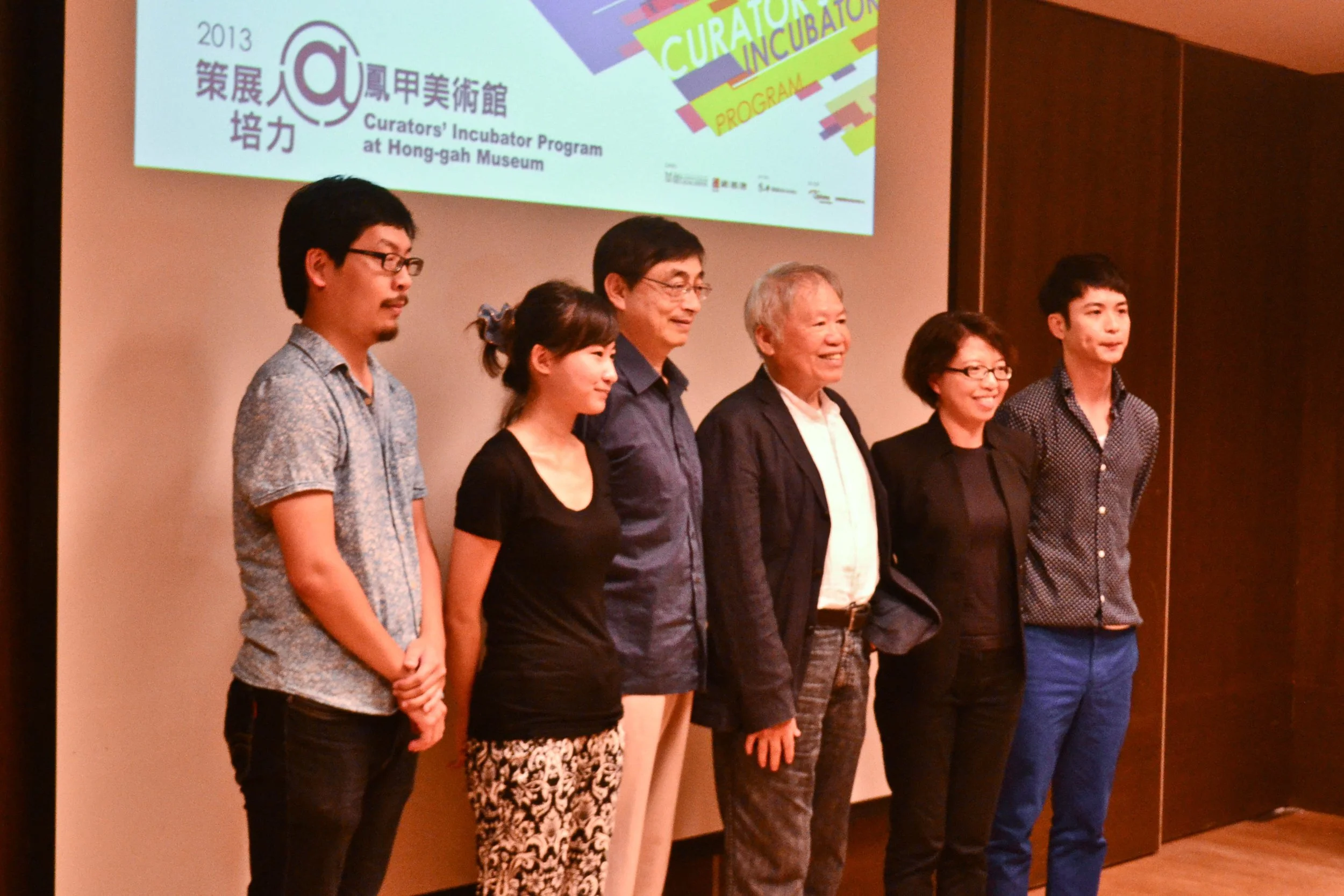
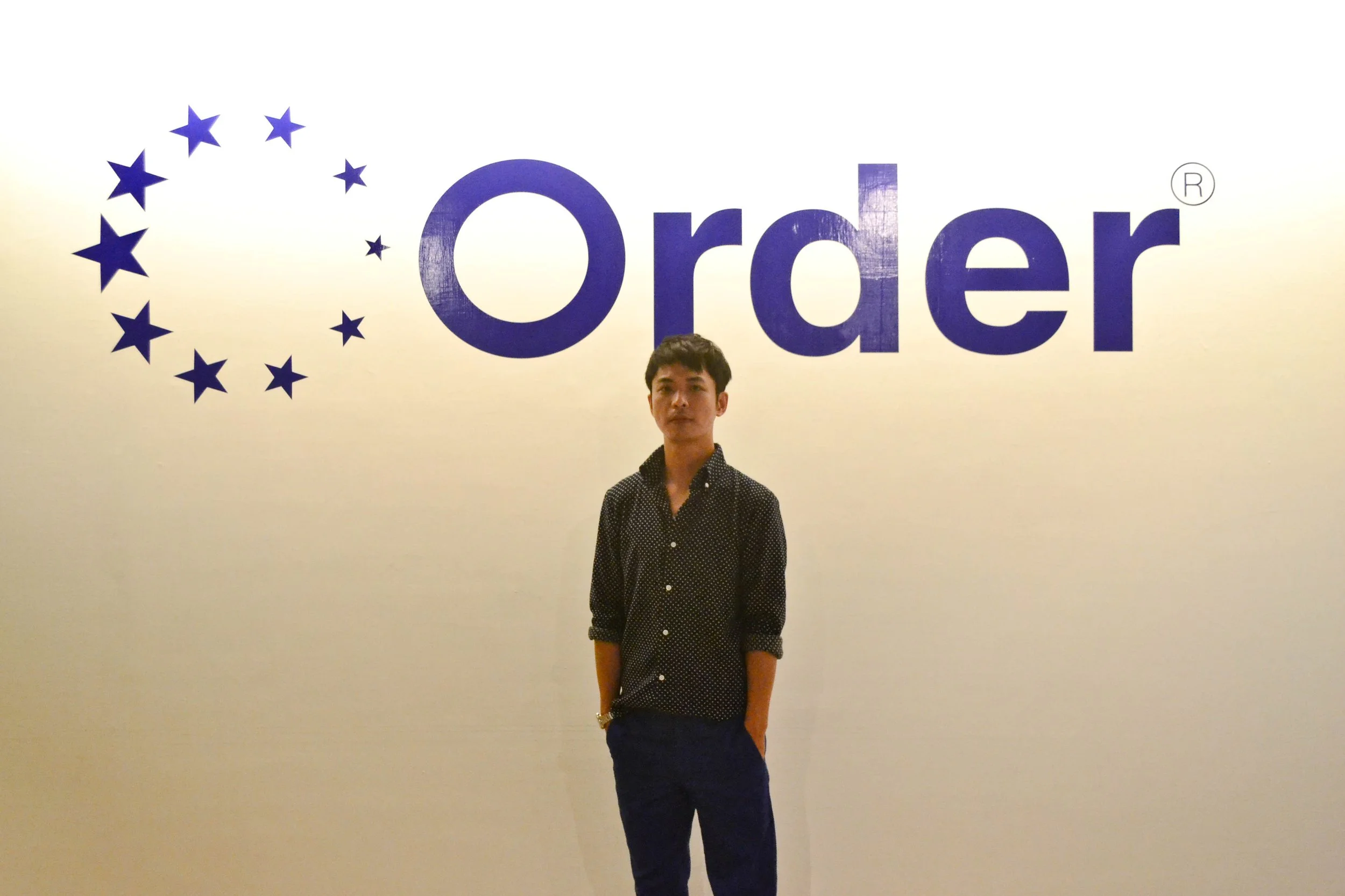
Introduction to Participating Artists’ Works
Jam WU
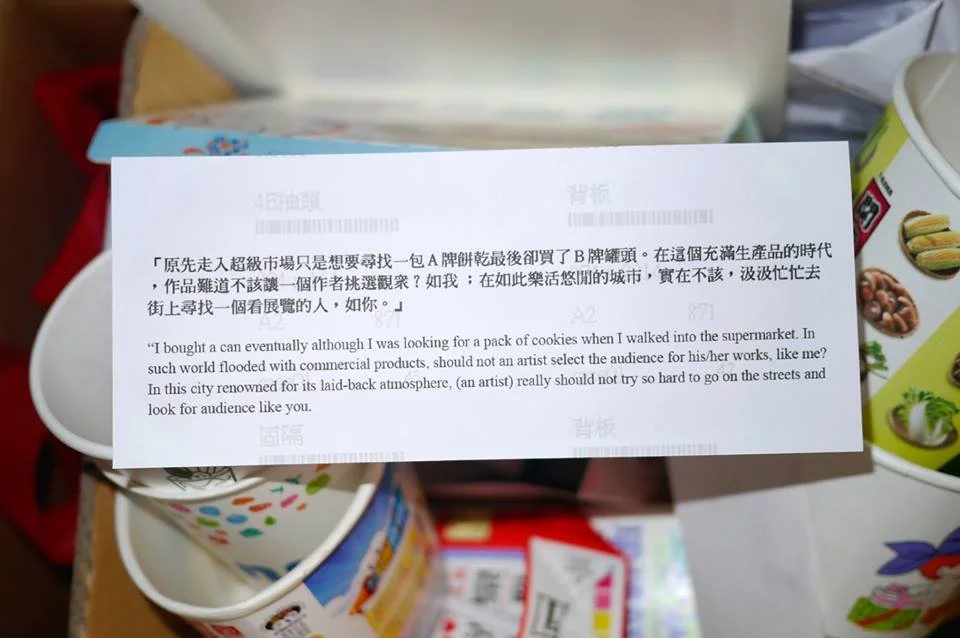
Looking For Audience
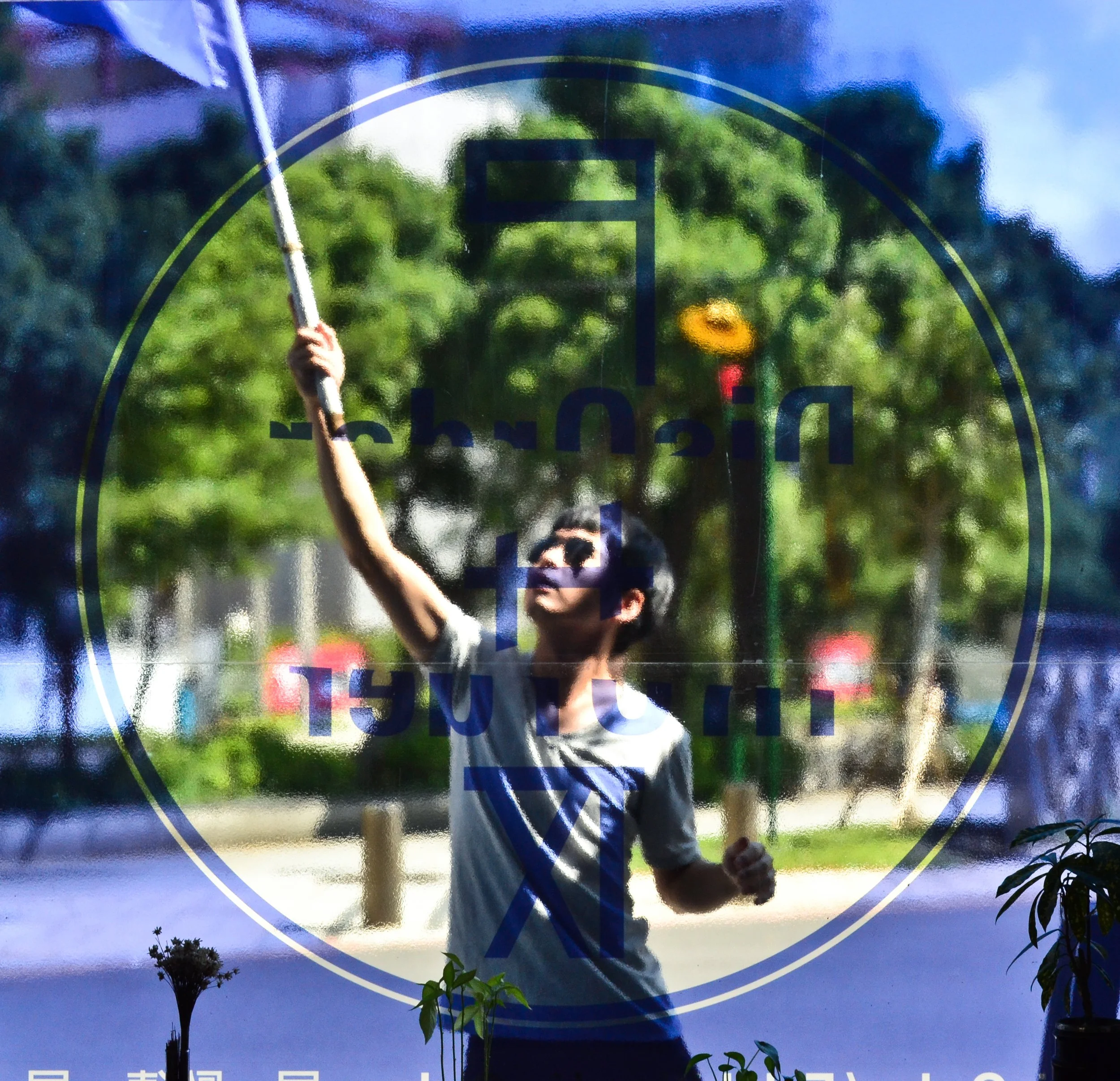
“Entering a supermarket, I only meant to find a packet of Brand A biscuits, yet I left with a can of Brand B. In an age saturated with production, should a work not be allowed to choose its audience? Like me: in a city so leisurely and comfortable, there is no need to hurry into the streets to look for someone to see an exhibition. Like you.”
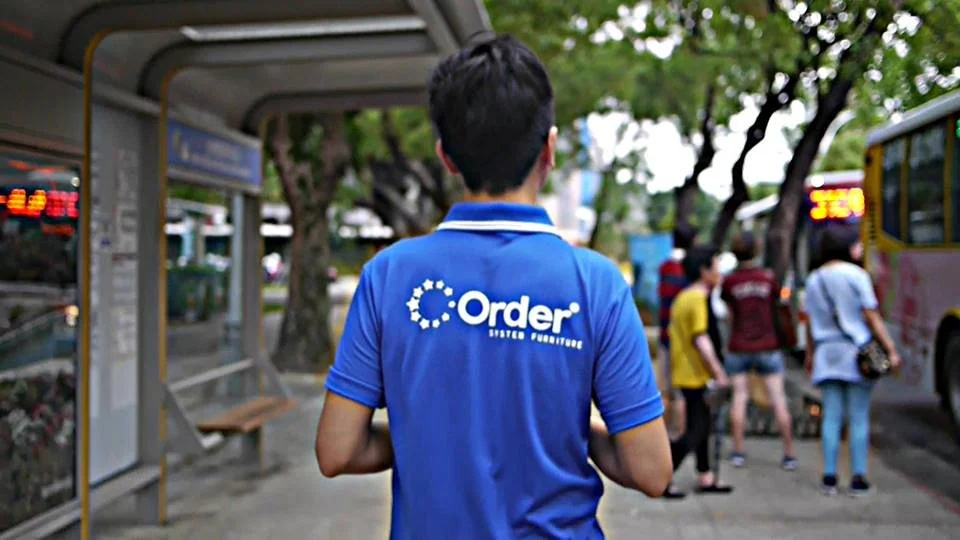
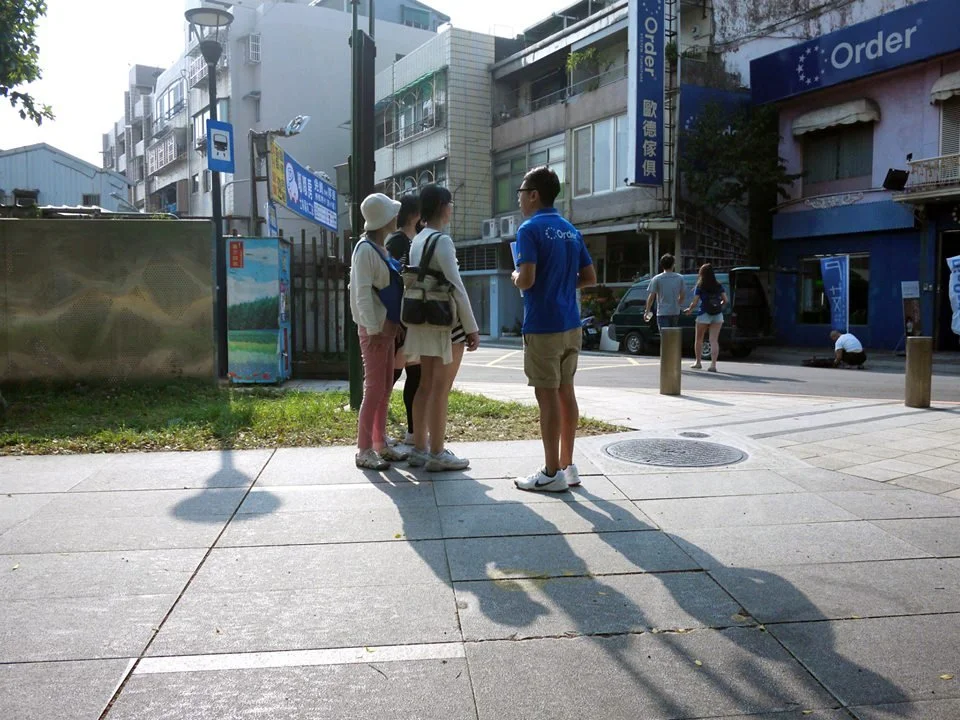
Role: Guide for DisOrder / Exhibition / in Order.
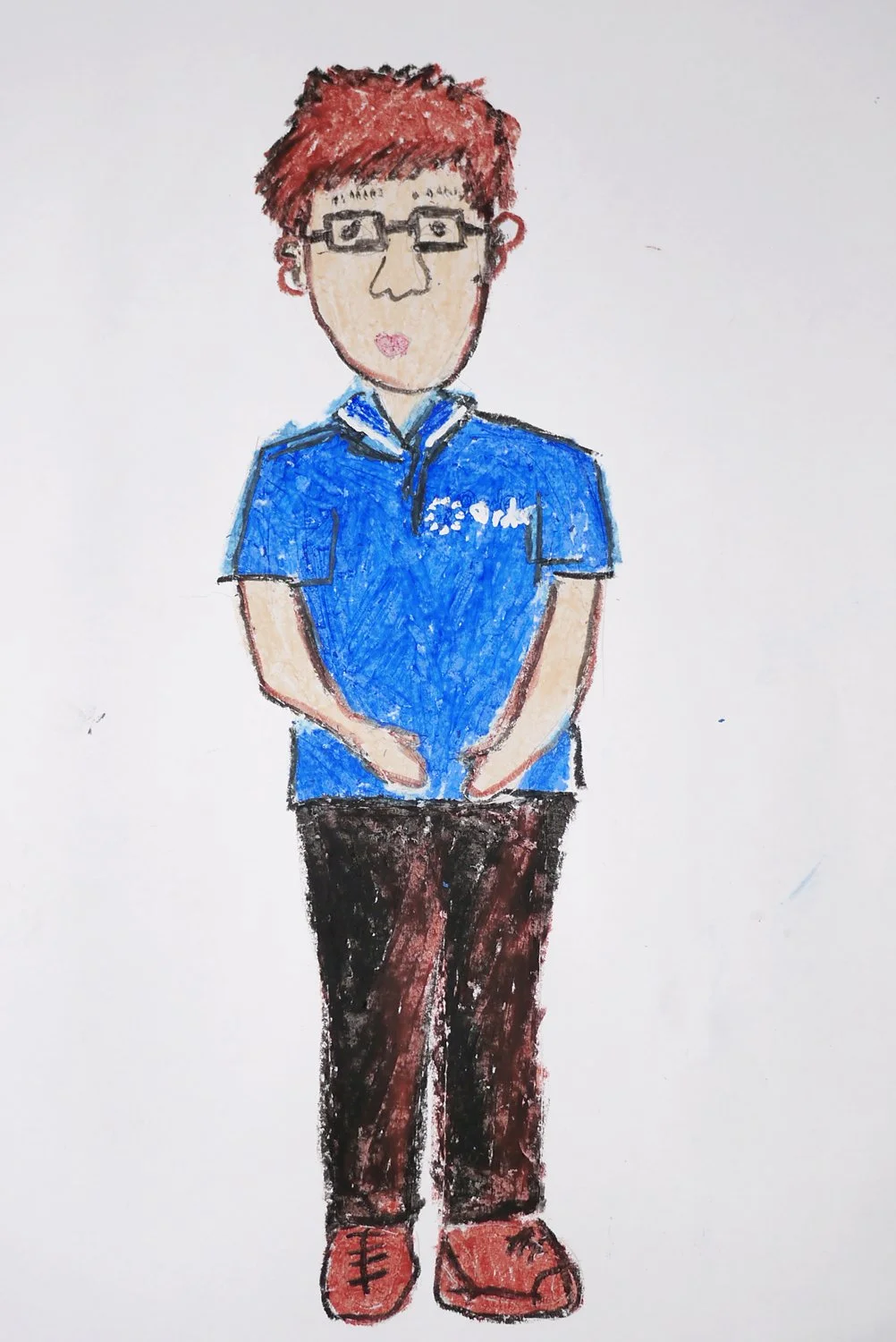
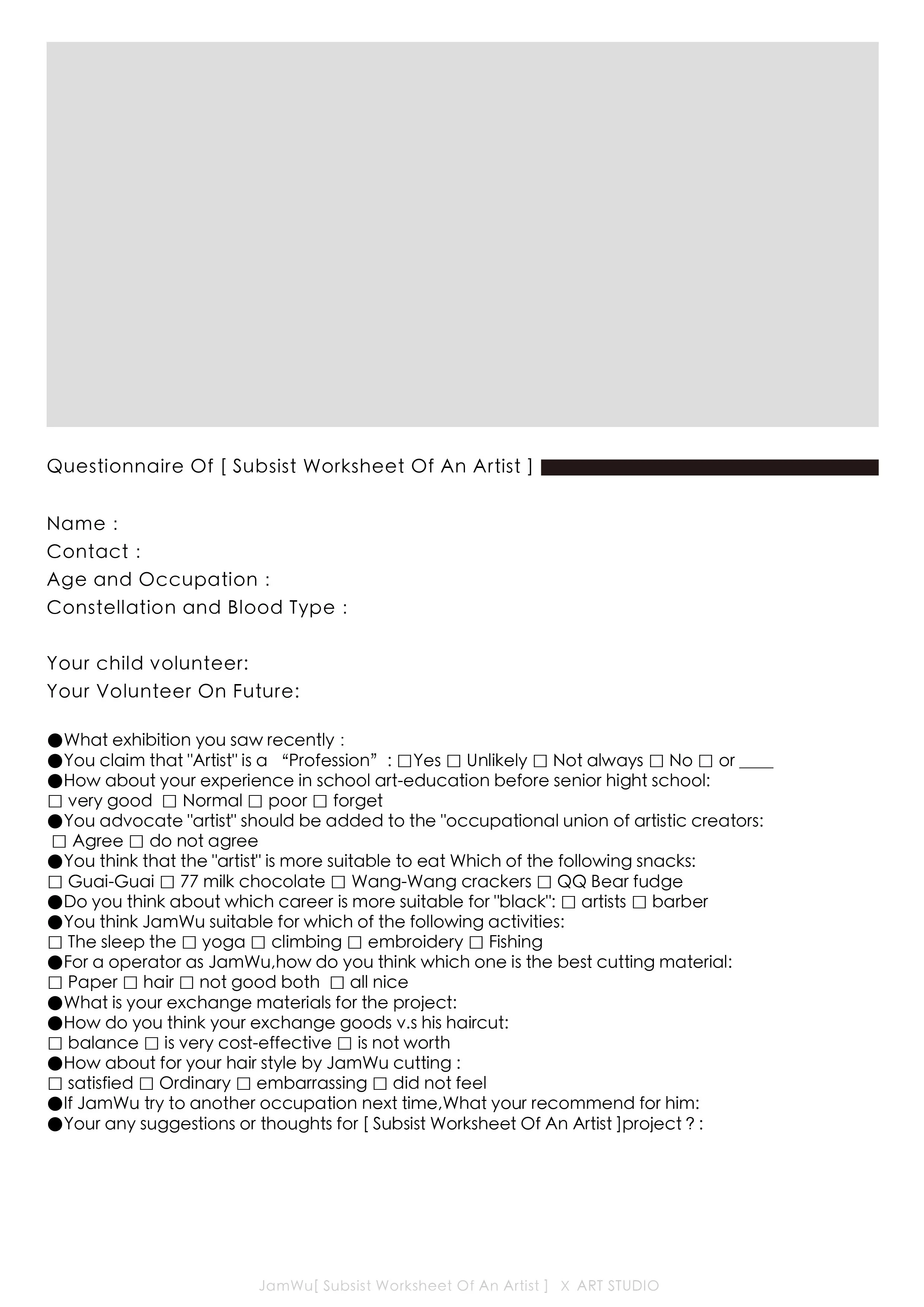
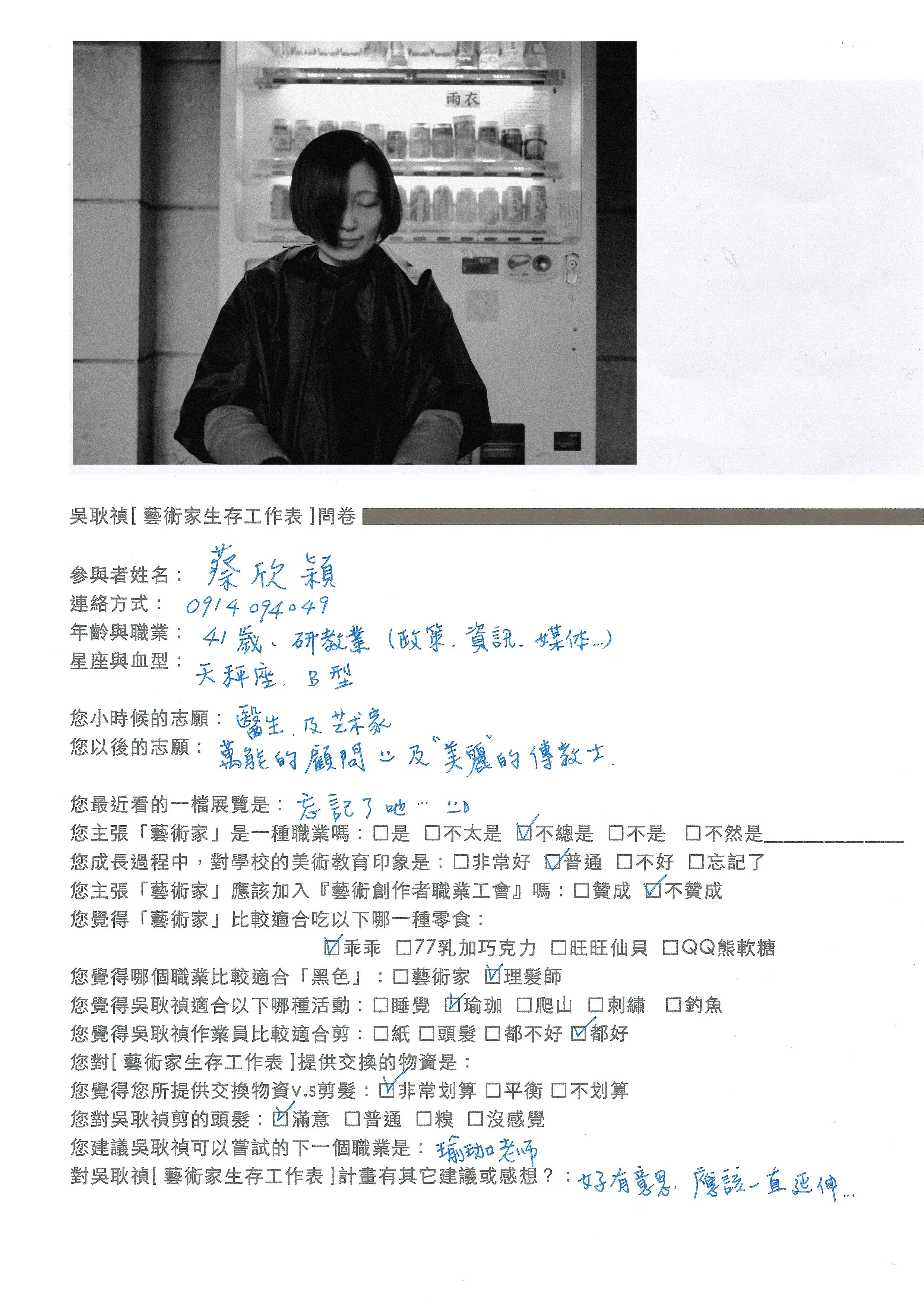
Wearing an Order-branded blue polo shirt, I approach passersby near the Order Shilin store at random, limited to those unfamiliar with the exhibition. I invite them into the Order furniture showroom, introduce the works of other participating artists in DisOrder / Exhibition / in Order (excluding my own, as I remain concealed among the exhibiting artists), and ask them to complete a brief questionnaire.
HUANG Po-Chi
Out for Order
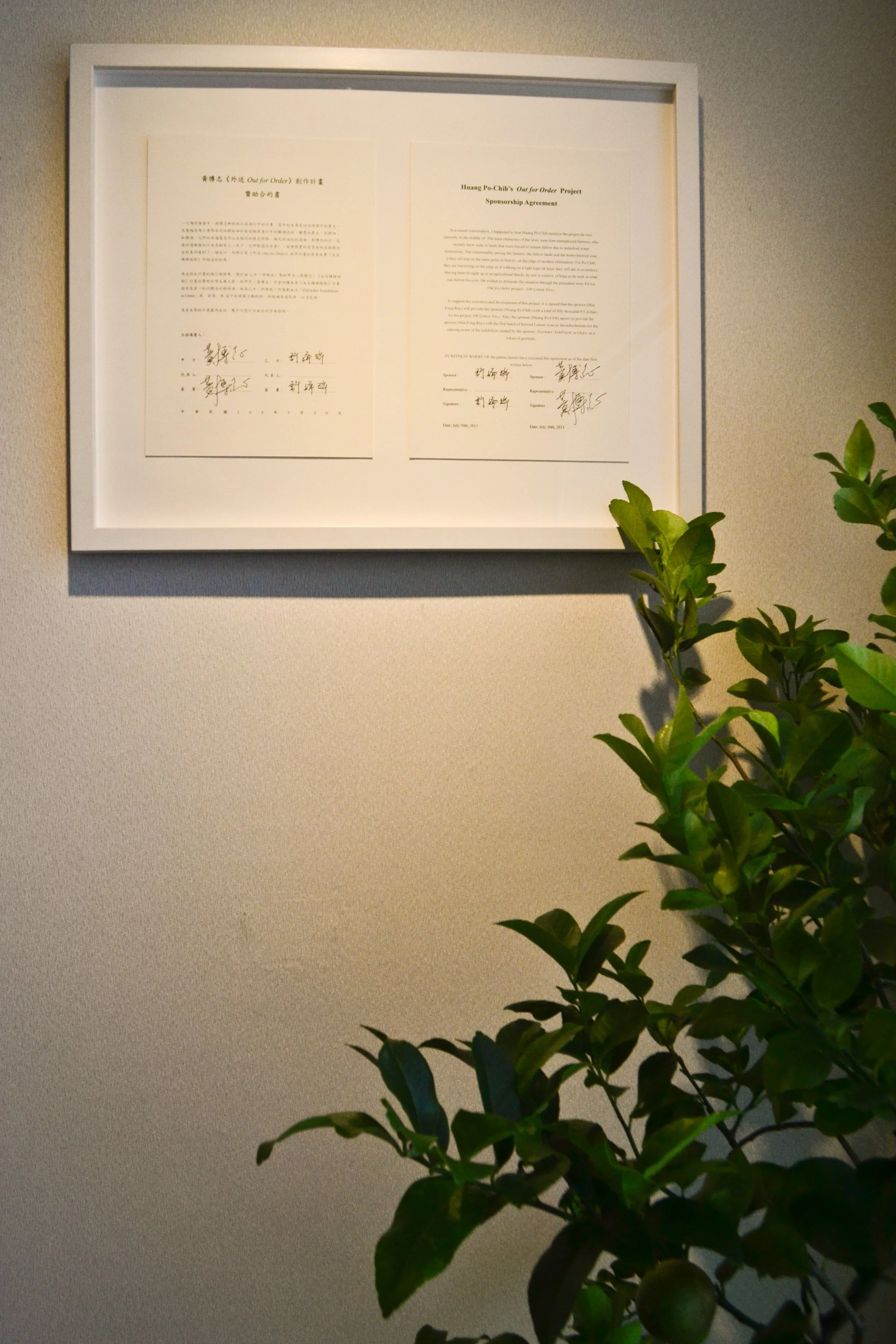
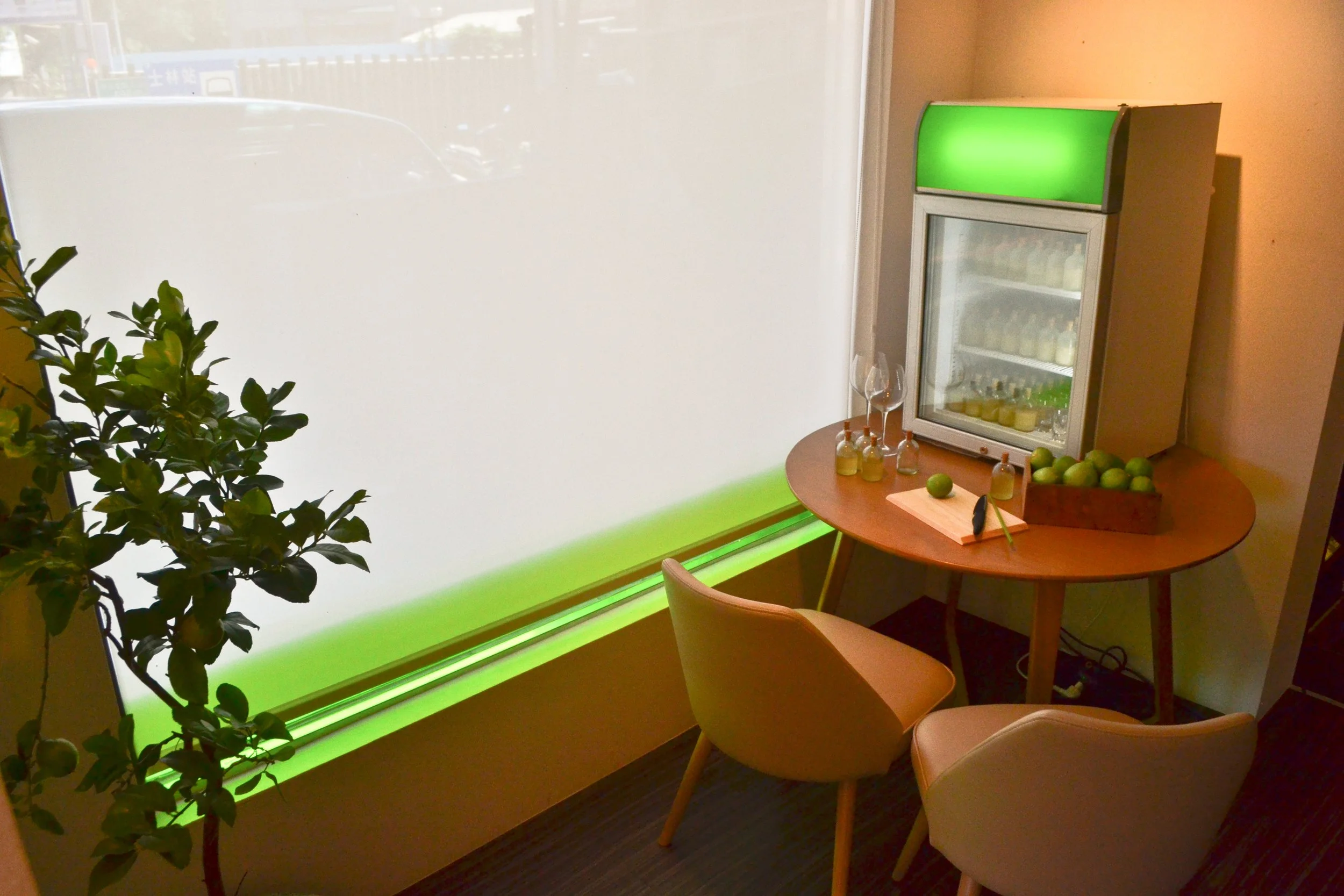
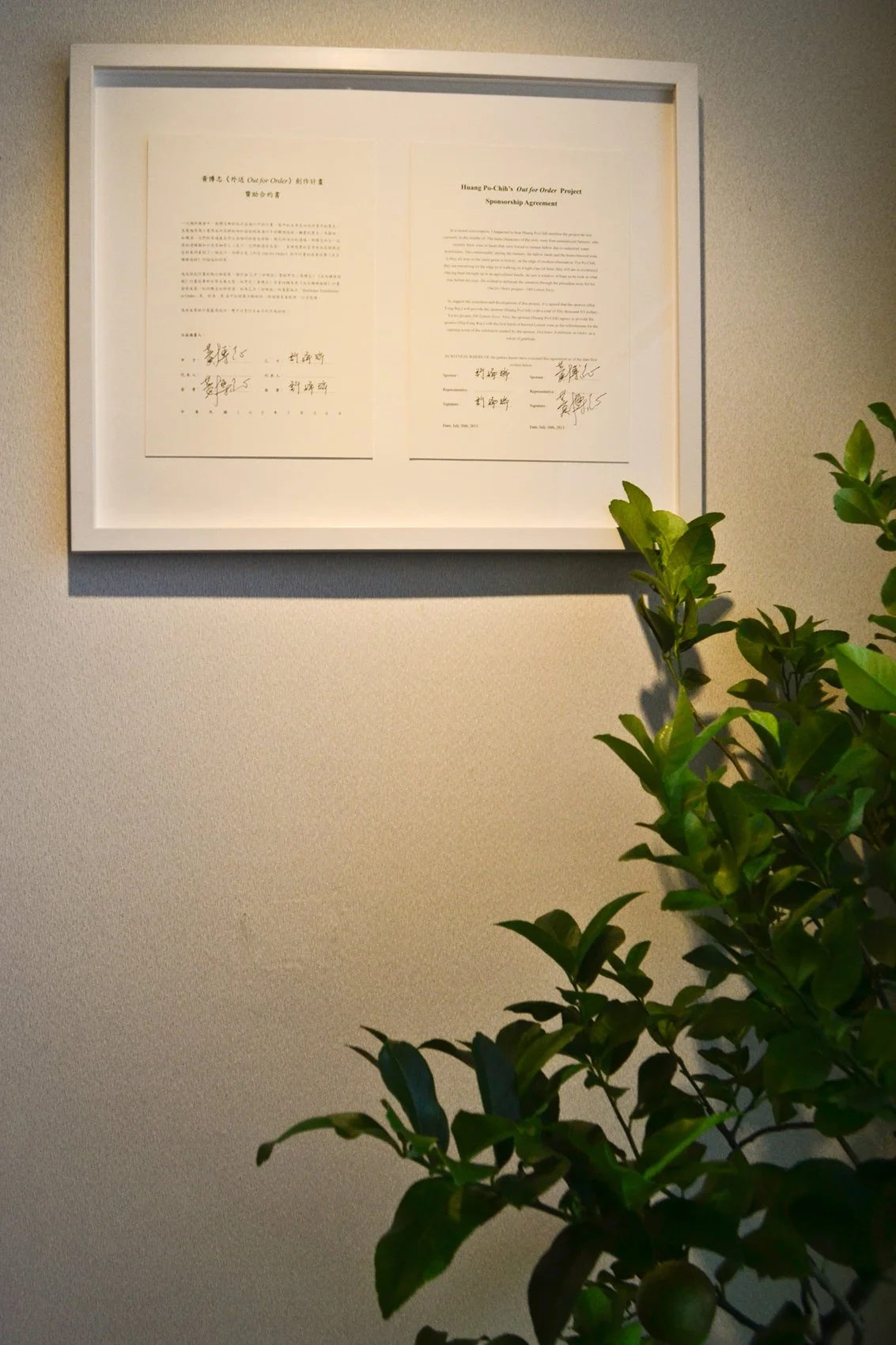
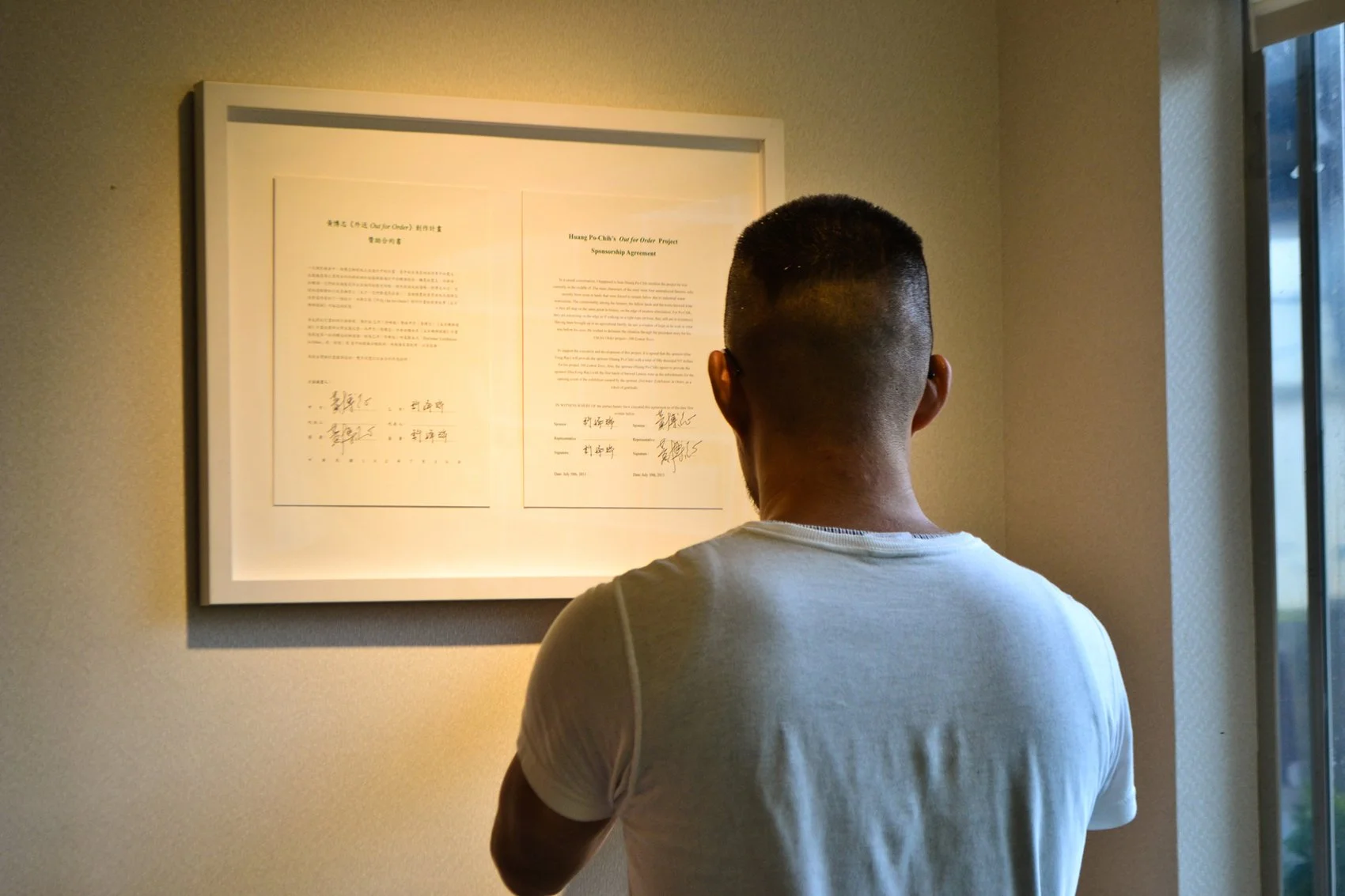
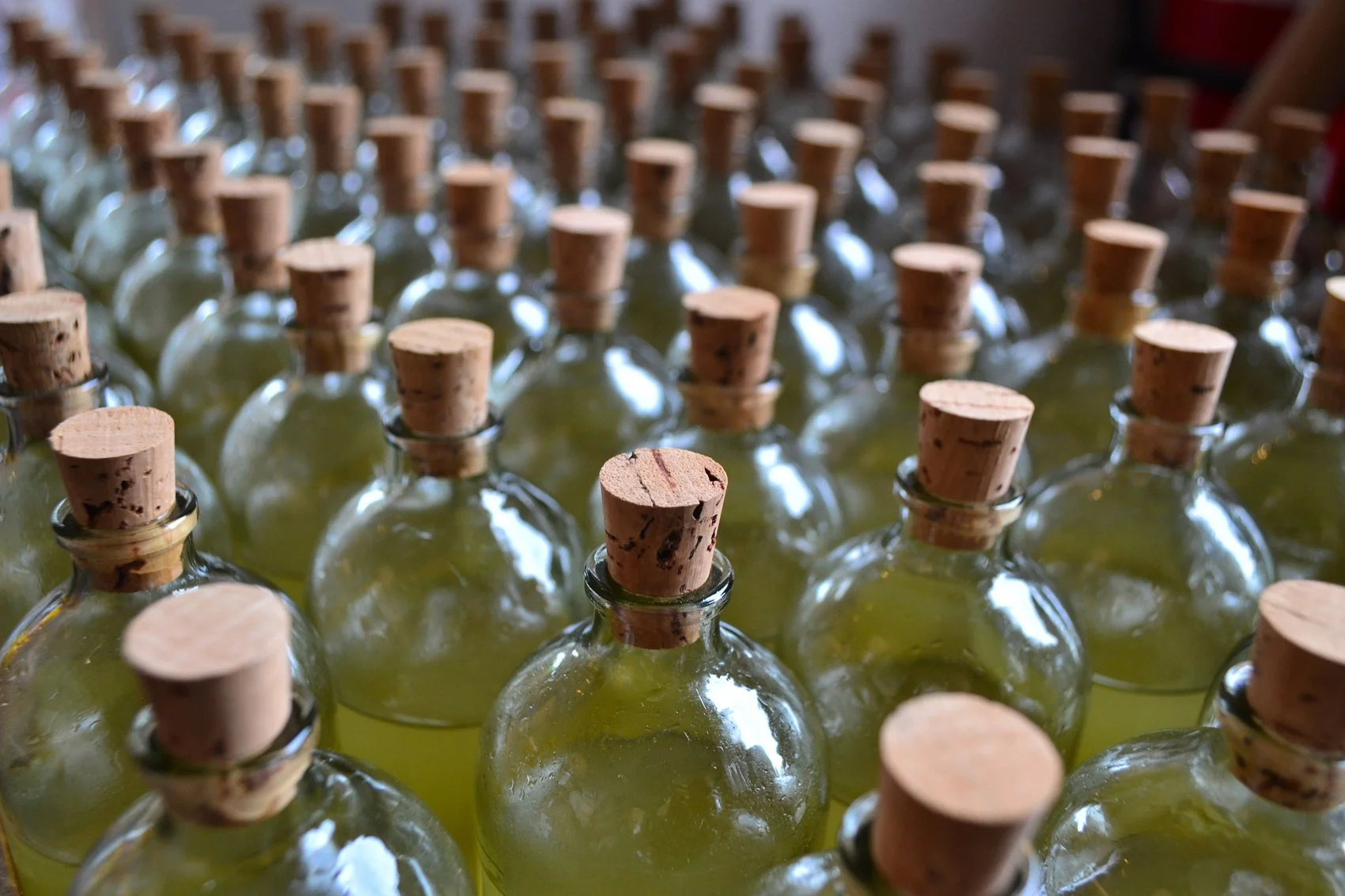
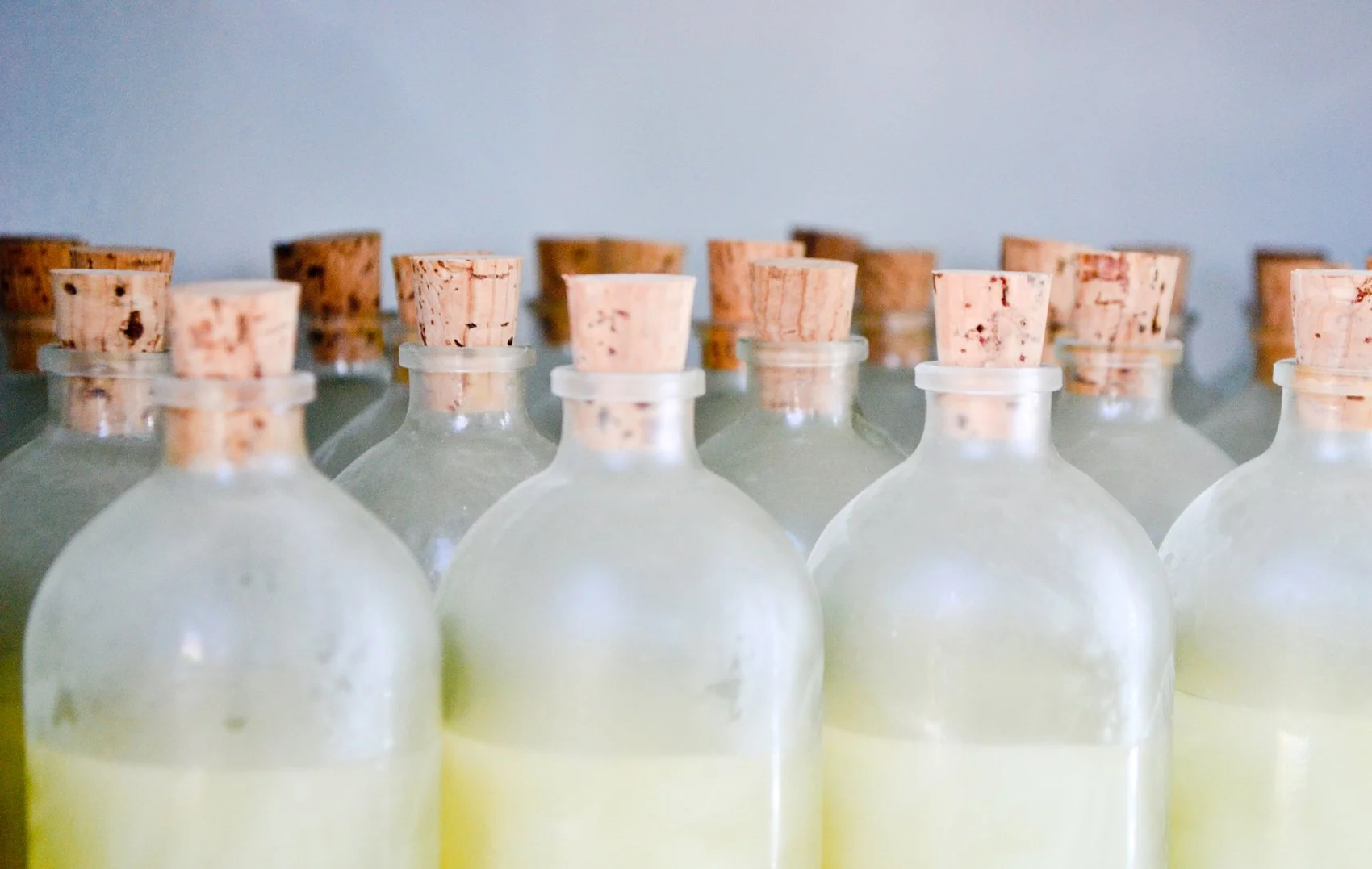
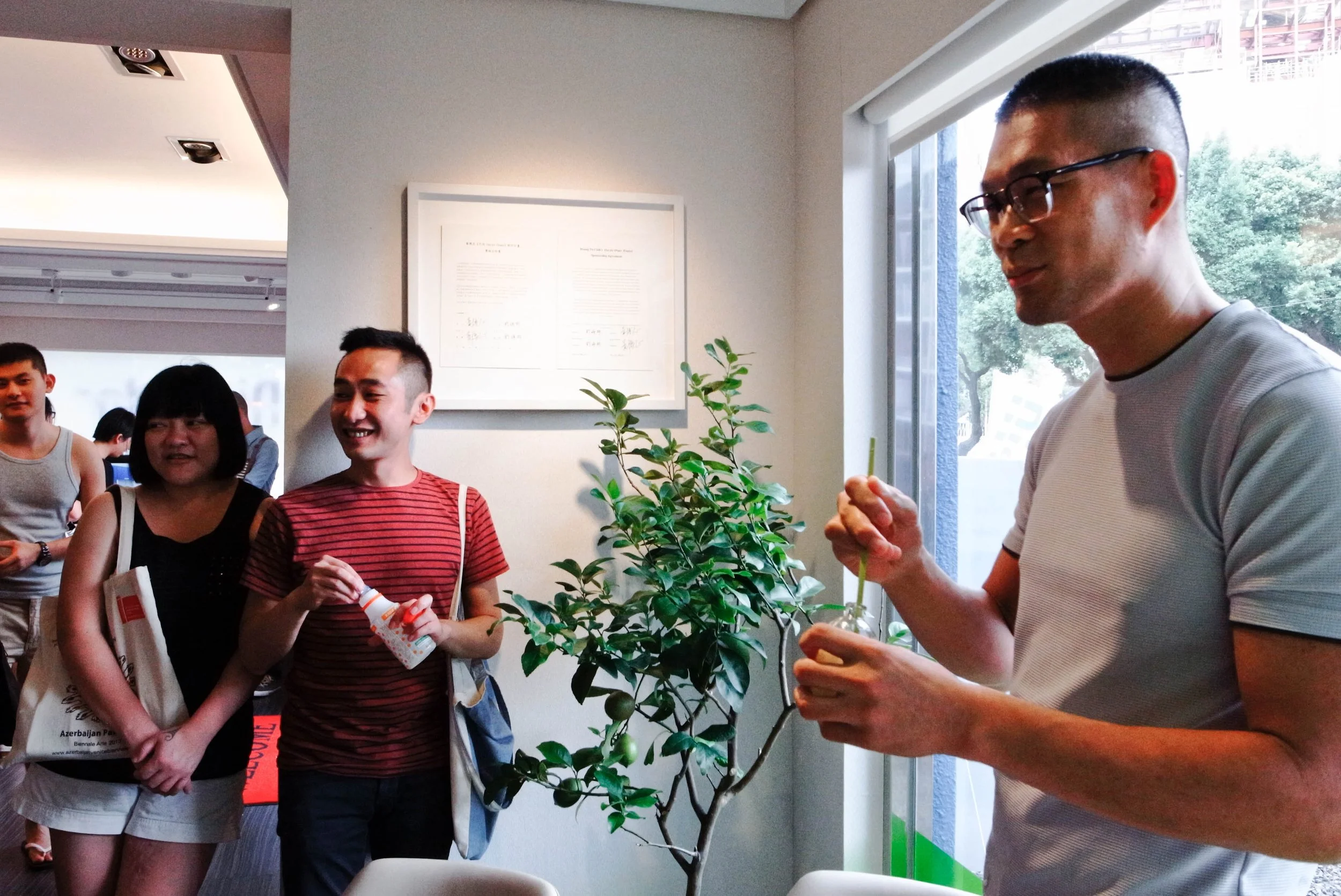
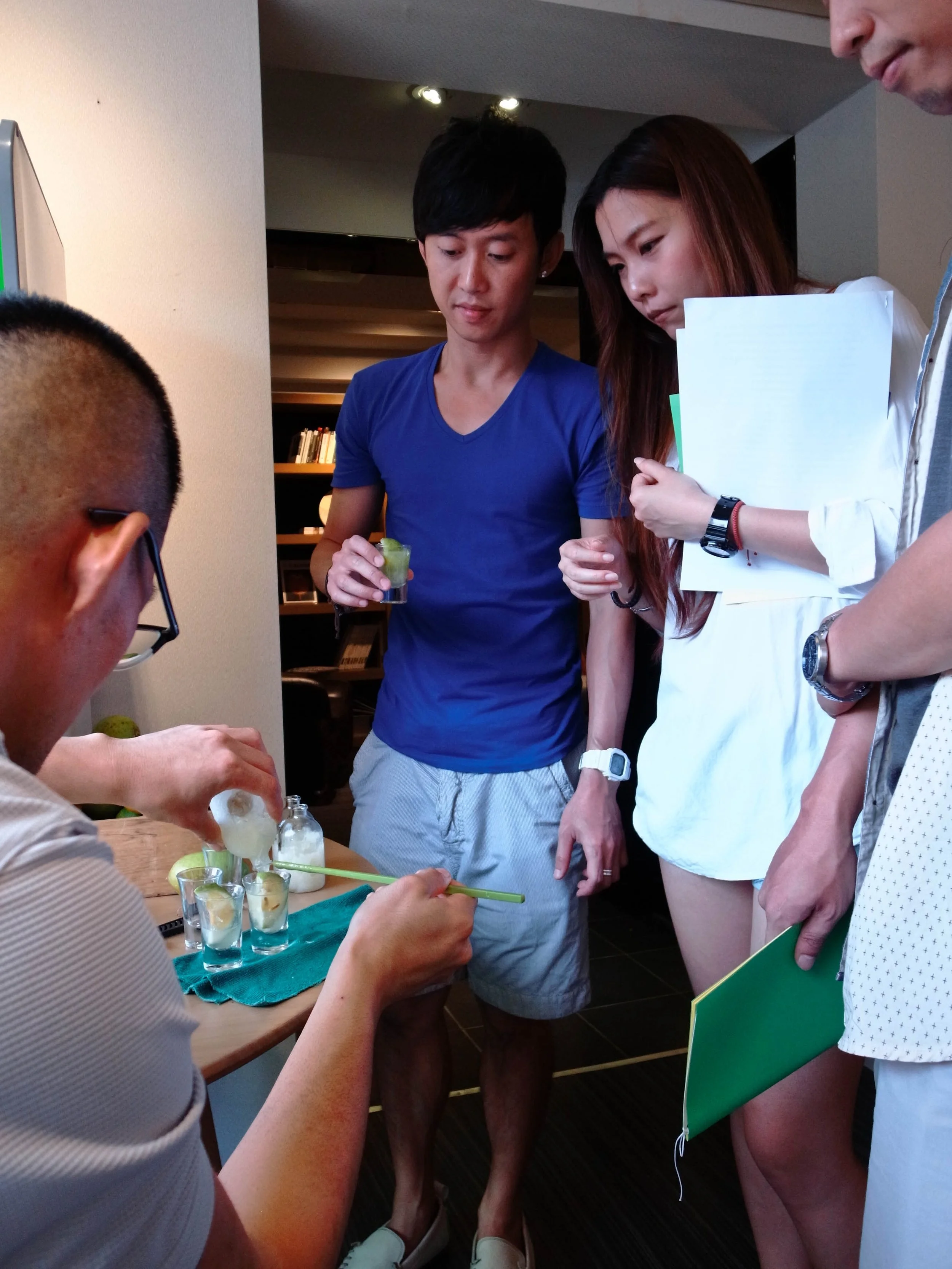
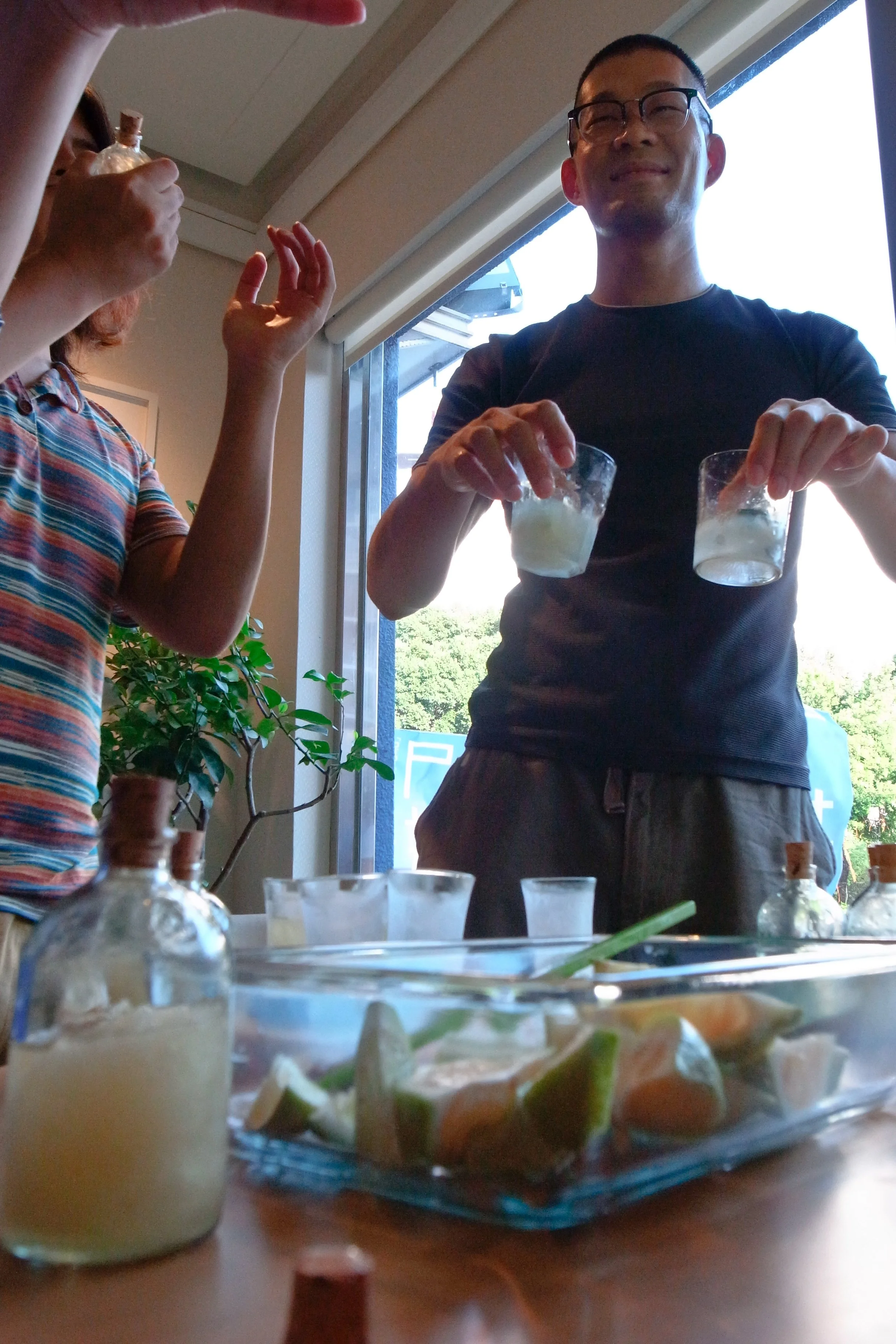
Out for Order was conceived as a gesture of gratitude to the curator for supporting Five Hundred Lemon Trees. I provide several trial-brew flavors of lemon wine from the first experimental batch of Five Hundred Lemon Trees as drinks for the opening of DisOrder / Exhibition / in Order · Order Exhibition, to be served to guests on site in appreciation.
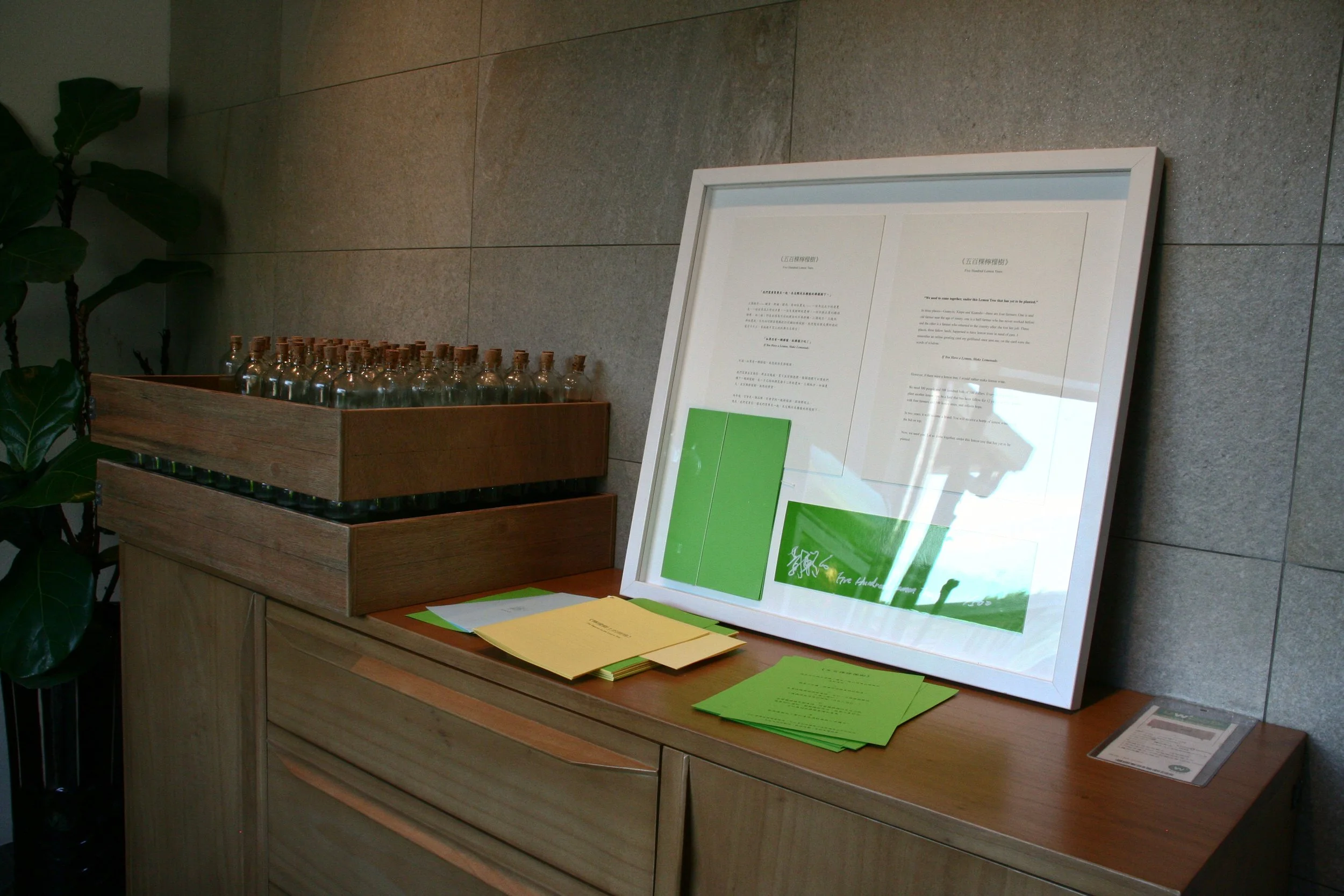
Five Hundred Lemon Trees
“We need to gather together, beneath this lemon tree that has yet to be planted.”
Three places: Guanyin, Xinpu, Guanxi.
Four farmers: an elderly farmer nearing ninety, a semi-farmer who has never held a formal job, a female farmer who returned home after losing her job, and a winemaker who never quite fit in. Each stopped farming for different reasons. In these three places, on three parcels of fallow land, there were neglected lemon trees left uncared for. I was reminded of an e-card my girlfriend sent me, bearing a handwritten, familiar motto:
If you have a lemon, make lemonade.
But if I have a lemon, I want to make lemon wine.
We need five hundred of you. With five hundred dollars, you purchase five hundred labels. Each label allows us to plant one lemon tree, on farmland left fallow for twelve years. Three places, four farmers, five hundred lemon trees, and limitless hope. Two years later, it will become a brand. You will receive a bottle of lemon wine and affix your label.
Right now, we need you. Let us gather together, beneath this lemon tree that has yet to be planted.
CHANG En-Man
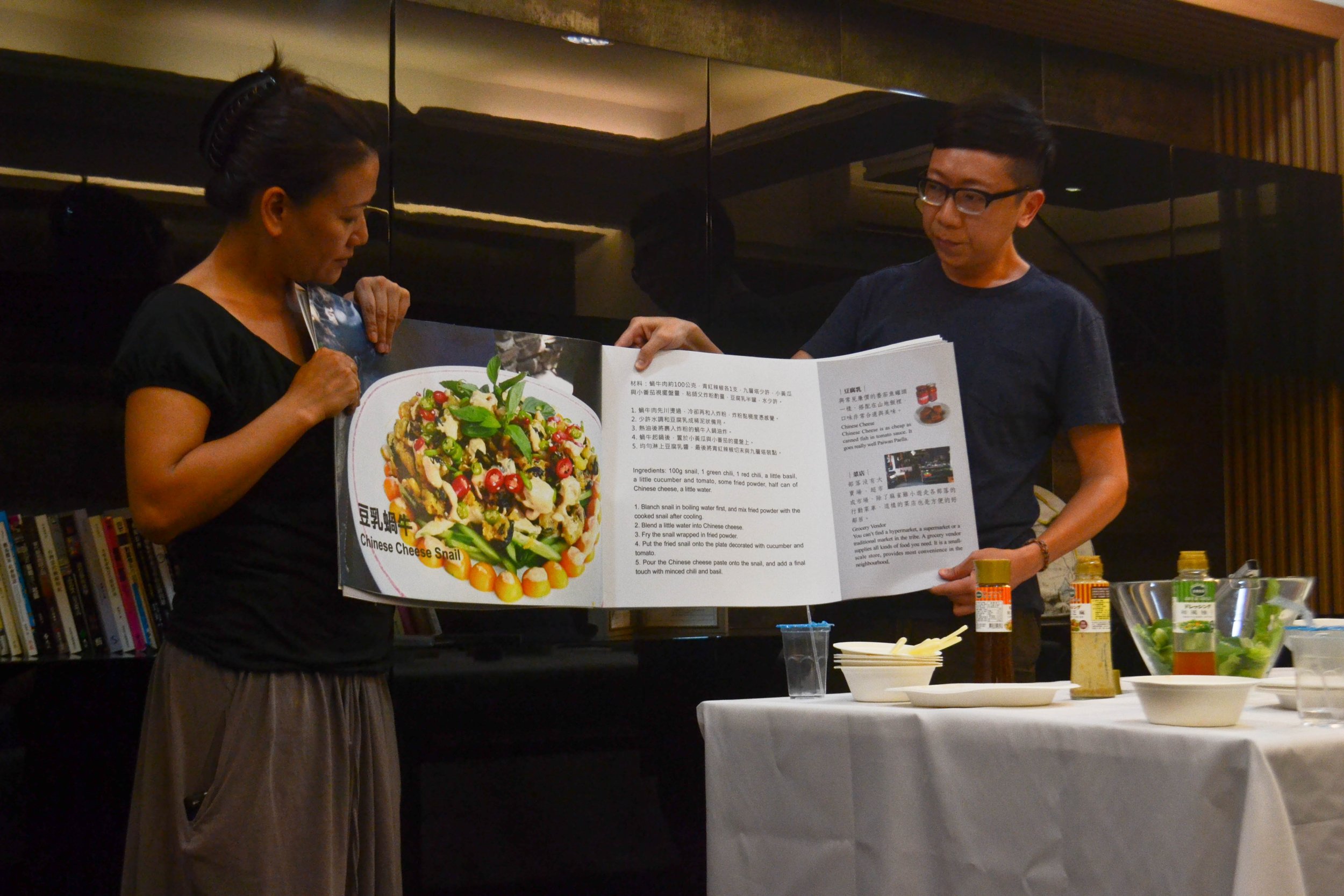
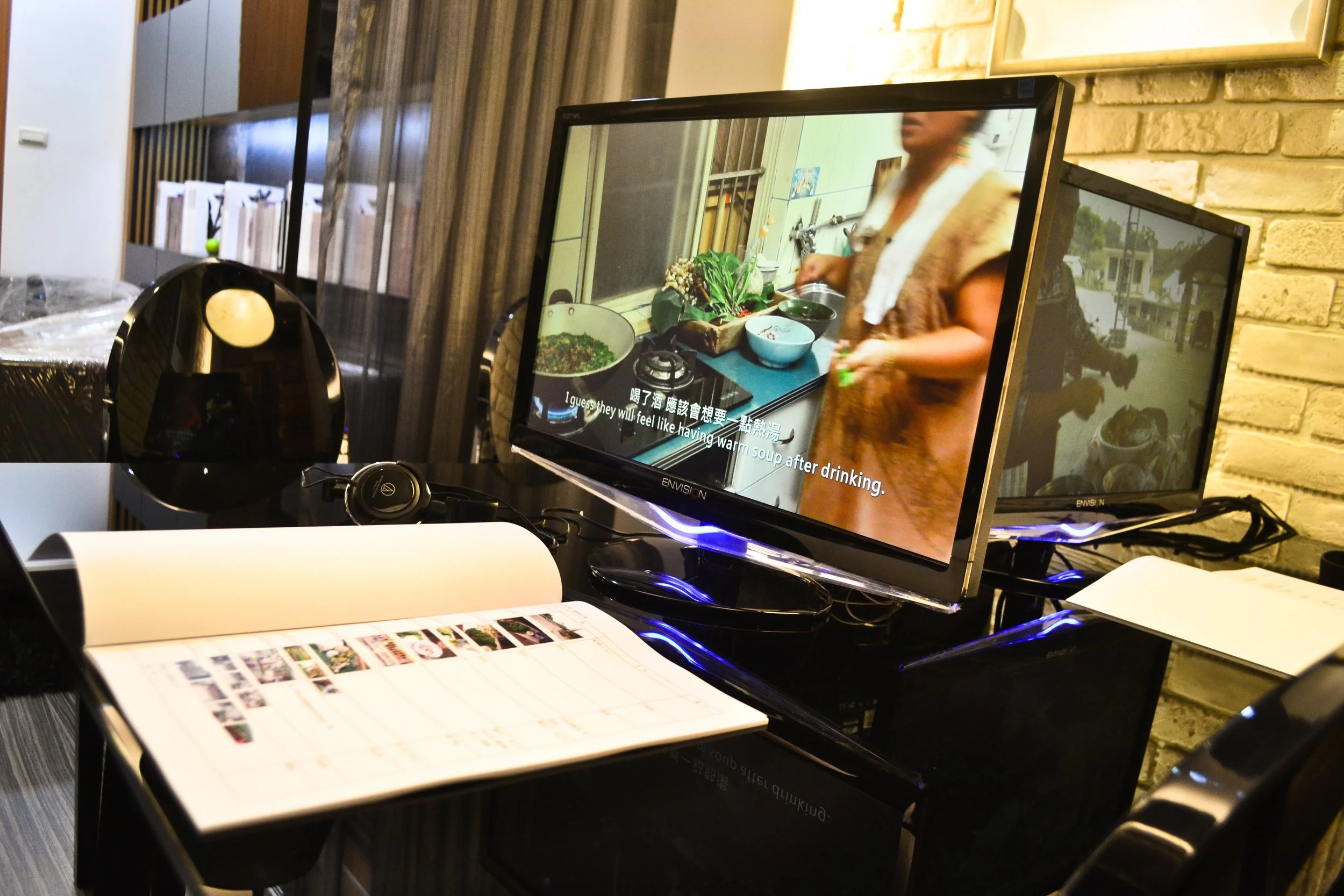
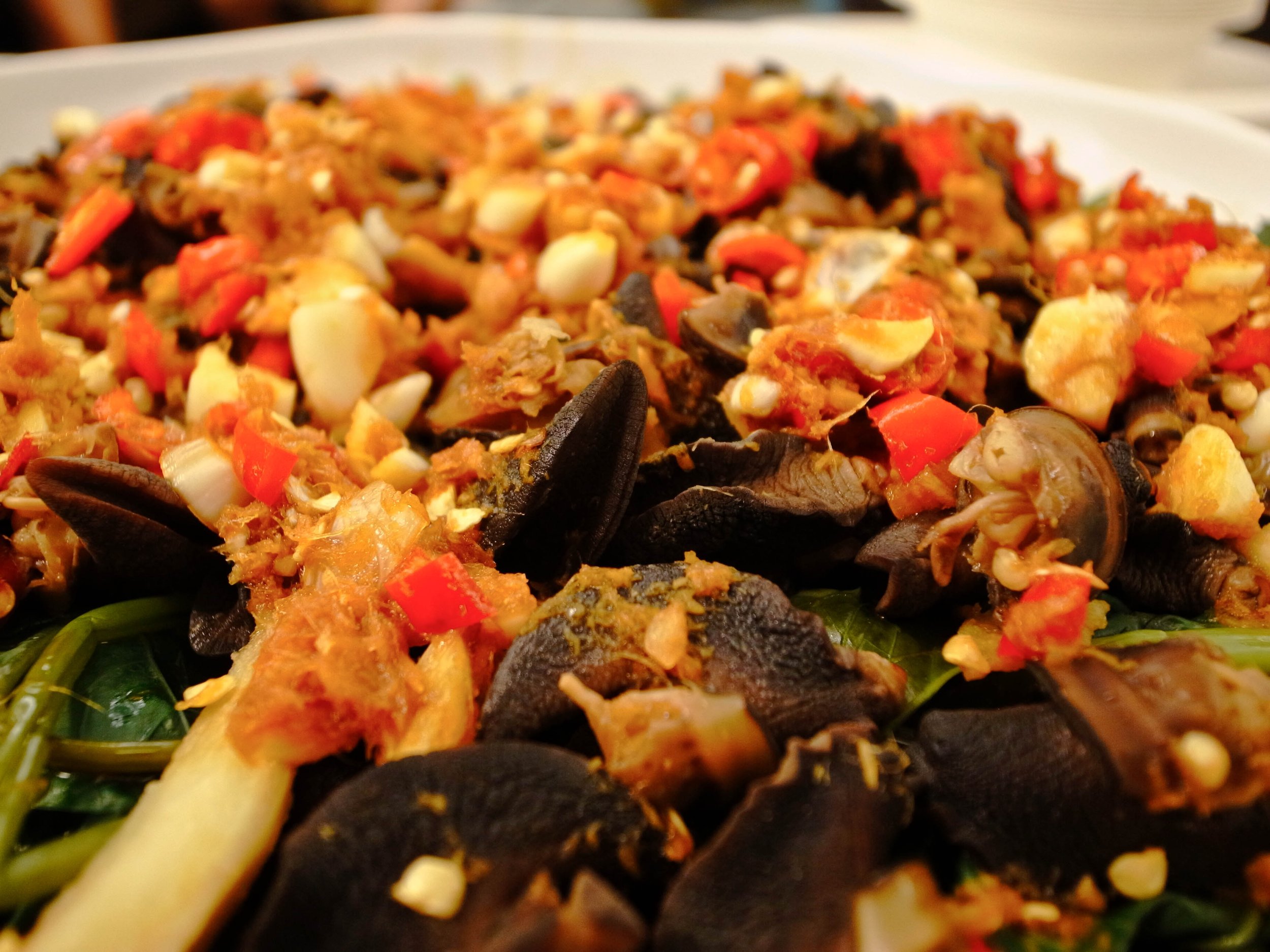
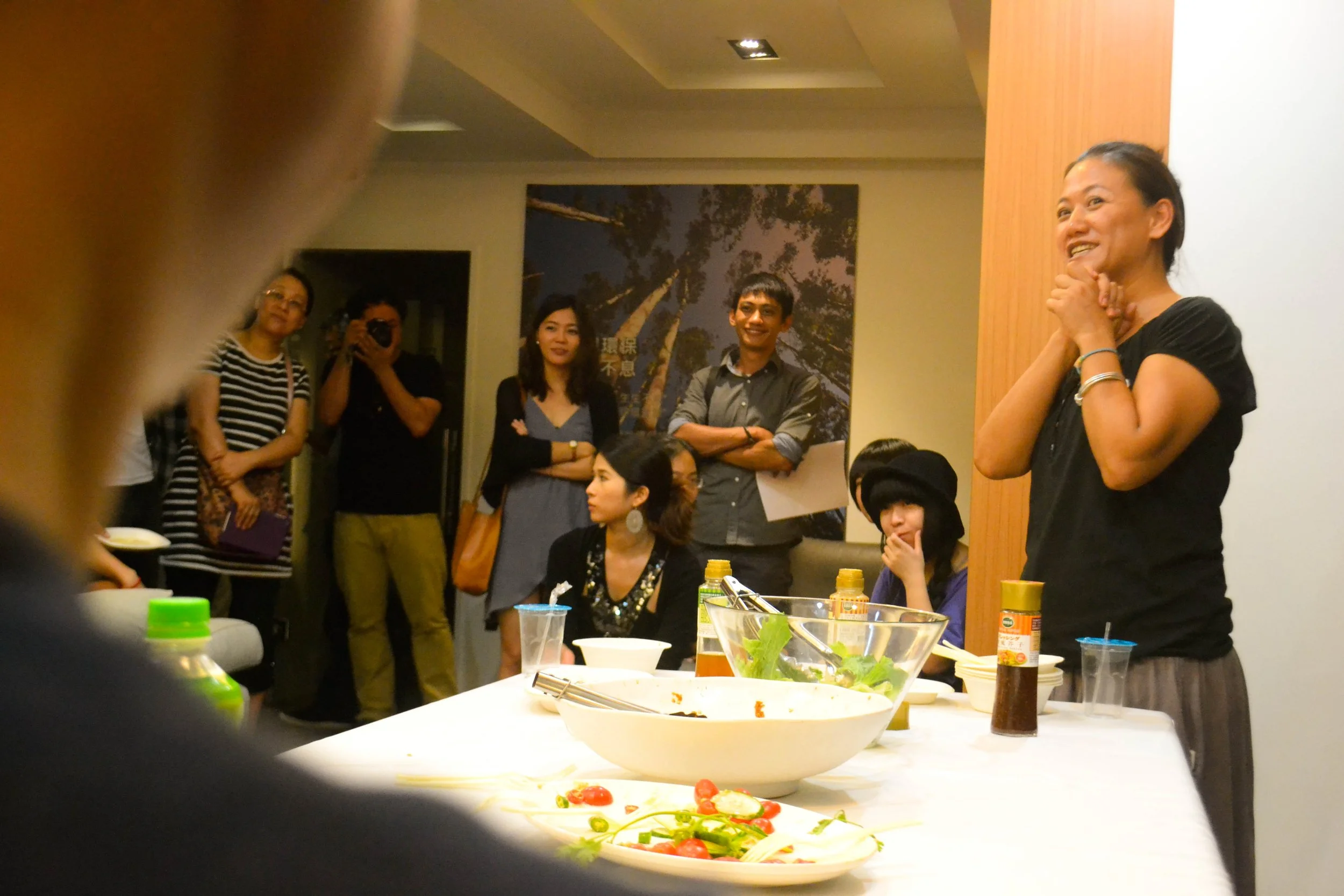
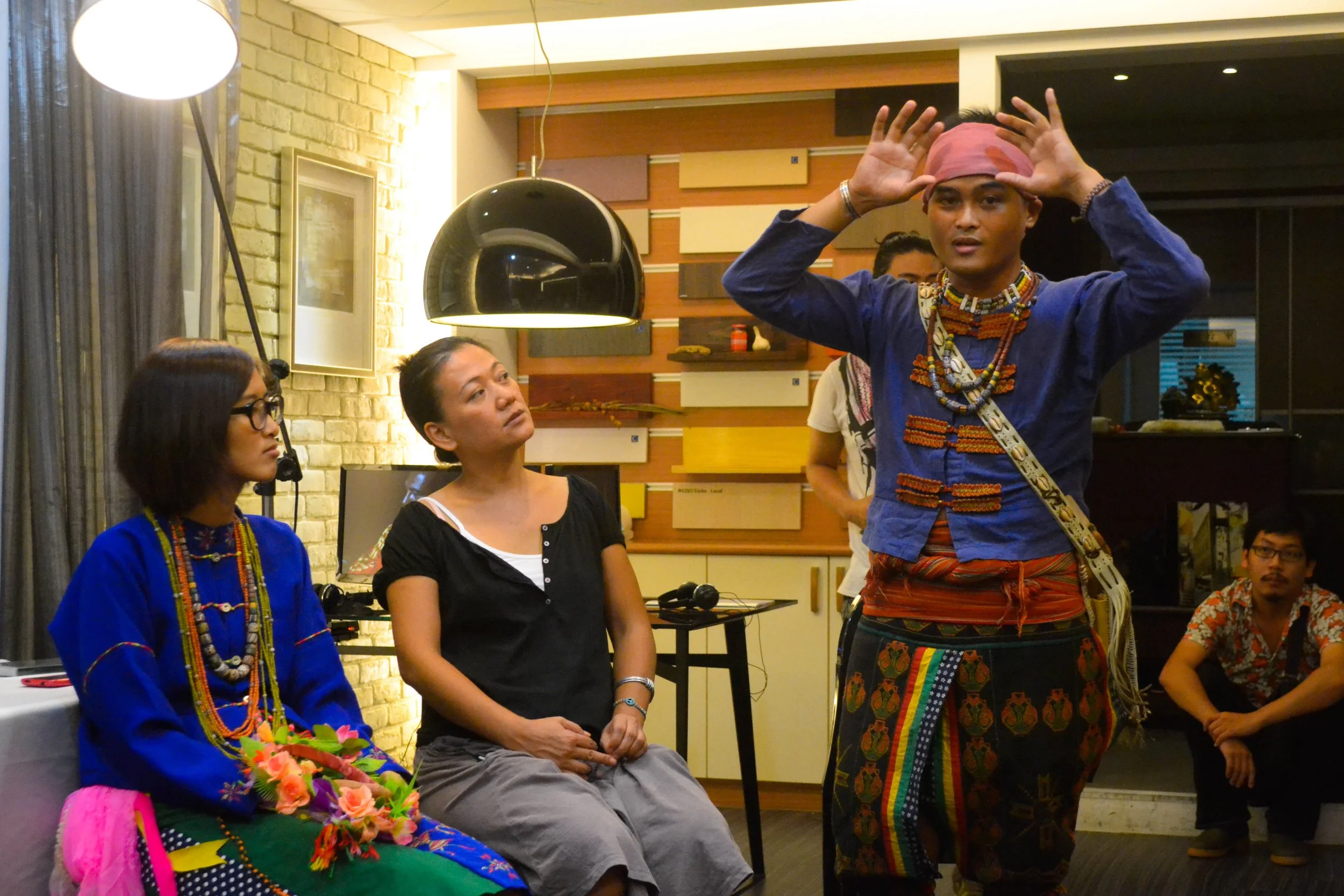
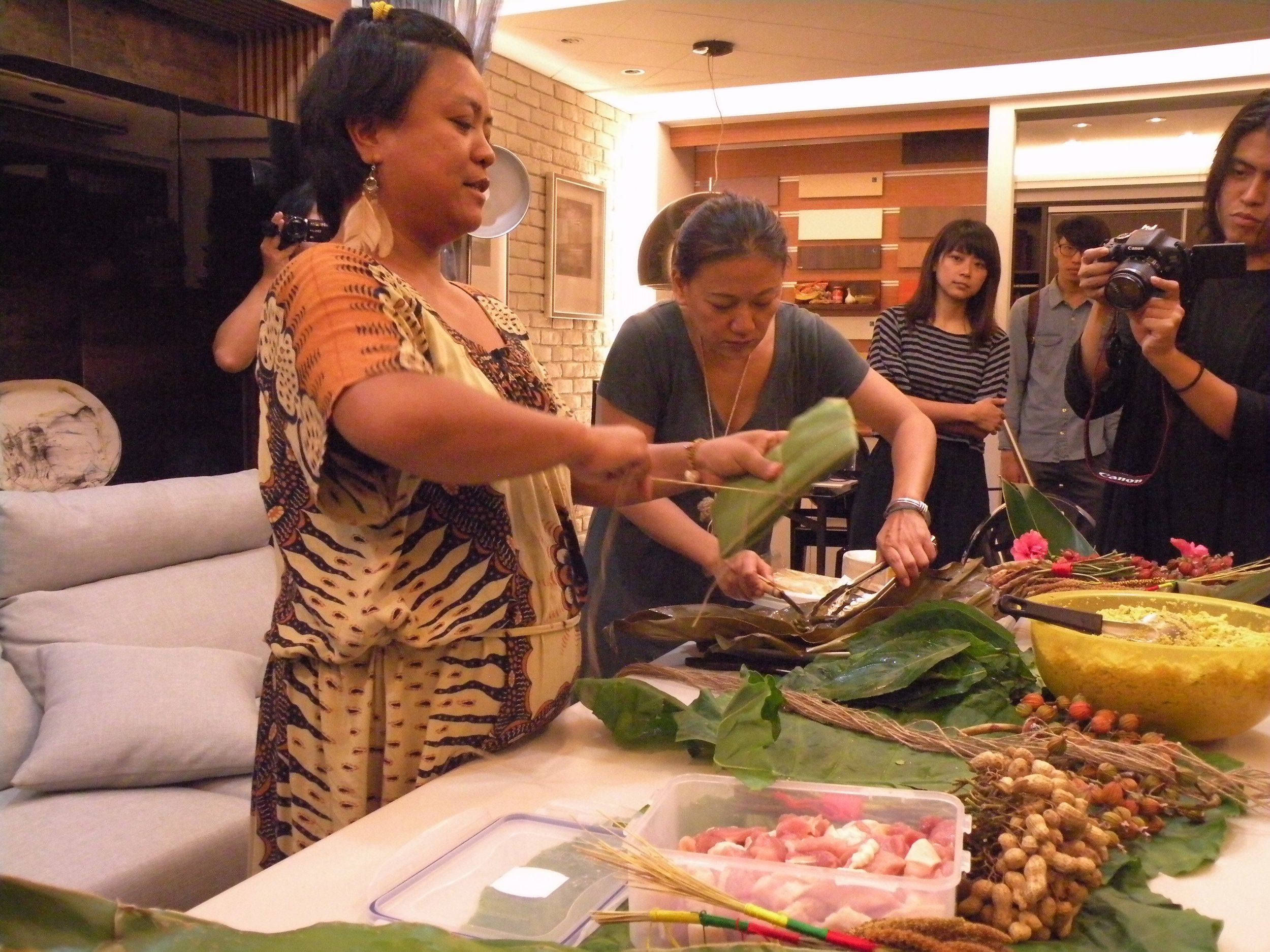
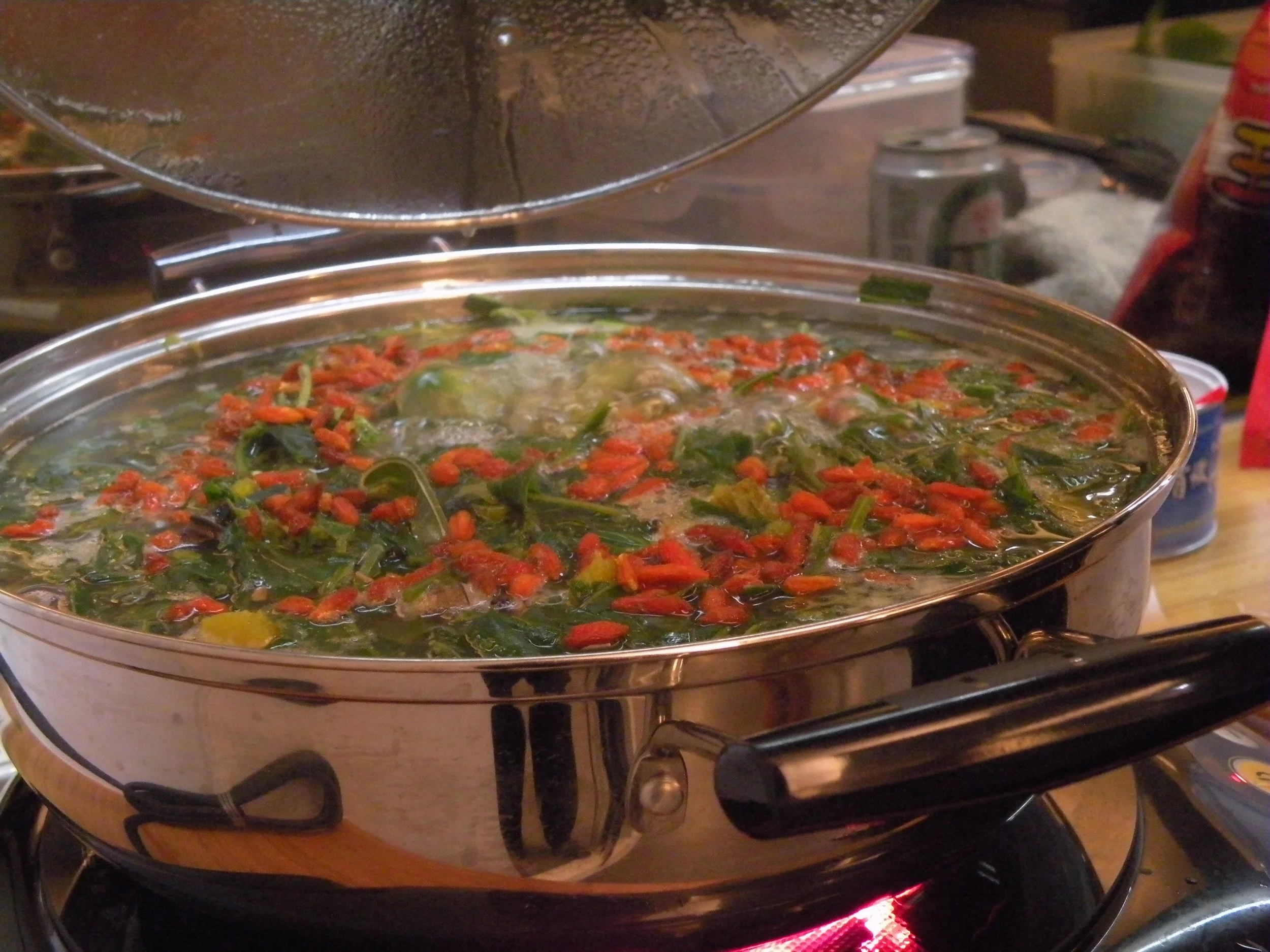
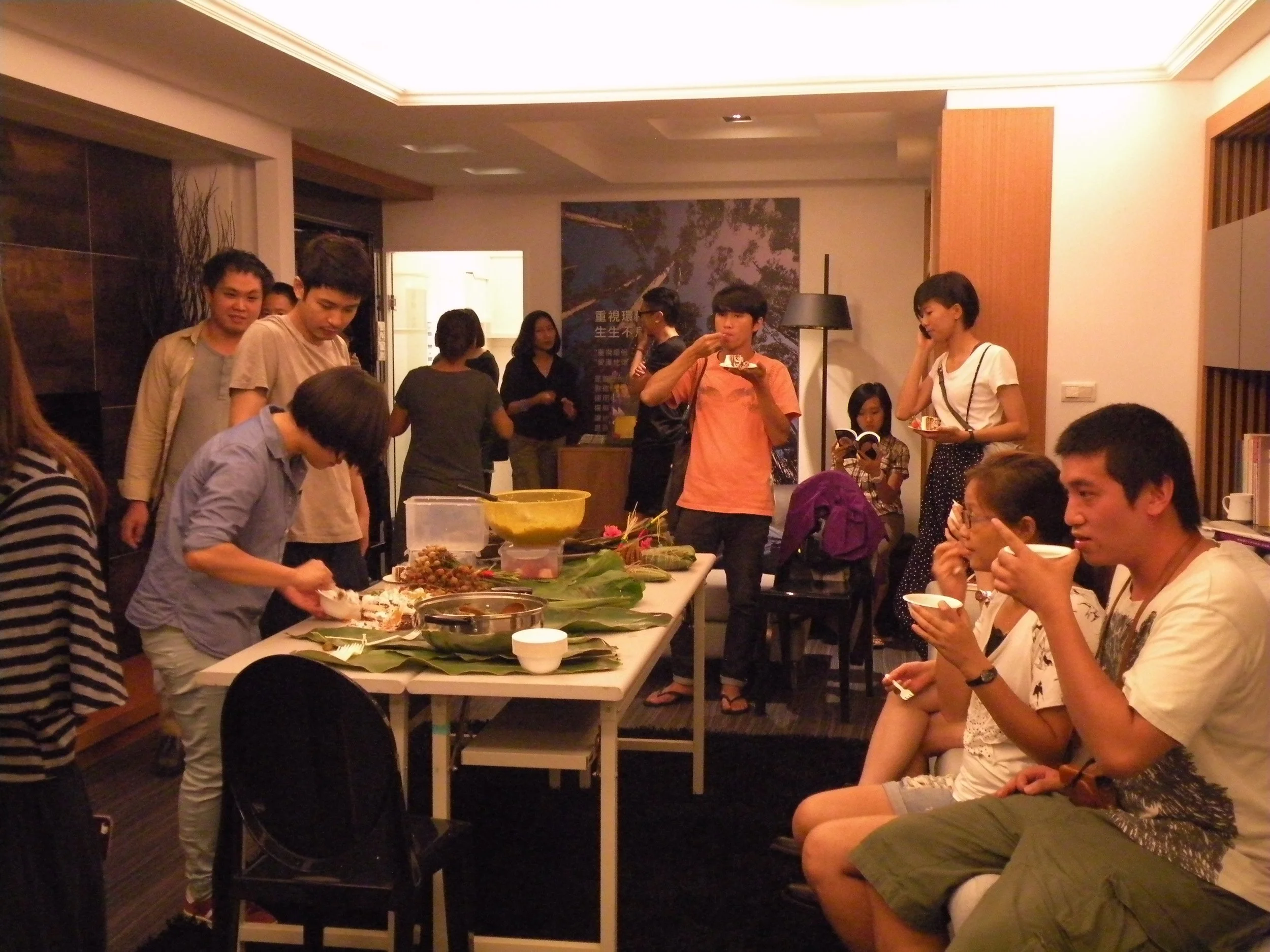
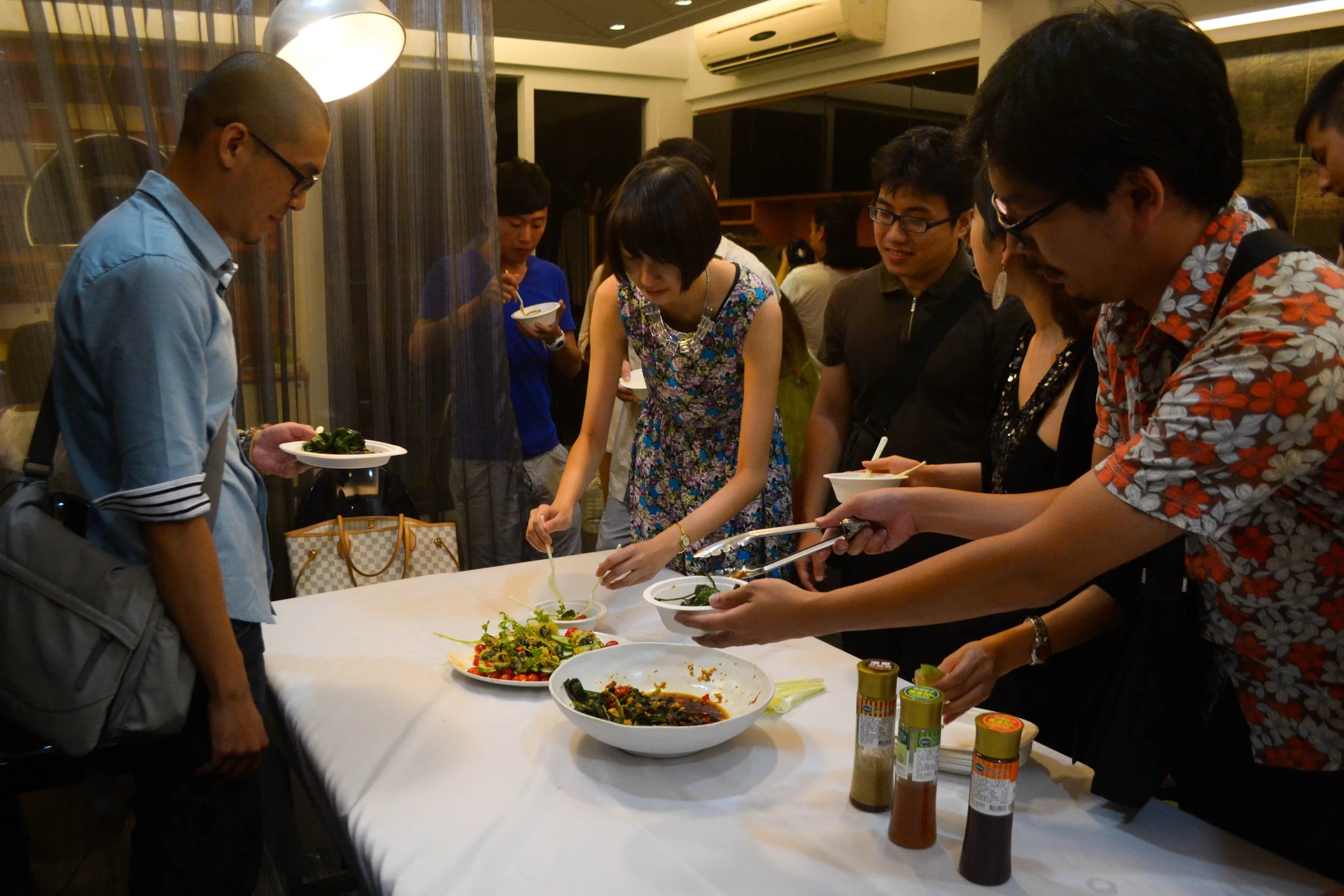
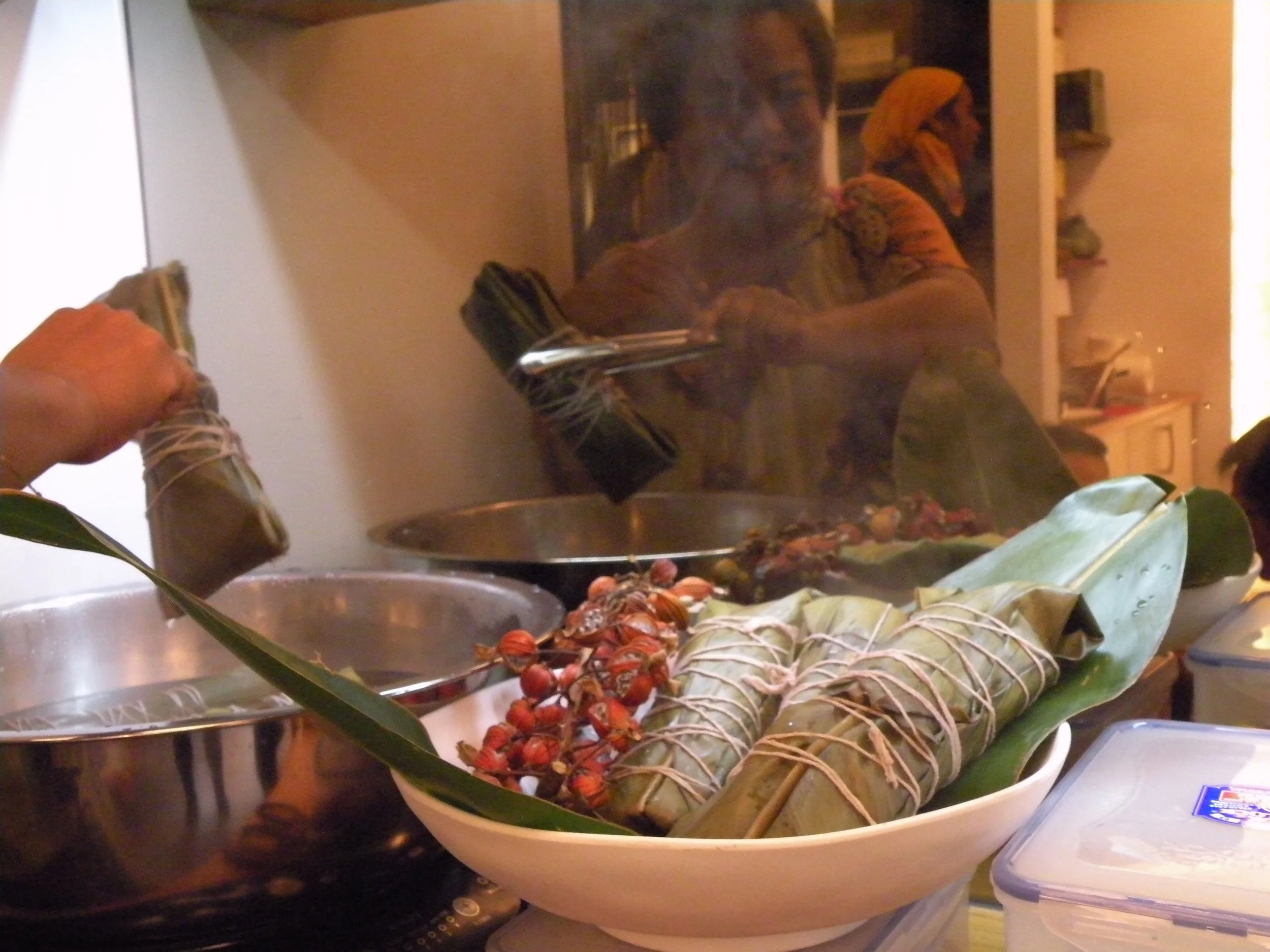
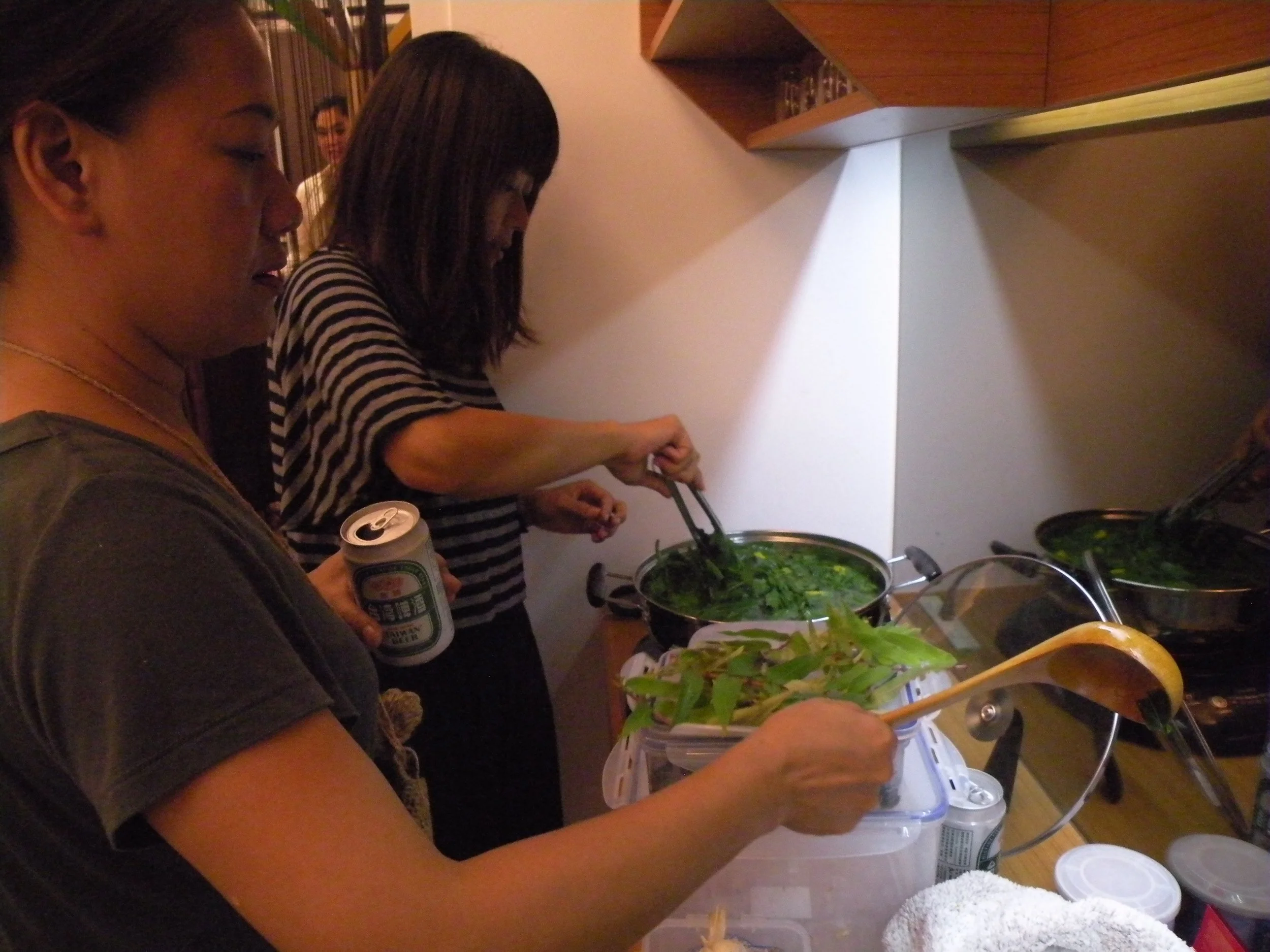
Snail Dishes Interview Program – Highway No. 9
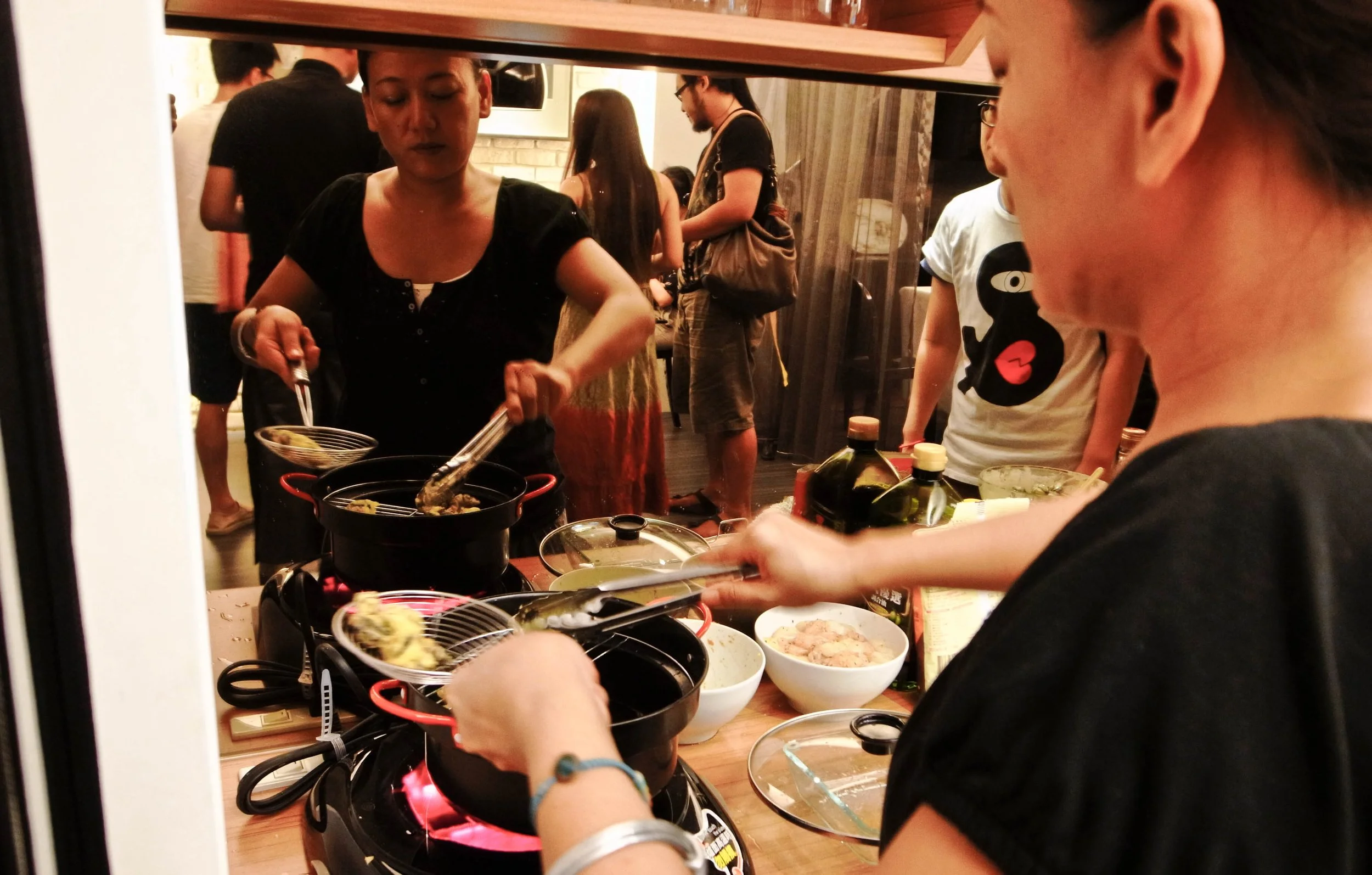
Moving from the city into the countryside, the body becomes a probing cursor tracing a path. This project focuses on the southern stretch of Taiwan’s east coast along Highway No. 9. Along this route, I attempt to trace food-chain-like connections, using cooking and documentation to outline the cultural landscape and its social conditions.
Aside from the railway, this section of Highway No. 9 is the only road home. It is also my primary route for returning to explore this island’s land and cultural identity, imagining “home” like a wanderer in reverse. Snail dishes function as a symbol of regional culture. They sustain life as food, but more importantly, they operate as a form of “language” within local culture. Once they disappear, regional and Indigenous cultures face crisis and decline. In this culinary interview project, I invite members of local tribes to demonstrate snail dishes, hoping through interviews and conversations to introduce audiences to different cultural flavors, and to cook a viscous relationship with life at society’s shared table.
This journey has only just begun. Starting from tasting food, it uses direct sensory experience to touch those inexpressible or unspeakable abstractions within us, seeking questions that many may have forgotten, and that we carefully retrieve and gently ask. It is also a slow and silent revolution.
CHOU Yu-Cheng
Art Bank – A Solution of the Ministry of Culture
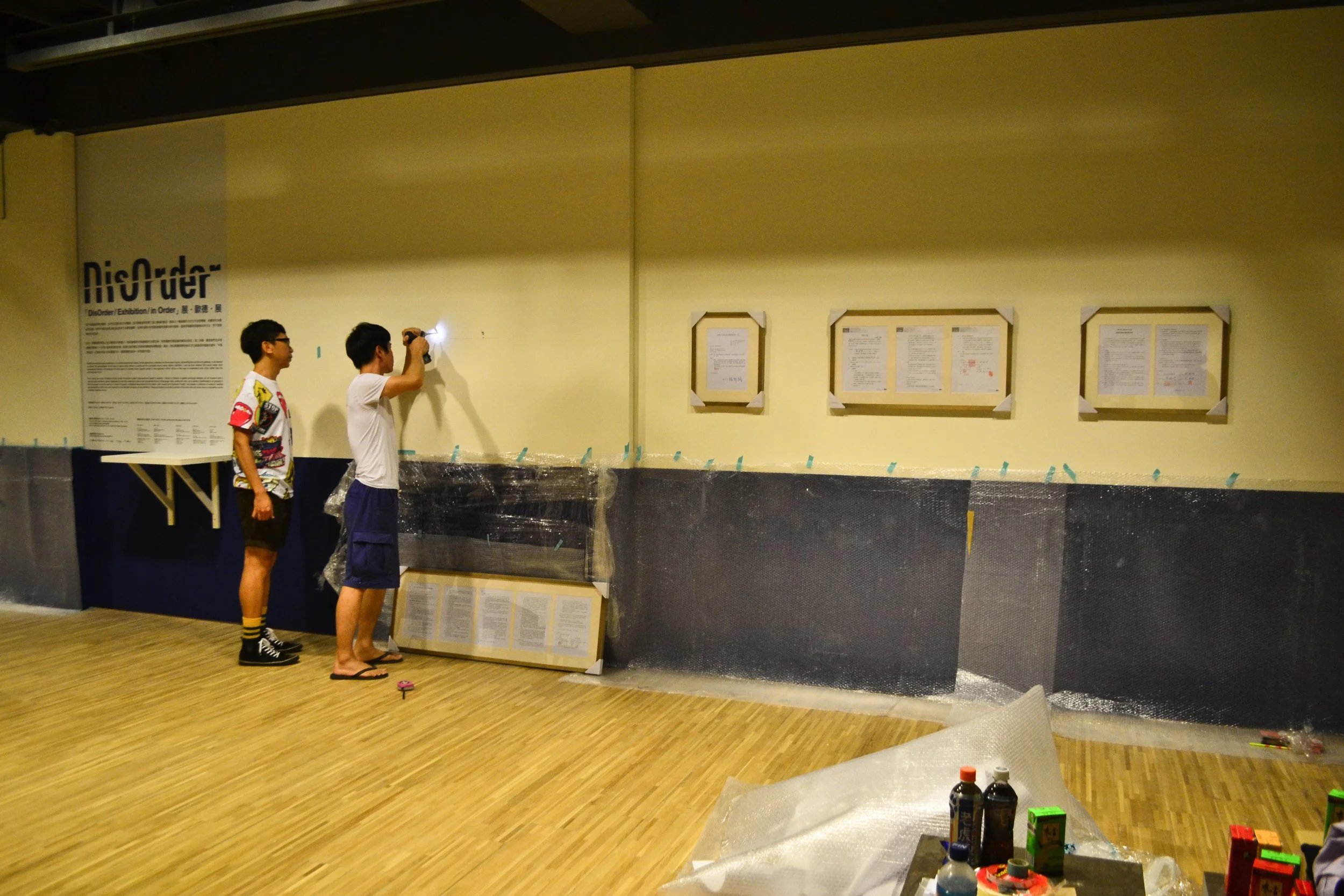
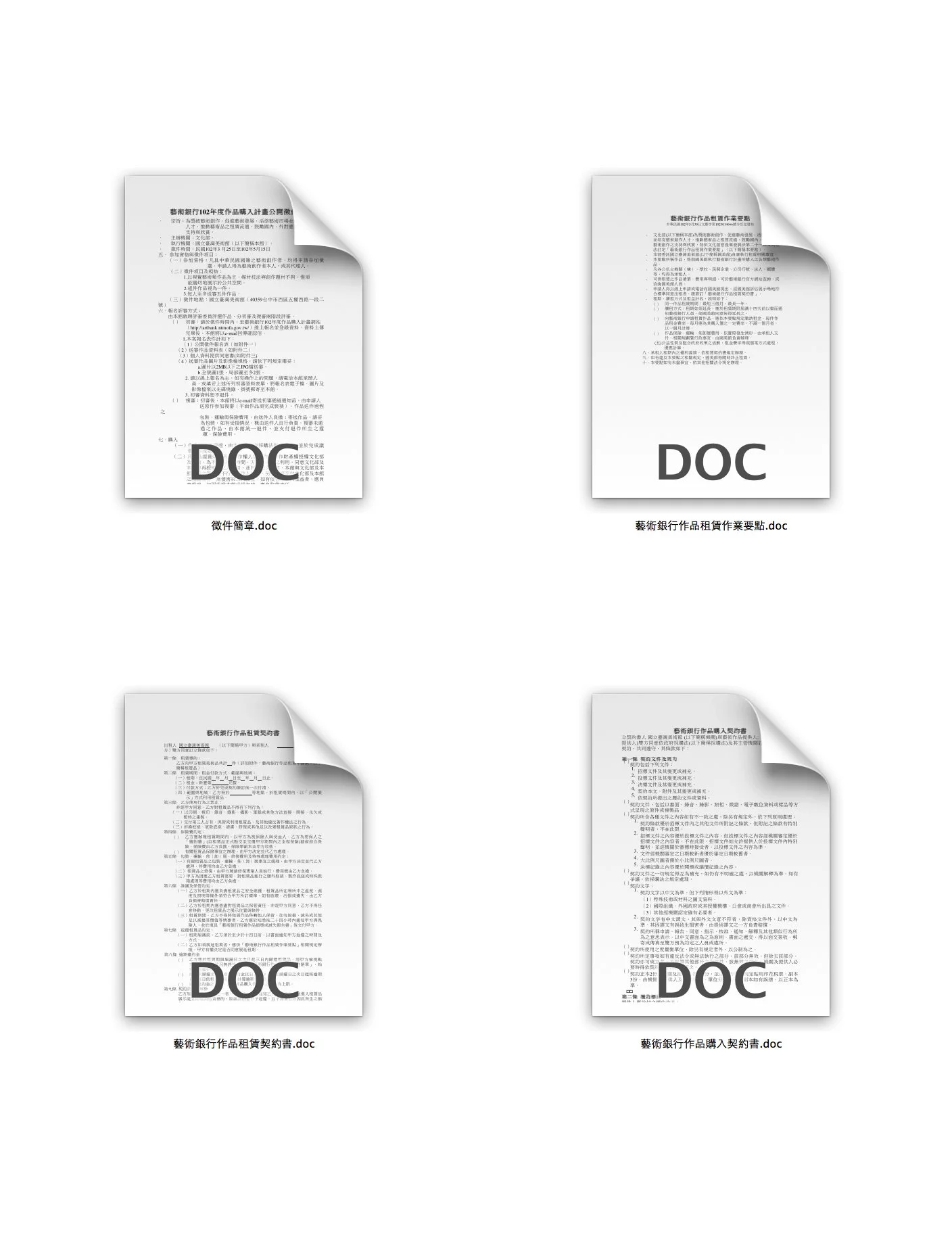
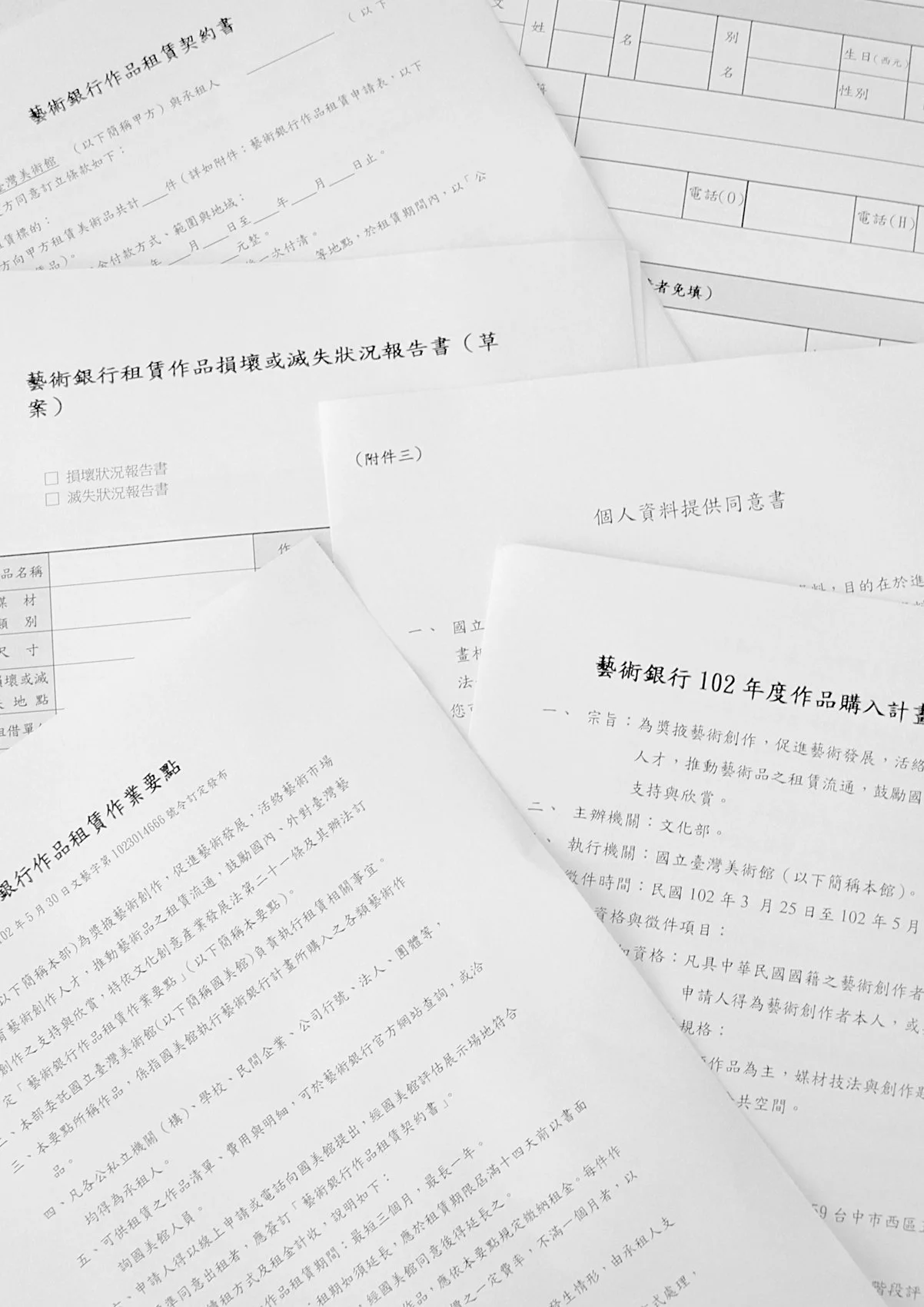
My project Art Bank proposes, from the position of an artist, introducing the official “Art Bank” program into a quasi-art sales model within the private enterprise Order Furniture. I suggest installing Art Bank works on a rental basis across Order’s nationwide retail locations, enhancing the artistic quality of furniture display spaces while advancing the dual objective of “art in everyday life, everyday life as art” for a broad public.
In this exhibition and project, the true work lies in the compilation of documents produced through the working process. By extending the Art Bank program into Order Furniture as a preliminary display action, the exhibition itself becomes an unfolding event. It offers a site for the authentication of future art documents, and simultaneously serves as the scene where the artist produces documentation.
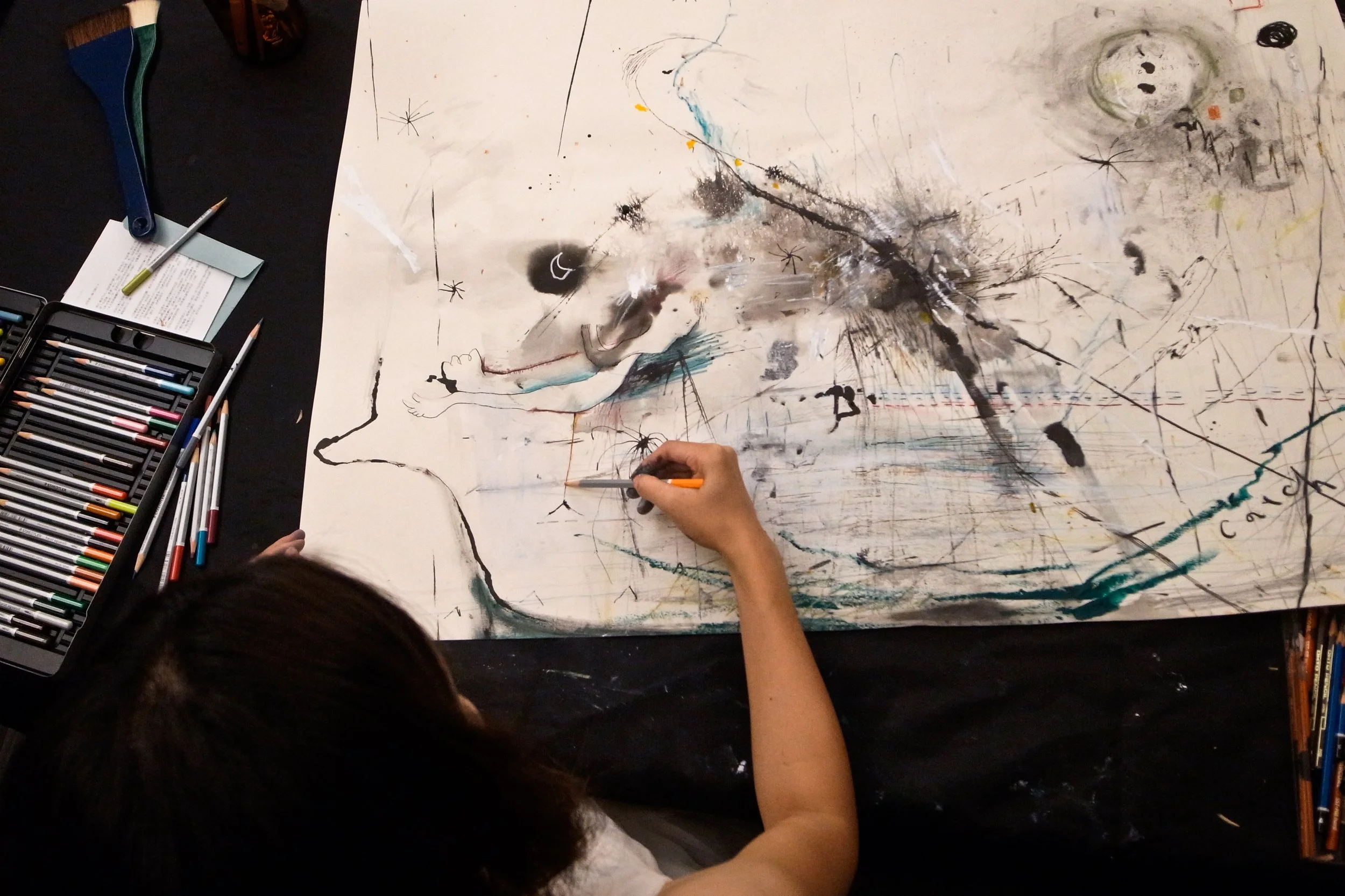
LIN Yi-Chun
The Site of Document Production




LAI Chun-Chieh
Story Teller Project: Storytelling as a Mode of Communicative Action
I. Project Concept
Within the ecology of contemporary art, discourse is often excessive. Statements, terminologies, even fragments circulate endlessly within so-called professional art circles, yet rarely form a genuine relationship with the public. While the expansion and deepening of artistic meaning can, in principle, exist without a general audience and remain addressed only to trained viewers, the art world has proven unable to continue revolving solely around itself. It still requires external forces, whether conflict, negotiation, or supplementary explanation. Art can no longer be detached from the public. Art history itself demonstrates that contemporary art has reached its present condition through a dynamic dialectic with the broader public.
How, then, can art practically engage with people? Interaction takes many forms, but if we seek to root itself in collective psychology, perhaps artistic discourse and exhibition practices must be reconfigured as “stories.” These narratives should emerge from contemporary social conditions, like traces carved step by step into lived experience, forming an internal, vital connection to the land and its context. Only then can they take root and become nourishment for the overall operation of art.
Within our shared cultural framework, there has historically been little sense of publicness or a public sphere, and thus no public discourse in the Western sense. Or rather, everything was public, if the public is defined through shared systems, hierarchies, and beliefs. Yet publicness gains meaning precisely through its distinction from privateness. Privateness itself is a product of Western capitalism, and its complete expansion coincides with capitalism’s total victory. With dramatic shifts in technology and consumption, we now occupy an uneasy threshold: a world that is simultaneously fully open yet insists on privacy. Perhaps we should say that the modes and scope of private ownership have expanded to the point of enclosing the self. We are masters of ourselves, and at the same time, slaves to subjectivity.
As we increasingly wrap ourselves inward, the circulation of knowledge and thought becomes ever more privatized. This, I believe, is one of the reasons why art in Taiwan has become increasingly professionalized and academized. Why can artistic thought not be made public? Why do certain ideas and rules exist only within specific networks? We should not naïvely assume that all discourse, habits, and norms can be shared. Yet I believe that a potential for resonance between ideas does exist. Only by striving toward it can we move closer to “emancipation,” not only as the release of specialized knowledge, but also as a liberation of the mind.
The “storyteller” represents an ancient mode of publicness. While retaining a performative dimension, the storyteller at least attempts to transform something private into a shared understanding and dialogue. In the historical rupture between art and the public, the storyteller may offer a renewed form of publicness. Publicness is not absolute equality, which is impossible, but rather an effective mode of communication and sharing.
The Story Speaker Project seeks to translate contemporary art discourse and contextual knowledge into “stories.” Storytelling is employed as a method to enter social bodies and institutional structures, making the expansion and continuity of contemporary art possible. Calling it a “story” does not merely imply accessibility. More importantly, it alters the mode of articulation of these clusters of contemporary art knowledge. Ultimately, this constitutes another form of reproduction. Throughout the process, audience response and feedback remain central, with formats continuously adjusted. This is not a one-directional, pedagogical transmission of knowledge, but a legend that is always “yet to be completed.”
The Story Speaker should not be understood simply as a teller. It is not about conveying information, but about uttering a position. “Speaker” implies an active act of speech. In Legislators and Interpreters: On Modernity, Postmodernity, and Intellectuals, Zygmunt Bauman distinguishes between the legislator and the interpreter. While it is unrealistic to expect every speaker to harbor the ambition of a legislator, constrained as we are by postmodern conditions, how many art practitioners today can truly be called interpreters?
II. Forms of Presentation
Different Story Speakers, grounded in their respective professional fields, shape stories that can be transmitted. These may take the form of film screenings, storytelling sessions, performances, talks, or other modes of presentation. Each “mode of telling” shifts according to the speaker’s background and the spatial context. While the audience is primarily non-professional, the scope initially focuses on the expansion of art and the redefinition of boundaries between art and everyday life. Comics, cinema, environment, magic, celebrities, and other themes that disrupt our imagination of art are all potential sites for the Story Speaker Project.
Week 1 — 9/14 (Sat)
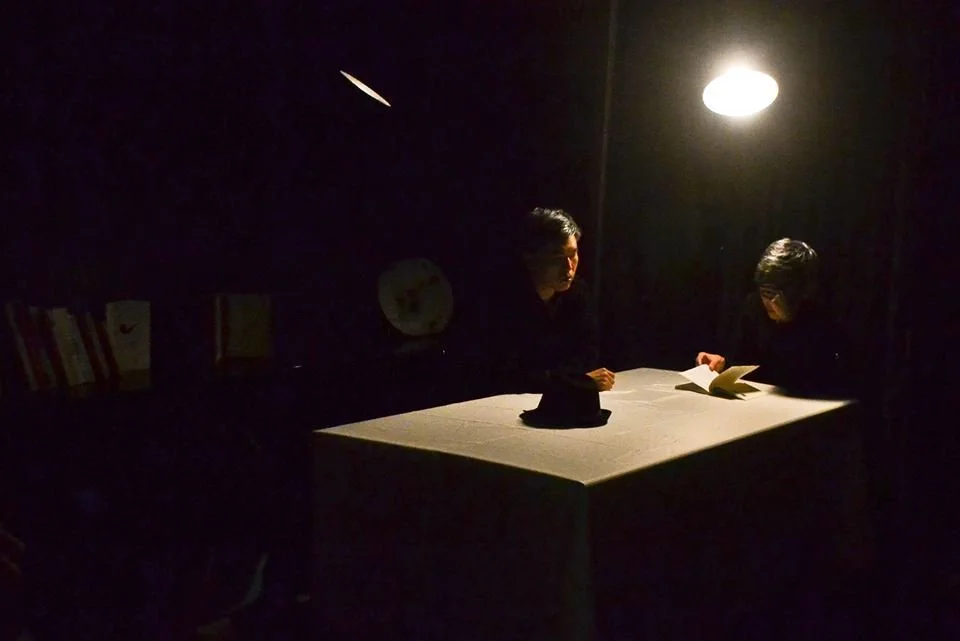
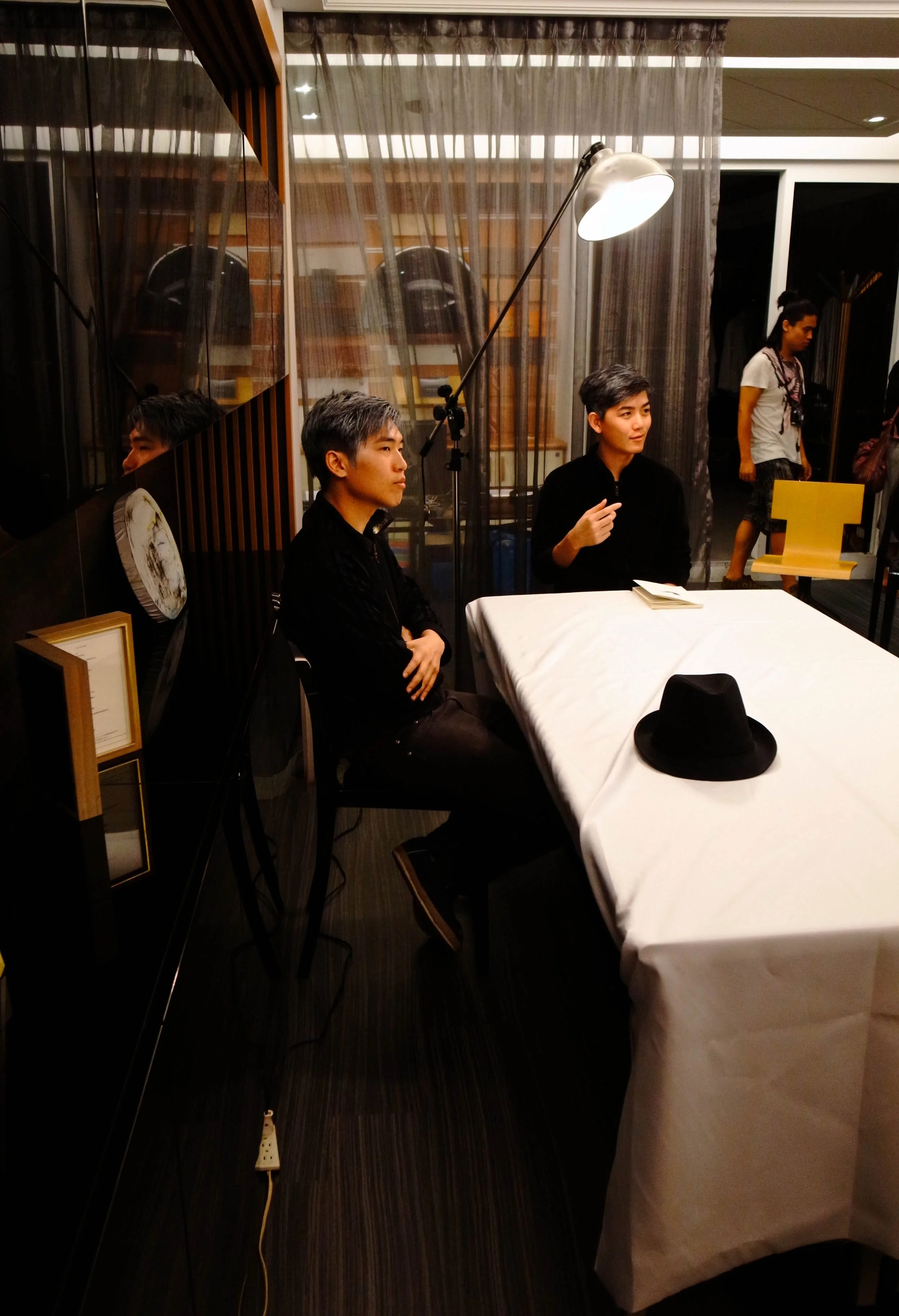
OrderDis: Taipei Improvisation
Austin Ming-Han Hsu × Jay Chun-Chieh Lai
Concept and Content:
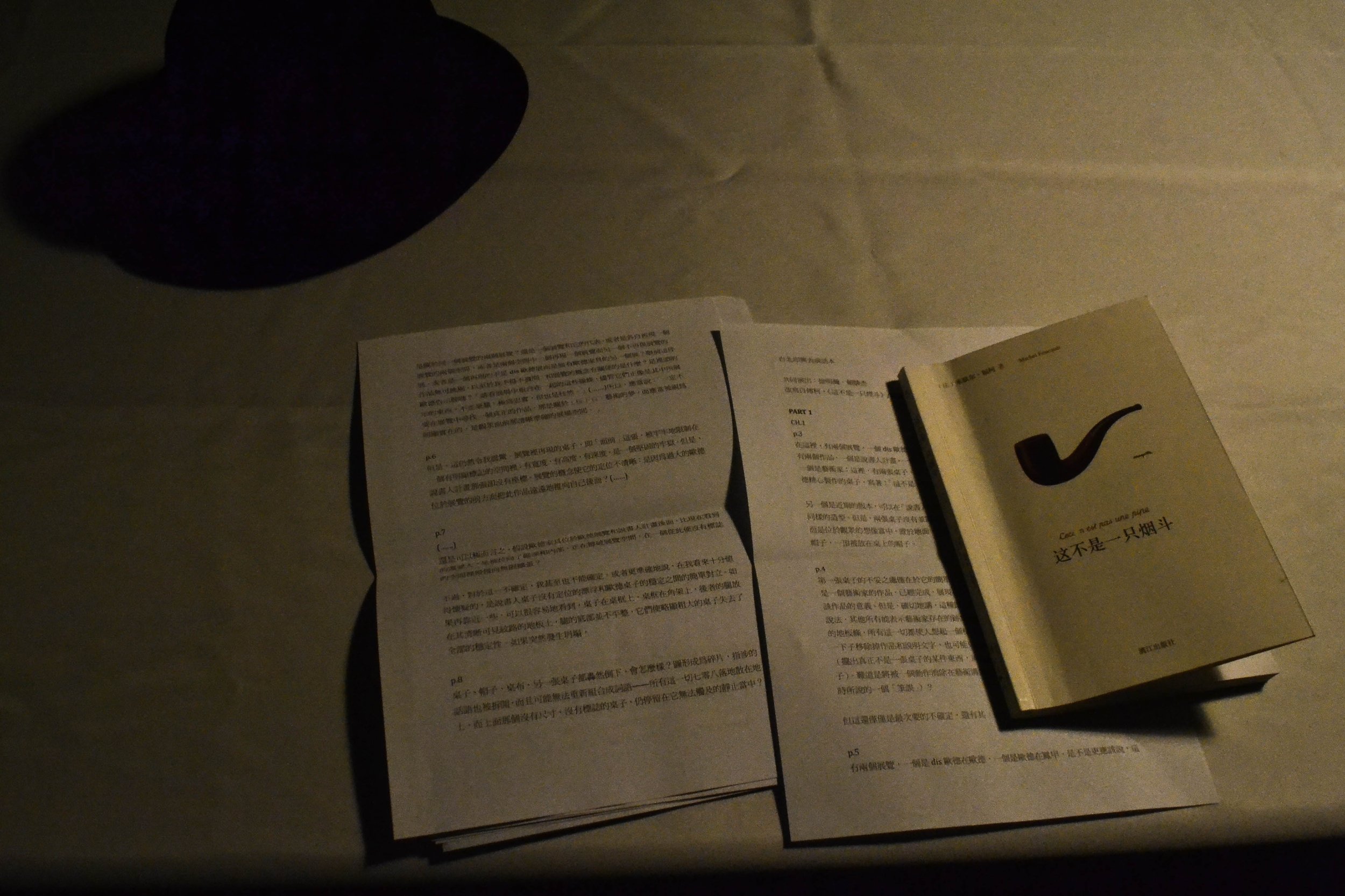
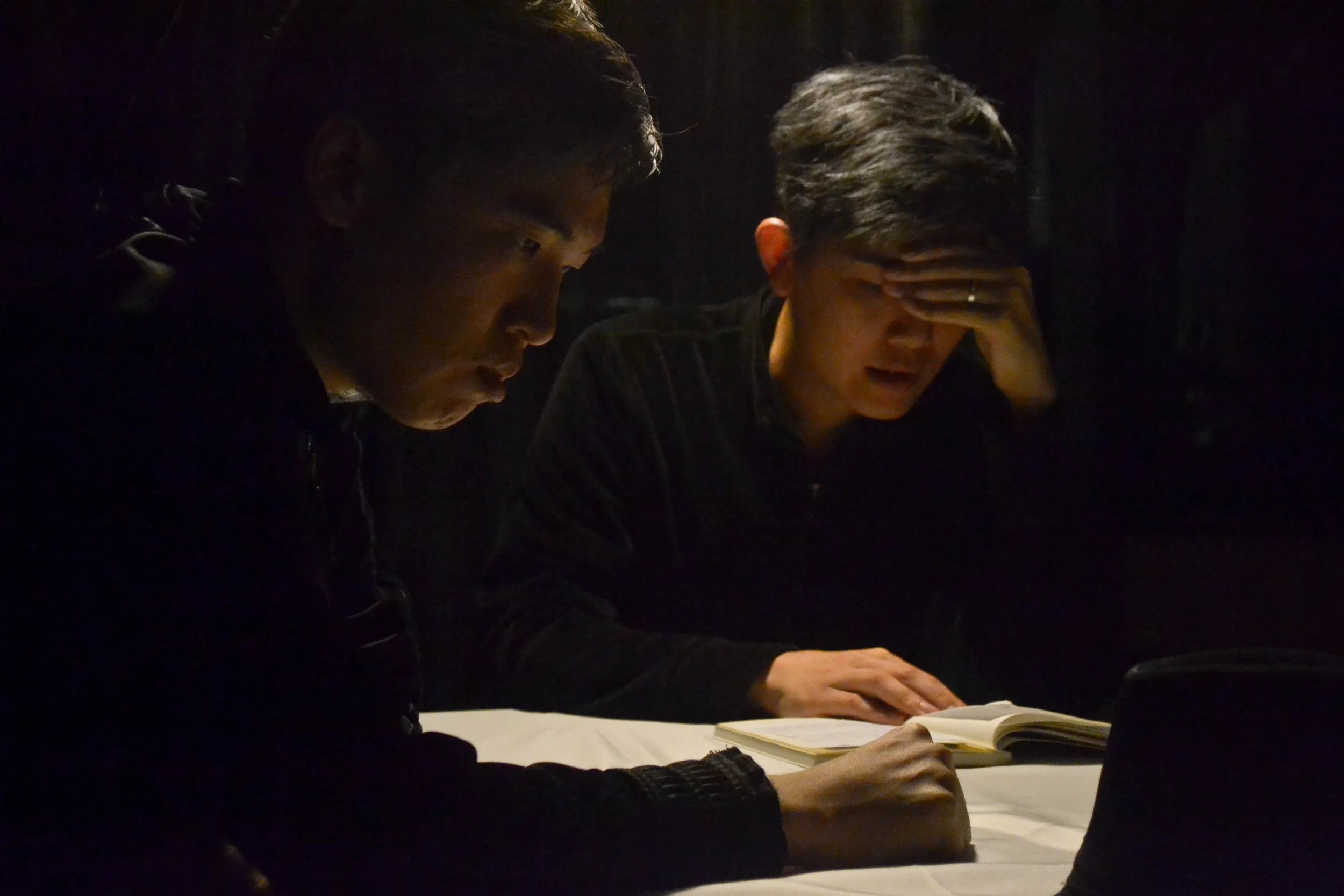
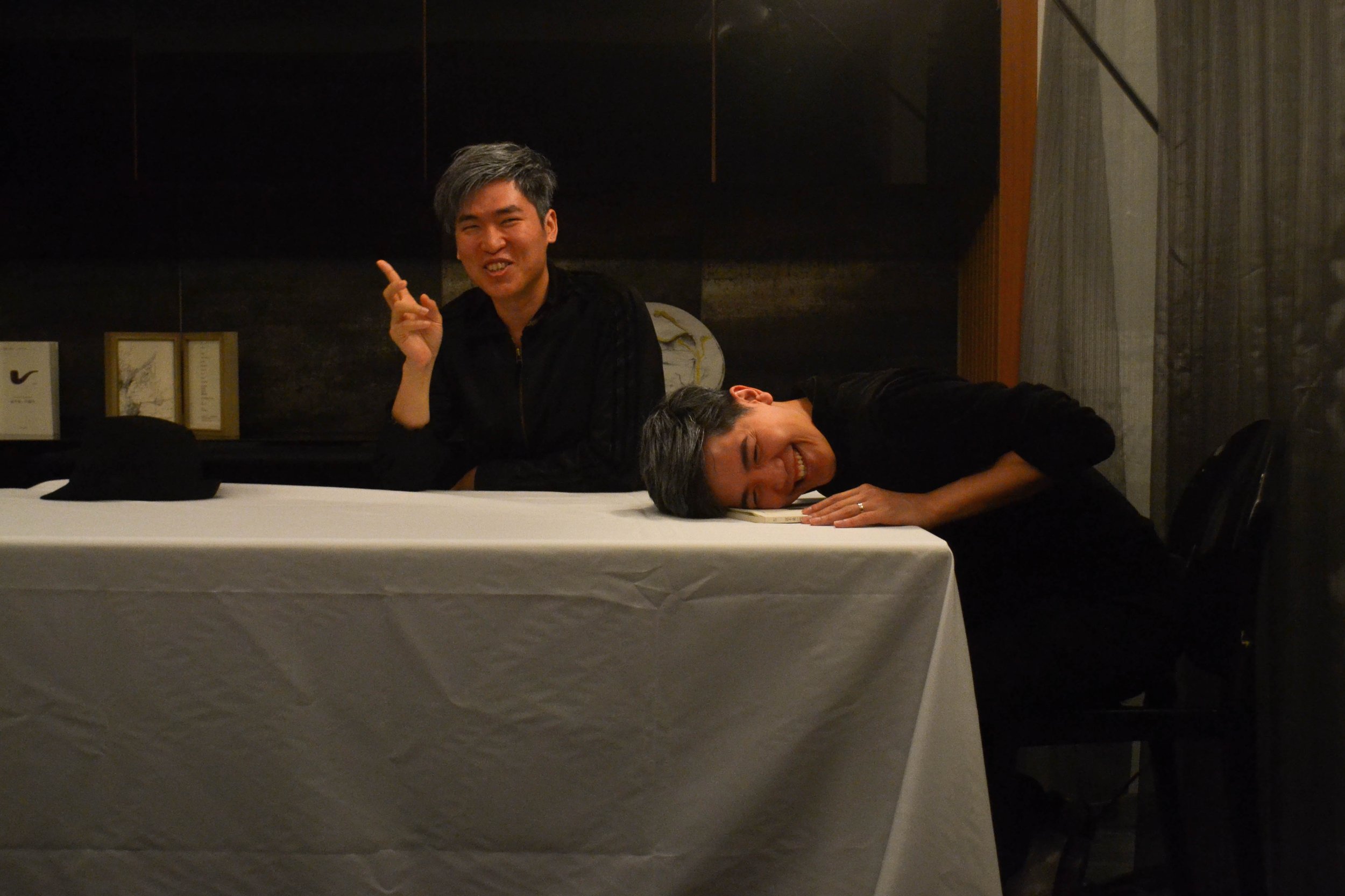
Adapted from Samuel Beckett’s Ohio Impromptu, critic Jay Chun-Chieh Lai delivers live commentary on a “commented subject or object” placed on a long table. During the reading, a hand intermittently strikes or taps the tabletop, interrupting the text. The critic may pause, restart, or continue the commentary. The owner of the hand remains unseen, concealed behind a curtain, sometimes silent, sometimes producing inarticulate sounds. Whether the intention is to halt the critique altogether remains unknown. The performance lasts approximately ten minutes, followed by a discussion addressing: 1.The verbal violence of art criticism toward artworks. 2.Whether silent contemplation is the only valid response to art. 3.Possible correspondences or rhythms between these positions. 4. Can artworks protest? 5.Can interpreters exaggerate?
The discussion also responds to the historical relationship between benshi narrators, cinema, and censorship during the Japanese colonial period, Chen Chieh-Jen’s concept of “rumor cinema,” and the figure of the “contemporary benshi” in the Taiwan Pavilion of the Venice Biennale, examining storytelling as a method, or its limits as one.
Week 2 — 9/21 (Sat)
Imagining Theory
Jay Chun-Chieh Lai
Concept and Content:
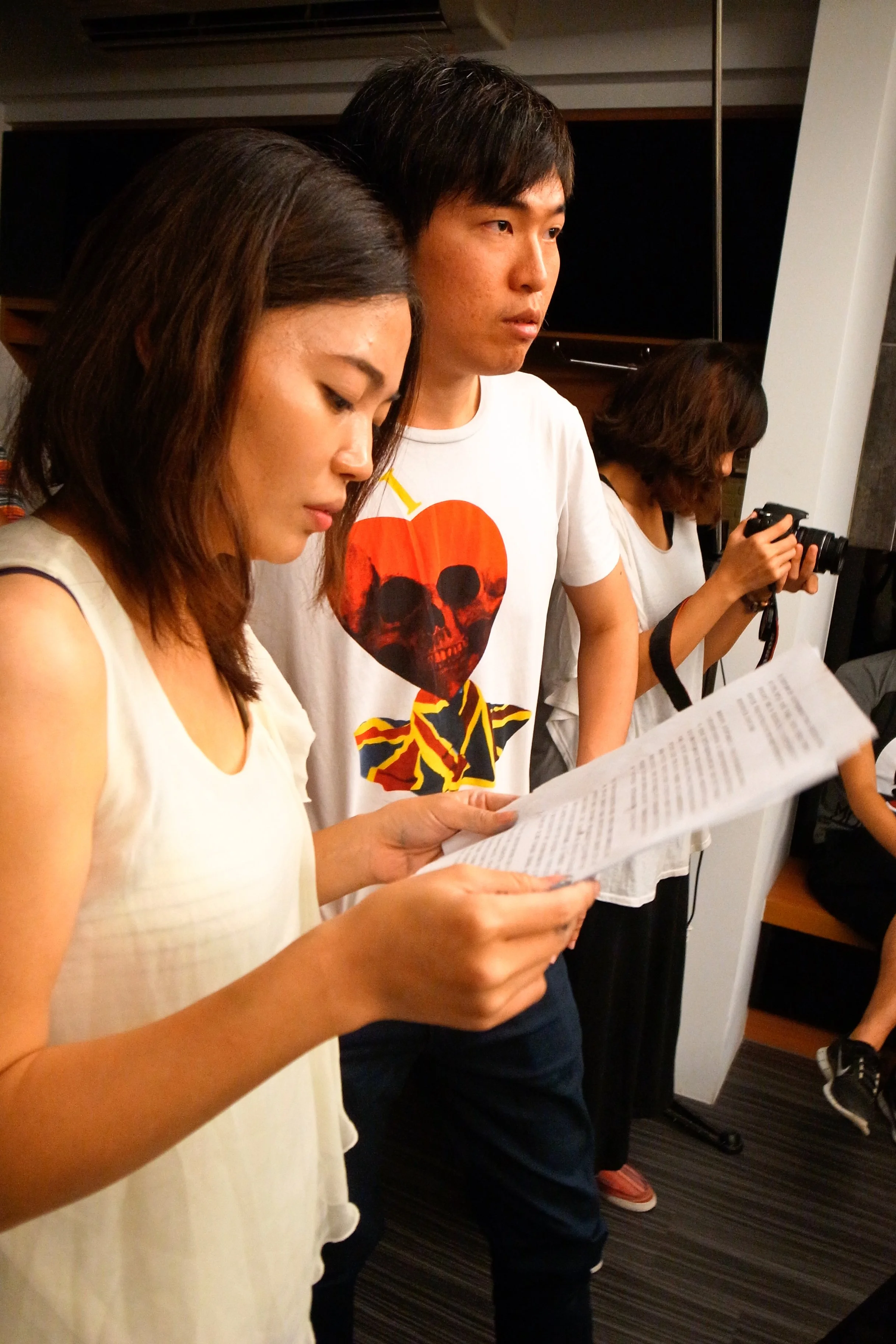
Several theoretical texts familiar to me are prepared on site. The audience votes on passages to be addressed. I translate these selections into plain language and supplement them with online references in real time, partially exposing the act of reading itself to the audience.
Week 3 — 9/28 (Sat)
The Future of Art Criticism
Lin Hui-Heng × Jay Chun-Chieh Lai
Concept and Content:
Artists often express themselves through their works, sometimes labeled as geniuses due to their singularity. Yet this may simply indicate that artists understand themselves more clearly than we do. While many of us are still unfamiliar with our own stories, artists are already creating and narrating shared experiential consciousness. Can such collective consciousness come first? In what sense can art criticism point toward the future, as a form of prefiguration?
In this session, Jay Chun-Chieh Lai reads a “future art critique,” while artist Lin Hui-Heng interacts with the text live. The text may function as an internal monologue or as a guide to consciousness. The fissure between language and image reveals a mental state during creation and the communicative structure between artist and critic.
Week 4 — 10/5 (Sat)
Art Criticism as a Mode of Social Exchange
Jay Chun-Chieh Lai
Concept and Content:
Artists are invited in advance to submit works. On site, the critic interacts directly with the artists, exposing the process of art criticism to both audience and creators. There is no rehearsal. Artists are informed in advance that the discussion will not be limited to praise. All conversations, as partial and provisional forms of understanding, unfold live. The final outcome, which may not take the form of a complete critique, is uploaded online. The aim is to reveal the possible processes underlying critical writing, with the entire procedure published in real time, including the final result.
Publications