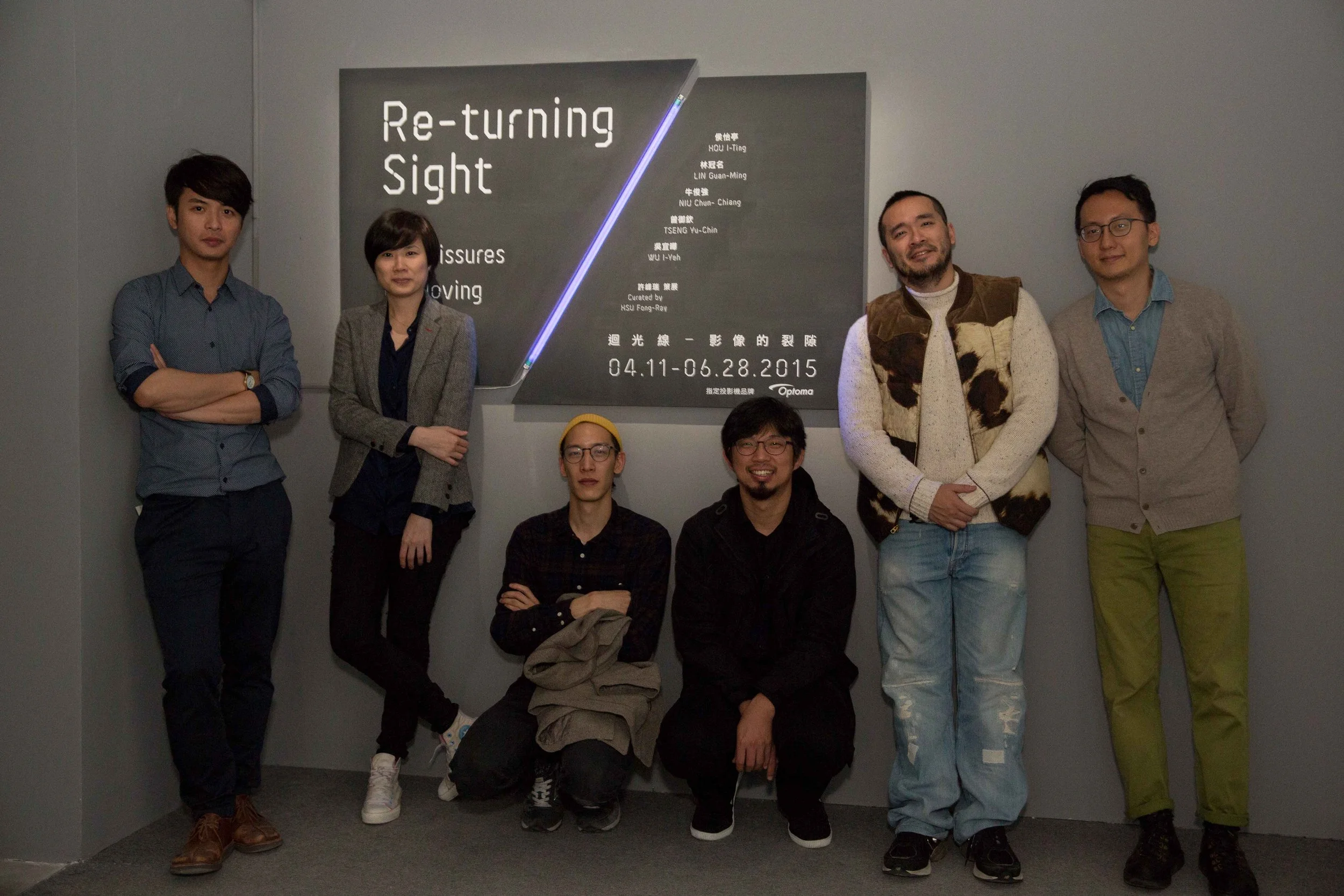
Returning Sight - The Fissures of Moving Image
Artists | HOU I-Ting, LIN Guan-Ming, NIU Chun-Chiang, TSENG Yu-Chin, WU I-Yeh
Curator | HSU Fong-Ray
Exclusive Projector Sponsor | Optoma
Dates | 2015.04.11 - 215.06.28
Venue | TKG+
The image is never a simply reality. Cinematic images are primarily operations, relations between the sayable and the visible, ways of playing with the before and after, cause and effect. These operations involve different image-function, different meanings of the word “image”. Two cinematic shots or sequence of shots can thus pertain to a very different “imageness”. Conversely, one cinematic shot can pertain to the same type of imagness as a novelistic sentence or a painting. — Jacques Rancière.
The distinction of images lies in its ability to recreate itself in the transition between mediums, not only as an imitation of reality, but also exhibiting plurality. Yet the attainment and designation of visual identity often implies a rejection of reproduction and a dependence on language for visible images, which connects knowledge, perception, action, contemplation, consciousness, and unconsciousness to the same level of activities. This is not only an attempt to align the experience between subject and spectator, but for latter to ignore mental trajectories, while the experience itself begins to fall apart. It imparts an imbalance between content and form, shifting towards a translated form of matter and text, altered into simple descriptive structure and textual content, to govern, entitle, and examine an image’s relation between inception and intention. When the emancipation of images is directly linked to reproduced imitation and its subsequent displacement, its appearance of ambiguous perceptions fall into the tethers of language, and images become stories or uncracked visual codes, reproduced equally and uniformly, which disrupts existing systems.The operation of images is an examination of reproduction, where real experiences are resistant to constructed rationality, which force images to lose their meaning, overcome by knowledge and language. We can therefore call into question: How does the audience comprehend the meaning of images, through a mixture of constructed rationality and lived experience? The display of images is a summoning of absence, making concealed sensuality visible and touchable, but this is in fact the inhibition and duality of reproduction--unfolding between the grey area of the visible and invisible, presence and absence. Images break through silence only when they no longer speak to their spectators. In other words, when images are replaced by language, they become voice pipes, transmitted through mutated bodies. In contrast, when images are silent, its form becomes the content of art, escaping the bounds of language, and retains its body. We can perhaps imagine a crack within reproductions, allowing images to reflect between observation and perception. That is representation constructed by time and motion, which allows images to move beyond the constraints of concept to instinctual perception.The exhibition “Returning Sight--The Fissures of Moving Image” attempts to elevate representation in moving images, allowing images to explore environmental qualities outside of symbolism, exposition, and description. The momentum of which comes from condensed, frozen time and the motion of moving images, coated between movement and stillness. This action appears to sever the connection between representation and reproduction, enabling images to embody truth and preserve their power, revealing indiscernible strength and voicing the inaudible.In the returning gaze of images, the reading of language never surpasses silent gaze.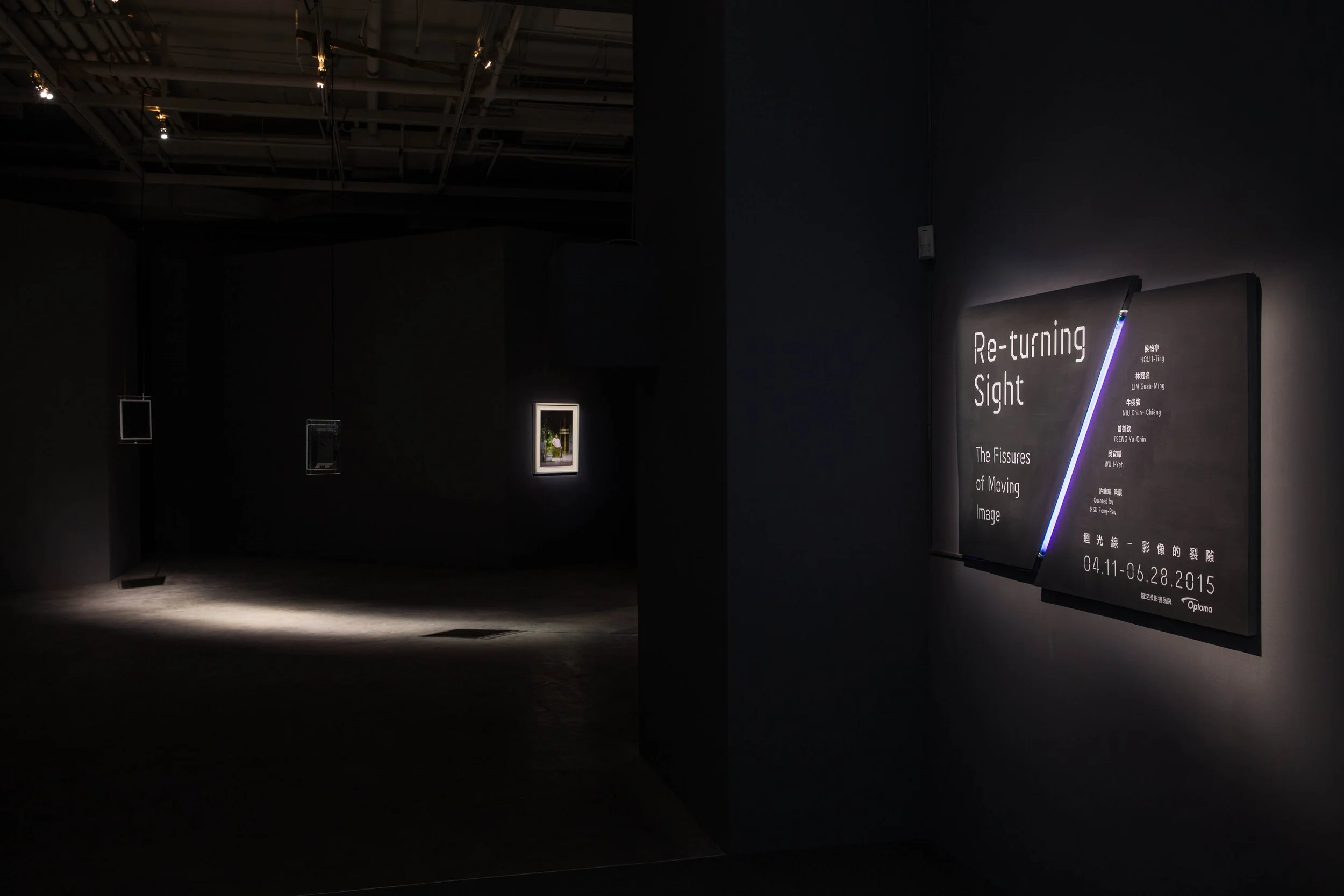
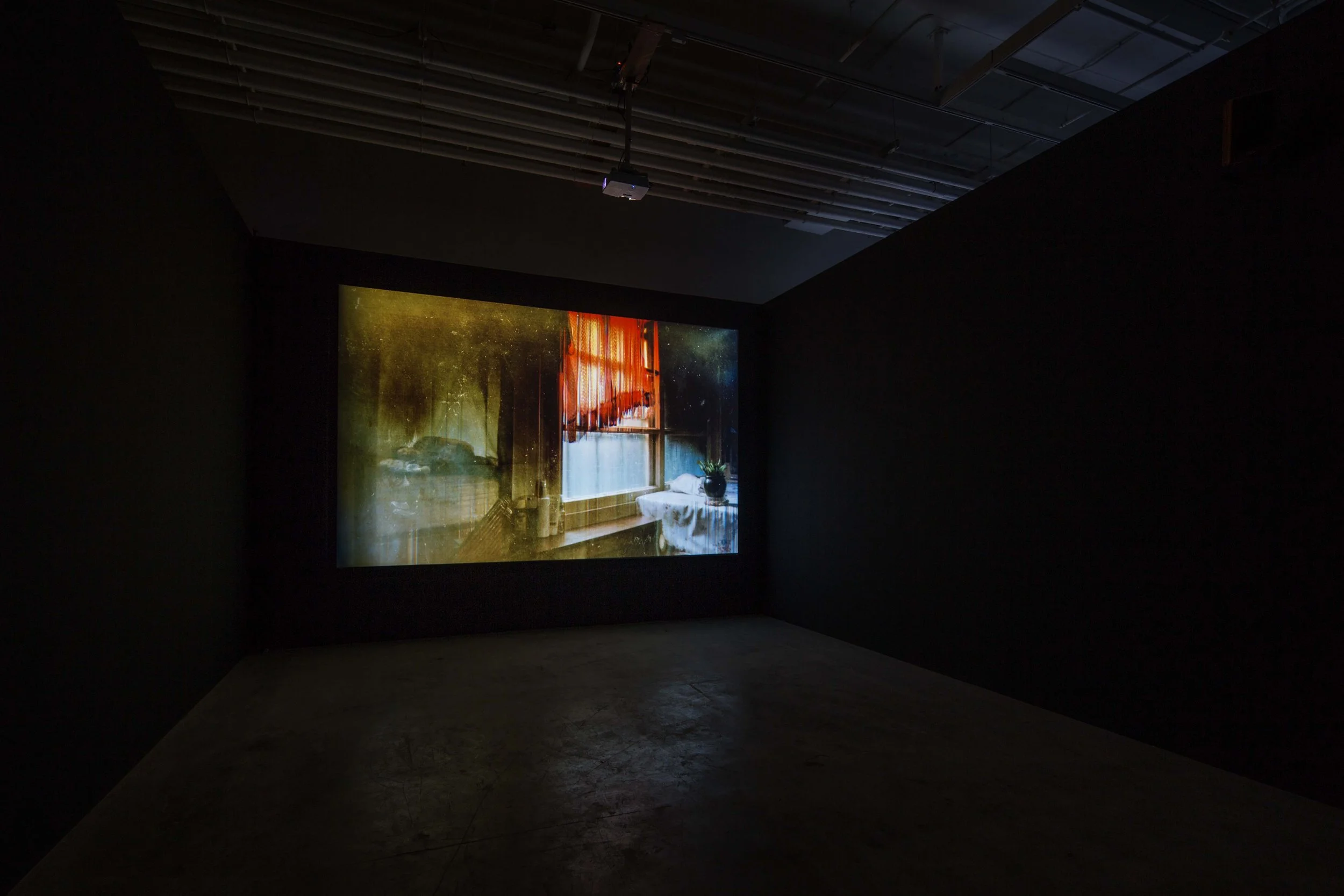
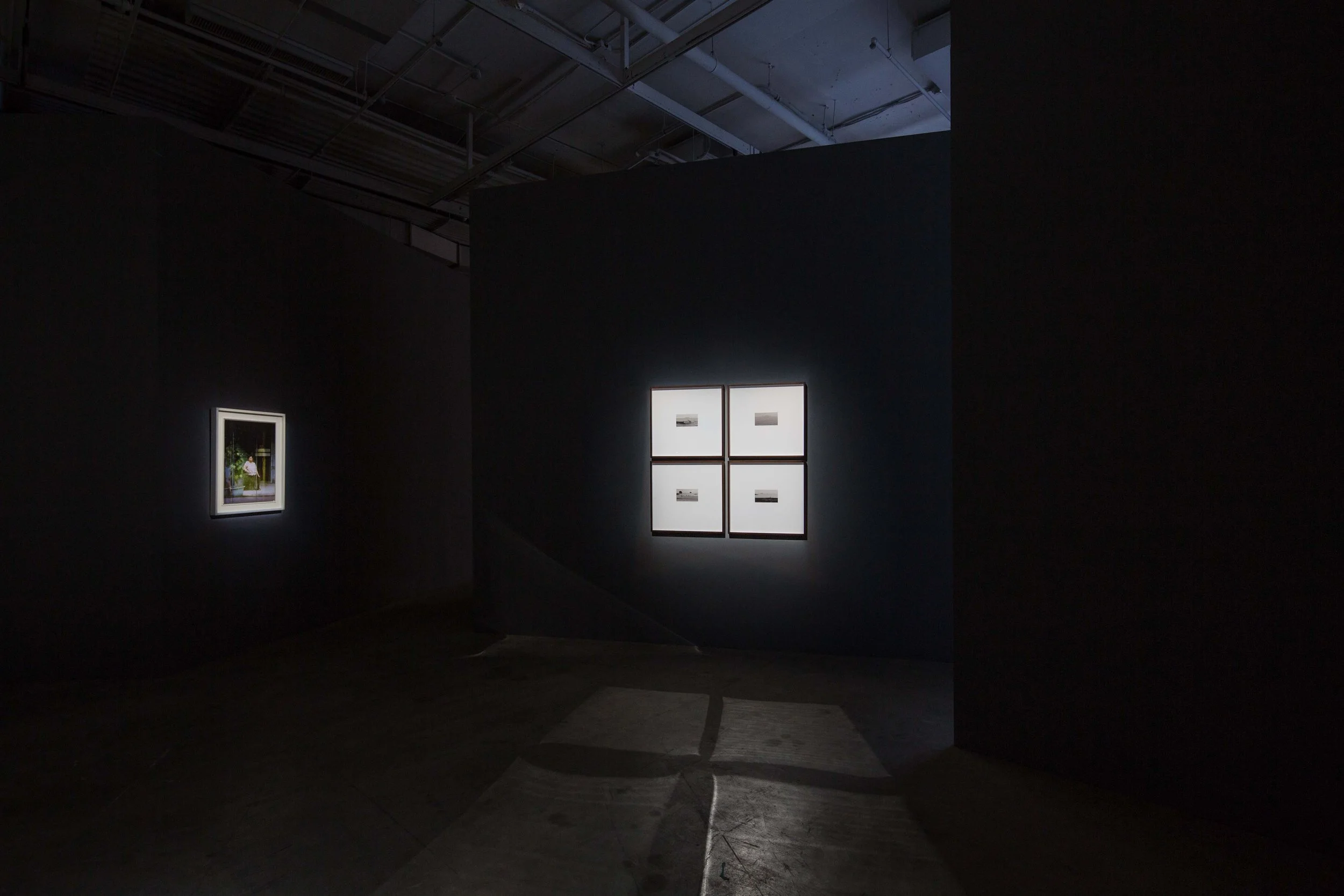
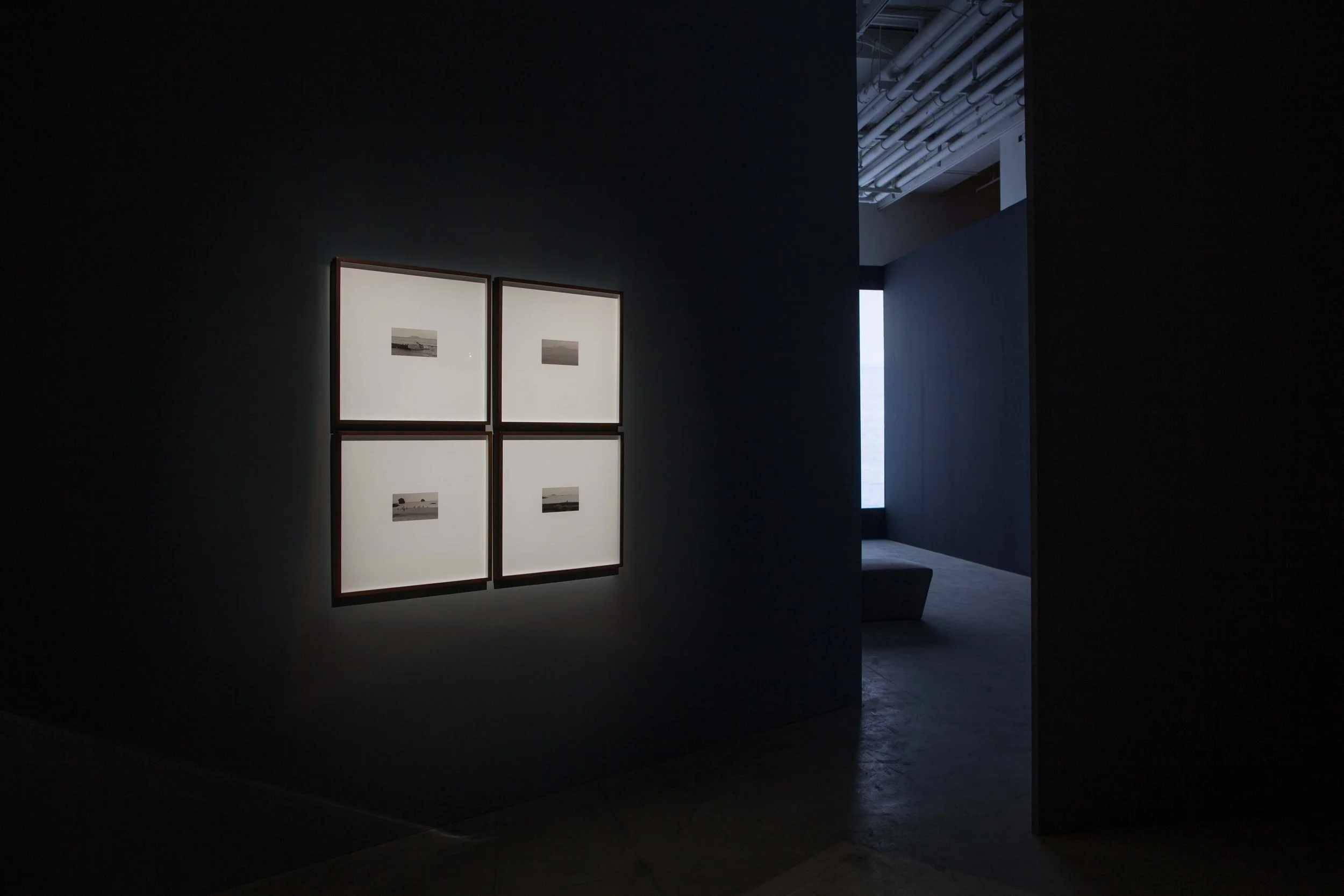
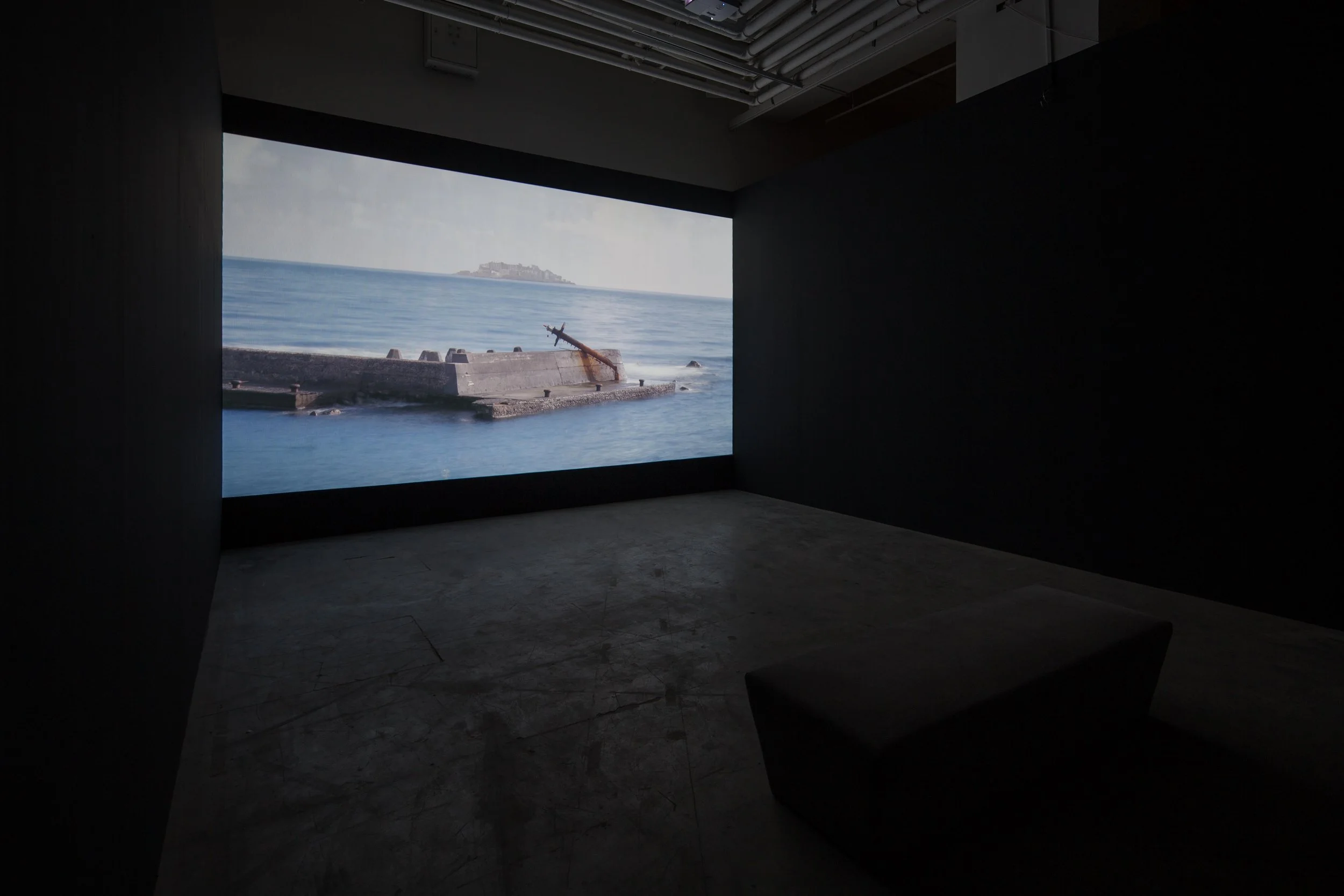
Artist Interview for Exhibition Publication |

1. Interview with Hou I-Ting
HSU Fong-Ray:
In the works Magic, Usurper and Agency of Reality, you have used the body as a vehicle for certain realities and as a projection of objects, often in a passive way that covers the body with the image as a symbol, while the image itself becomes absurd. Passivity may be a response and attitude to the critique of reality, and we see the absurdity of life in these images, but then what? If the body is to be consumed, it is not an action that disrupts the symbol, but is a projected subject under that very system. Perhaps because of this, your recent work seems to shift between perspectives, returning the body to the photographer’s standpoint, rather than from the position of the subject. This may reveal the process of image production, reconstructing active consciousness and the space the body occupies, like in The Perspective of Experience and Gaze. But these are of course only my own perceptions. We need to return to you to understand your ideas about moving images and the actions you take in response to them.HOU I-Ting:
In thinking about moving images, I often start from stationary stills, a bit like animation, and move towards motion. My process is directed by conceptual thinking, not through editing and film language to construct a narrative, but through shifts and metaphors applied to the subject and form, perhaps this is connected to my images. To state simply, I often start with a spatial venue, often a particular space that I am drawn to during my travels, to use as the background of my work, a preliminary blue print, which is then dissimilated through my own methods with the body, properties of the space, coupled to allude to the political and social imagination behind the work.I have worked more systematically with images from 2000 to 2002, in a series of documentary self-portraits, setting myself in my environment and taking pictures with a long lens in interior and exterior locations for months, and the accumulation of those black and white images is very impressive. At the time I found the foreignness of the space and myself in it intriguing, but I was not aware of what I was searching for.For me, images, no matter moving or still, are like mirrors, they reflect reality and are twined with the real world. This idea of the mirror is also used in the Magic series, when the camera is directed at myself; I see the camera as a mirror, the first mirror. Then in Agency of Reality (2007-2009), the form of the mirror appears in the composition of the work; this is the second mirror. The third, refraction is The Perspective of Experience, which is a reflection of a whole scene (space). Thinking back, this is initiated from the body to the lens, the mirror (reflection) in the work, and then to the entire space. Like Complexing Bodywork-Mise-en-abime (2011), this cyclic way of representation is an illusion of the visual world, but I was also interested in the continuous duplication that appears in contemporary images. This has also surfaced in the expression in my work.In my recent work, approximately from 2010 to 2014, the form comes closer to multiple perspectives with a critique of performance, using the image as a material interface. The work during this period is much freer, not confined to set formats, and no longer speak to the proof between virtual and reality. The content is often closer to culture, space, technology, and interpersonal relationships, applying intersectionality to the existence of the image.
HSU Fong-Ray: Can you describe that mode for us?
HOU I-Ting:
I believe that images are like interfaces, which can be abstract and material; it is the material image, but also a medium of transmission for abstract, sensory information. For the sighted, there is visual continuity in motion and time. When light interacts with the retina, millions of stills are seen, becoming the moving world that we visualize. Because time flows continuously, still frames consolidate to become the world that we feel. And so in my eyes, the world was initially still and dark, but images are captured through the perspective of movement and developed through the brain that stores visual memories, which becomes the sensory world that we all have. This visual field of experience is shifted to the image interface, and through it transmits information. But these actions also reveal the opposite of daily life. Images are no longer an objective reality, but a slice of the world within a view finder, the framed world, and perhaps one of the ways we see the world anew.
HSU Fong-Ray:
I agree that “images are not objective realities,” because it connects reality with the subjective experience of viewing, and that is never based on the same foundation, unless you construct a world and start from there. But even that is impossible, like you mention, everyone has their own unique sensual world, and it is in fact a public vehicle. From this understanding, images seem to critique viewing subjectively and without shared senses. At least for me, I don’t think that is possible, but with the same subject (image), reality does shifts between individuals. It does not need to emphasize the transmission of information, because utility includes its essence. I feel that you might have something to say about this.
HOU I-Ting:
That is true, we occupy an internet age and a century where we are proliferated with images. As Andy Warhol once said, “In the future everyone will be world-famous for 15 minutes,” this has been taken to the extreme in the internet age. With public images of beautiful people or controversial images on social networking sites, everyone appears unique but are we really so? We often hope to display certain appearances, and yet that is desire projected, shown in public spaces, and those images become disguise. These consumerist images are transmitted in masses, and the most perceptible phenomena is the desire to peer into another’s private world.
For me, the representation of any image, including documentation and reportage, is a snippet of the objective world. Images are presented conceptually or in perspective as if prepared to abandon objectivity. But the images that we present are often second hand, and how so? When you capture these images, the images contain the consciousness of the recorder, unless they were images taken by drone on a track, but these are also details from a larger, comprehensive, objective environment, the world, the planet, and space must have corners where satellites do not reach. I believe that the reproduction of images is a phenomenon of the human world, no matter its surrealist imagination or transparent objectivity. It is a thin membrane of the real world. This process of distancing from the real world is to prove its existence through endless illusions, but you can never get there! Because nothing is real….I am also embedded in most of my earlier works, and the main content of these images surrounds the body with various environments and interfaces, which then place my existence in the world. Of course what is presented is not merely the interior sensual mode of an artist, but through the conception of interacting with the world while creating, to look back at this existence, using the body as a way of engaging difference spaces, interacts between the transformations of subject and object.
HSU Fong-Ray:
What about the work this time? How do you regard this work?
HOU I-Ting:
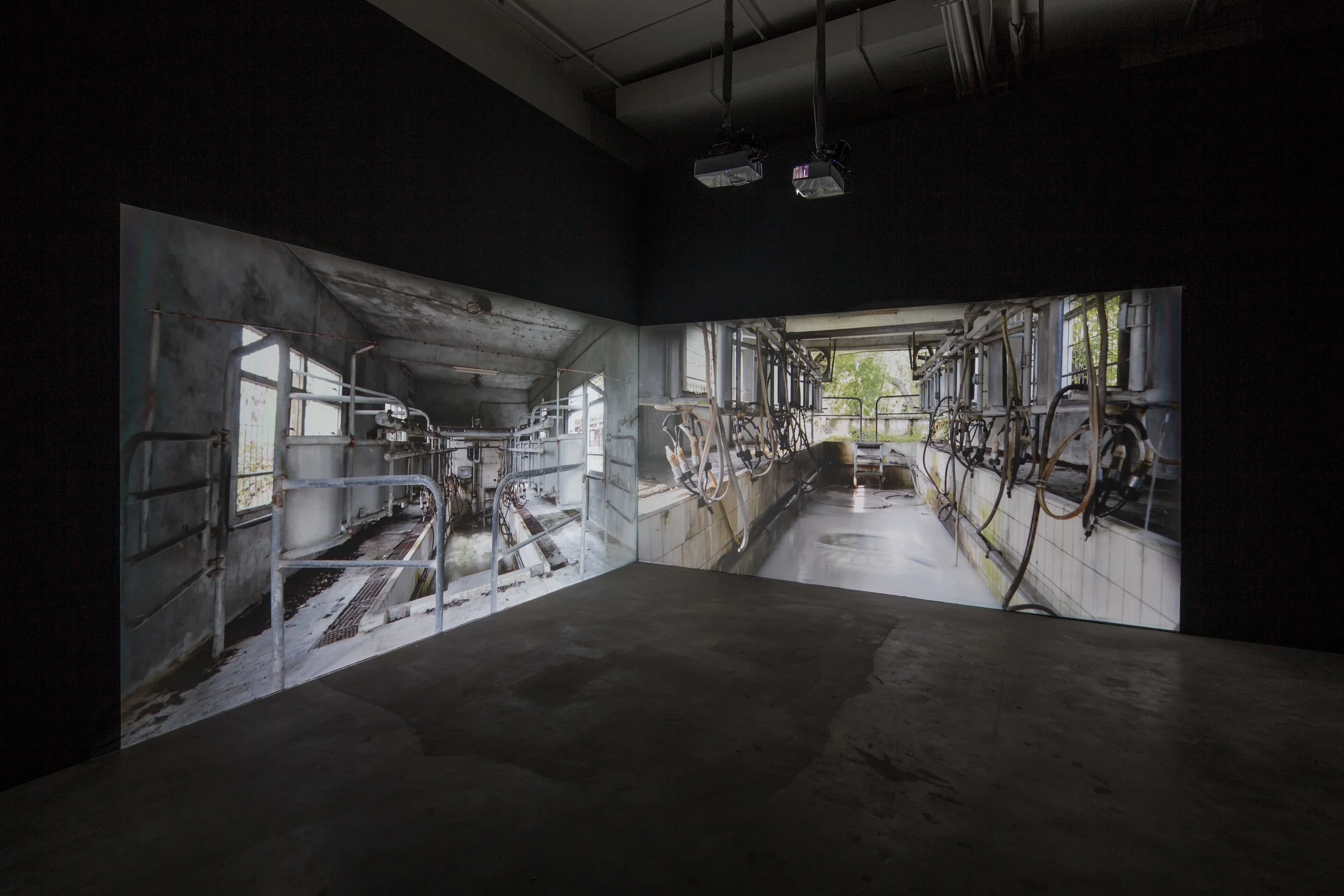
Silence presence continues the creation of dystopia (which is a mutually alienated space) in a certain space through conceptual images. We can read this as an aesthetic extension of Complexing Bodywork-Mise-en-abime (2011), which also uses the framework of image within an image as a stage for the mirror, but silence presence varies in its sensory experience presented through multiple mirrors in the water. Compared to the metaphors of previous images, and the spatial properties in the video and the strong compositions alienate us from reality and our sensory experiences. In the setting of these images, through different perspectives that express the transition between time and space, the visual world shifts and represents itself with changes in time and shifting of the individual. The reflection on water and its spatial context, through dual projections allude to the bi-directionality of space, which gives the image their mutuality, allowing us to see images of the world as if we’re passing through mirrors.


2. Interview with LIN Guan-Ming
HSU Fong-Ray:
Some of the other interviews mention the strangeness of interpreting “images as an objective reality.” This covers communal experiences that are bundled into the same issue in order for discussion, or a subjective reality treated as muttering. When the self has been eliminated from the group in society, it is forced to formulaically point to other rigid truths, and dooms its for singularity and fatigue. Those who like your work love it, while others who do not, complain of languor or muttering. We can start from talking about your ideas.
LIN Guan-Ming:
I always carried a camcorder on me when I first started creating images. One day I was traveling through Nangang and saw a pond with the dead goldfish in it. The colors were very vibrant, so I filmed it. The size of the goldfish was very small, probably only 5 cm, and when I played it back on the monitor, it became 10 cm. I had a chance to exhibit the work, and the fish became a 100 cm projection. I only filmed the fish floating in and out of the frame, and that process appears as if one is witnessing death, but the colors were so vibrant. That was very surprising to me. From my previous experience of painting or photography, the composition and frame is pretty much set, you cannot adjust it like projections. This is even more powerful when it comes to moving images. My images often embody different feelings when they are in different spaces, connecting to their site and being viewed under those conditions. The digital signal remains the same but changes depending on its context. Take film for instance, every cut is individual and has its own context, but the frame size influences your viewing experience.
My work exists in the moment of the shot. When I photograph, I complete the image. It is hard to talk about… but in this process the subject projects vagueness; I’m already making my work when I see something and have the urge to document it. There are times when my work is hard to edit, and I am aware of it becoming a narrative for the audience, but I do not want to talk about narratives because the process is established when you see this image, rather than when the subject explains something to you. Creating has its own cognitive and sensory space, and I want to recreate the space and state of viewing. Watching moving images is an act of time, and compared to looking at stationary work, you are basically viewing a segment that is vanishing scene by scene before you. Like Wang Yahui’s work, that is the interesting part of moving images. Small details are changing while you look at the image. You may not discern the change when you focus on one small detail, but through experiencing the entire process, from start to end, the loss of time is the expression and essence of moving images.HSU Fong-Ray:
Compared to painting or photography, time is the strength but also a weakness of medium like moving images. In the process of time, how much time spent and how one sees is personal. When time moves forward, it also accompanies the movement of the image to affirm itself, like Tseng Yu-Chin’s work. The slow movement of his lens actually cancels time, and transforms into a scene closer to painting. I am actually not sure if there are other methods of entering the exhibition besides viewing. There must be, but that might be our blind spot. We believe that this is the fastest way to reach our destination, and that it is a path to be traveled. We can speak more about this later, but tell me more about the urge to photograph a scene or subject. What attracts you?LIN Guan-Ming:
In a way that is similar to Yahui, I do not plan my shots, but she thinks logically and allows the perceptions of daily life to shine through her work. My work documents and exhibits daily life as it is. This appears very simple, but the hard part is to convince others that this is art; perhaps I have been challenging how we perceive the quotidian as moving images. In other words, the audience should not have expectations, thoughts, or descriptions with my images, because you can just look. Going back to the urge that I mentioned, it is similar to a sensory interaction that I have towards these scenes, like the dead fish I saw. I saw an image of death so I recorded it. I have also filmed many works of the sea because I feel a constant threat or fear. The desolateness and lack of activities attracts me. I saw someone playing golf on the beach once, and it was very strange for me. The beach is a lifeless place with a handful of people. There was once when someone started windsurfing in a fish hatchery by the sea! I even saw gravel trucks prowling about! The wind was too strong, and I did not have the right equipment to film the scene. You can never predict what will happen at the sea. Different from the mountains where you see the mountaintops, you cannot see the bottom of sea, nor can you complete something on your own when you are at sea. There is an “invalidness” when you are at the sea, you can only look at it, and for me that is a very sentimental act. The title of the movie “A Flower in the Raining Night” reminds me of sorrow. Very rarely does someone say “I am looking at the mountains,” but we often mention “watching the sea.” The sea is charged with emotion. I film the sea because there are many possibilities even in boredom, like the peculiar scene I just mentioned. Very few people except fishermen live by the sea. The sea is different from our daily lives in that it secludes.HSU Fong-Ray:
It feels like you are chasing the unknown. And in that process find images that are unexpected, collecting and deciphering them into an imagination of “the unknown sea,” imagining a sea that is imperceptible. These things that occur by the sea, like the seclusion that you mentioned, is the first layer, while the second layer is the hidden part of the sea, and these are from a distance. I am curious if distance affects how you see images?LIN Guan-Ming:
I work very hard on my compositions. The distance that you mentioned is also something I try to control. For me composition is very important as it is for painting, but I must complete it at the site of the image. I sometimes think if I extract a still from my work, it could still work as a photograph. In that moment it becomes a work, because you also press the shutter when you’re looking at a good image through the viewfinder. Why is photography only completed in reality? Why can we not complete the image through moving images? In my recent exhibitions, I have tried to extract stills from moving images, but this is a different way of seeing and vocabulary for me. I’m not entirely sure what I want to do. If we really need to speak about aesthetics, I think we must return to “the decisive moment”: the thing you try to capture. In my moving images I want to create the moment, returning to still images through moving images.
HSU Fong-Ray:
You emphasize “the decisive moment” in still photography as “the frame” in moving images, but how do you release frozen time in this transition? And when you are creating your work, how do you determine the distance between images and the relationship between image and space?
LIN Guan-Ming:
There really isn’t a decisive moment for me when it comes to moving images, but rather completing an atmosphere. My work does not have strong images or explosives to draw attention. There is a certain expectation that comes with looking at images, but I do not give in to those expectations. It is in fact a quotidian impression that I provide for the audience. When you go to the sea, you want to clear your mind and not think about anything, and I hope that is the state for the audience when they see my work. To counteract the many doubts about my work, I want to challenge what most people regard as ordinary, daily things. But when you ask me what I am trying to express through my work, I don’t have any answers because once I try to articulate those things, they disappear. Many works nowadays are very vibrant and articulate; I do not make that sort of work. Why can’t I just make a work that is just for viewing? It is much harder to convince someone through silence. Everyone talks, and words are words are words. Of course there are many good works but…Oh, I don’t know! I’m off topic!Although I mean to complete the work in the moment, that does not mean that I finish a work every time I shoot because when I look back at the image a day or a week later, I may be confused at what I shot. Perhaps I should break it down to two segments, the moment is more like completing an emotion, but when I return to the computer, that is the viewing of the work (image). Images are composed onsite, but the camera only records within its frame, but when I return to the computer, I see the work on the images within the frame. These are two different states of viewing, and discrepancies do exist. I’ve wasted a lot of film selecting a frame with the least difference.At the start of photography, the medium has moved us with its ability to copy reality with ease to the point where there is no distance between the image and us. Yet now with digital and 3D technology, the reality of images are called into question and the core of image is transforming. Looking back, what has the development of images brought us? I am actually not sure. What have we been searching for? This question is very much connected to the transformation of images as our lives are filled with them. How is it that now we edit our images after we shoot them? This is because we think about our images before we present them, and because those images are infiltrated into our lives. This is a transformation in the essence of viewing images to fulfill the image we see and imagine. Returning to the work, since images have a certain ability to document, its form is the least distant from reality, but what is the difference? When reality becomes image, what is the distinction between the two? I complete an image when I shoot, but something is left captured in a snippet of reality, the distinction between reality and its image, a difference of “image reality.”
3. Interview with Niu Chun-ChiangNIU Chun-Chiang:
My first impression of images starts from around 18. I really enjoyed watching European films at the time and coming upon another way of narrative in the world. I liked Krzysztof Kieślowski’s films, mostly because of this greenish tint that would appear in old VHS tapes. That particular experience made me fascinated with lighting. Kieślowski’s work is often about impermanence and the constant change in life, but to my former self, the quality of light surpasses the content of images and narrative, which heightened my awareness of image. Although the viewing of film and video is different, my work often attempts to include filmic narrative, like the shorter version of Even They Never Meet, or the five-minute short for When I’m getting older with you (2009). I describe the same scenario through art.HSU Fong-Ray:
What do you think is the difference of artistic vocabulary in these two fields of expression?
NIU Chun-Chiang:
I actually don’t feel like there is much of a difference between the two. Many of the examples that come to mind are Tsai Ming-liang and Julian Rosefeldt, where the difference doesn’t vary much. But perhaps the image is stronger in video works due to a lack of dialogue, plastered with photographic work, so the still itself feels stronger. But now that I think of it, my video works between 2012 to 2014, tries to slowly get rid of this feeling. They do not feel like video works because there is not that strong of a visual, but its existence in the process of “Why does this need to be shot?” discusses the circumstance when the photographer, subject, and moment of the image—and not just the image itself.
HSU Fong-Ray:
Different mediums have their inherent logic and aim when it comes to images, but the properties of images are not alike when it comes to reportage, film, and documentation, so what is your view of image in art?NIU Chun-Chiang:
The image in art is often more open to ways of discussing time and space, but it doesn’t have to be complete in material to become whole, but a slow and indirect, abstract feeling. This manipulation of time and space is correlated to its depth, dexterity, and transformation. For me, images might not be the most honest, because if you want honesty, I think the most honest images are porn (laughs). The honesty in porn lies in its directness in actions, and the aim is clearly oriented in the desire of the body, without inhibition. All the narrative, movement, and performance return to the extension of our desire.The production of image is closely related to desire, but not the narrow definition of desire in porn, but connected to the current ways of seeing and development of technology. It is as if you’ve seen porn in high definition, and now you cannot go back and watch low quality, exposed films. That is a very direct feeling.Sometimes images on the news are often the furthest from reality. Even though reportage tries very hard to come close to the time and space, like the TransAsia Airway crash. When I’m getting older with you (2009) expresses the craze and futility that mass media has towards reality. On TV, you see the plane steering away from the residential building and colliding on the bridge. But then what? That image is very far from reality for me,[1] of course however authentic, gory, and distressing, that sort of forced manipulation of images is unreal to me, and the farthest from the event. Of course it is the fastest, most instant reaction and deliverance of what happened, but that does not mean that it is the best medium to represent what happened.HSU Fong-Ray:
You just mentioned, “that you didn’t know why that had to exist in image.” What do you believe should exist in images? Like the honesty that you talked about in pornography, that honesty is the hunger for desire, something that belongs to the body. Are you weighing the existence of images on the honesty that comes from this directness?NIU Chun-Chiang:
The existence of images is very particular, like the drawings in the cave; it is a record and expression. I think that is the start of when man was aware of his existence. It is the essence of existence. But to go into discussion of existence would seem paradoxical or obsolete, especially when we are accustomed to a variety of “existences.” We can live a life of no images, if you do not write or talk, but images seem less urgent compared to words and language. When the first humans made their marks in the cave, he might have drawn his own shadow, or his prey of the day, and at the time he did not know what he was doing, but that itself is an extension of existence. For me, that is the way you let others know you’ve existed, and his proof.HSU Fong-Ray:
So you believe that the existence of images is a reproduced existence?NIU Chun-Chiang:
You could say that. But I think all experiences are no longer the original experience once they have been reproduced—that is my definition of reproduction. But that iteration becomes another experience entirely, because it is transcended by personal experience.HSU Fong-Ray:
Returning to the work in this exhibition, how do you operate the transitions of that experience?NIU Chun-Chiang:
During the beginning of graduate school, I was very interested in “time.” For the start of this series, I invited two subjects to be photographed before the camera, sitting stationary until they make an exaggerated performance at the end of three minutes. I set the time and wanted to frame the possibilities that could happen within this time frame. During that time I was interested in images displayed on screen, and would scan the screens on a scanner to see what would happen. This was also one of the experiments that I conducted on the operational possibilities of common digital devices.At that stage, I wanted to break through the limitations of imaging software. For instance when you look at a photograph, it actually condenses 10 minutes within its frame, that condensation is fascinating to me, it has flattened motion into even, digital noise. While for this work, I recreated a stop-motion animation through these scanned single frames, returning them to their movement. The concept of condensed time has been recalibrated, and so…you could say that it “looks great” and only that (laughs). The quality is great because it is not the quality that you get from a regular camera, but an analog light that only comes from processing signals twice, which was then picked up by the scanner, and translated into digital signals on the computer, and returned to digital image. These transferences already look great, and the noise and light is actually unevenness in the scanners’ reading of light, so it looks like an old photograph, or watercolor. The image itself is beautiful, and there is no need for words.When I left graduate school, I was very against making things that were visual. At that time, most works were very strong visually in the visual arts, and I did not want to follow the herd, while also being uncertain whether I could make it as an artist, so I thought of transforming. My first work after graduating in 2011 has no imagery. It isn’t hostility towards images, but rather I wanted to reconsider my relationship with the medium.HSU Fong-Ray:
How is your relationship with it now?NIU Chun-Chiang:
Most people have recently told me, “Shouldn’t you start making things that are more strong visually? The quality of your work is likable, but if you want to make a living, you might need to develop visual recognition.” I probably would not manipulate my methods repeatedly, or vary the ways I do things, and there really isn’t a need to repeat myself. To me, my relationship with image is to know how to get along with it, while not being too dependent or trusting it too much, you have to know how to have a conversation, and in that conversation not only in how to use it, but receive and consider it in life.HSU Fong-Ray:
You seem to be talking about these things from a consumerist perspective, the trend that everyone seems to have been making works that are visually strong around 2010, at that time political, social, and didactic discussions were not in trend, but that is now changing. So I wonder, if a work simply tells a story and translates to become another work, what is the point of discarding all its elements of art? Of course we could also work backwards, if the artistic emphasis becomes a worship of visual tools, what is the meaning behind this? When in fact you don’t need to talk about text or reason, but to replace things with another reality, to see if the meaning can reflect it’s own image.NIU Chun-Chiang:
A lot of the exhibitions I see nowadays have too much text, strategies, and agendas, and when those have all been established, the work is sacrificed. Why don’t we make a subjective, sensory exhibition? The successions in art history, the trends that return and come back, after that many incarnations should accumulate in the lives of the masses, even if they are only purely sensual works. The text of works should be actively produced by the audience, not to see if what you have resonates with the intentions of the artist. Like your question of how the work is, I only replied that it is “very pretty,” of course it is not just pretty, because I say it is (laughs), but I have to think about how to make it pretty.HSU Fong-Ray:
I feel that strong visuals in our current climate are no longer taboo or something to be embarrassed about, but I do question, when you cite different disciplines or knowledge to your work, what does it become? There is not much confidence. Whether from visual to text, or text to visual, this is only the first layer of the question, what we should be asking, is this the most appropriate expression, and what is it? Take this current exhibition, images are to gazed upon and taken in, the time that it takes to discern is different from your time spent reading text. These are two different things. As you just mentioned, when you remove symbolism, narrative, and text, what remains? What kind of image is it?NIU Chun-Chiang:
To be honest, I don’t know what it leaves behind. Or rather, if I knew, I would not have to make it look beautiful. To explore this question to the fullest, it might be the “existence” that we just touched upon. If you want it bare, I would not know what it would look like, it would be too hard. Even stripped to the minimum, its still skin. Take this work, for instance, the emotional projection of the work is there, so we don’t need to talk about that. You asked about text, and it has that too, so we don’t need to bring that up. So what is left? The beautiful watercolor? I think it comes back to desire. Does it hook your desires, does it make you want to stand in front of it for a few more seconds, or does it make you want to buy it? (laughs) [1] The artist resides 300m from the place of the incident, and can see the search and rescue outside of his window.
4. Interview with TSENG Yu-ChinTSENG Yu-Chin:
My first work was titled The Projection and Reflection at That Time, which was a selection at the Taipei Golden Horse Film Festival. I really enjoyed watching films in college, and would often walk home to Dazhi from the movie theatre in Ximending so I could think about the film. I used to read films like textbooks, trying to understand what the film meant, the symbolism behind the images, and the thoughts of the director. I believed that film had a standpoint and the ability to resolve difficulties in speech. That was important to me, because there were many things that I could not talk about, and I have always been doubtful growing up. When you realize that things are not simple, or when you are no longer obedient, you start contemplating: “What am I?” “What can I do?” and “How do I talk to anyone through this confusion?” Eventually I choose to interact with the world through images, without having to interact with people directly. I believe that art is created so you do not have to interact with people (laughs); it seems to have established a new method of communication.I was looking for something to represent myself, or words I could not articulate, and how colors correspond to things. There is a scene in The Projection and Reflection at That Time, when I have a living fish in my mouth, and its slithery, ungraspable state subjects the fish to a risk of death. I believe that the body of the fish represents the vocabulary that I want to address, a slick but otherwise irregular texture in our hands plots the work as: indescribable words. The movement of the lens, editing, colors, and symbolism combine to become my words, and my way of applying images becomes my way of speaking.HSU Fong-Ray:
What role does the symbolism of images play in your work?
TSENG Yu-Chin:
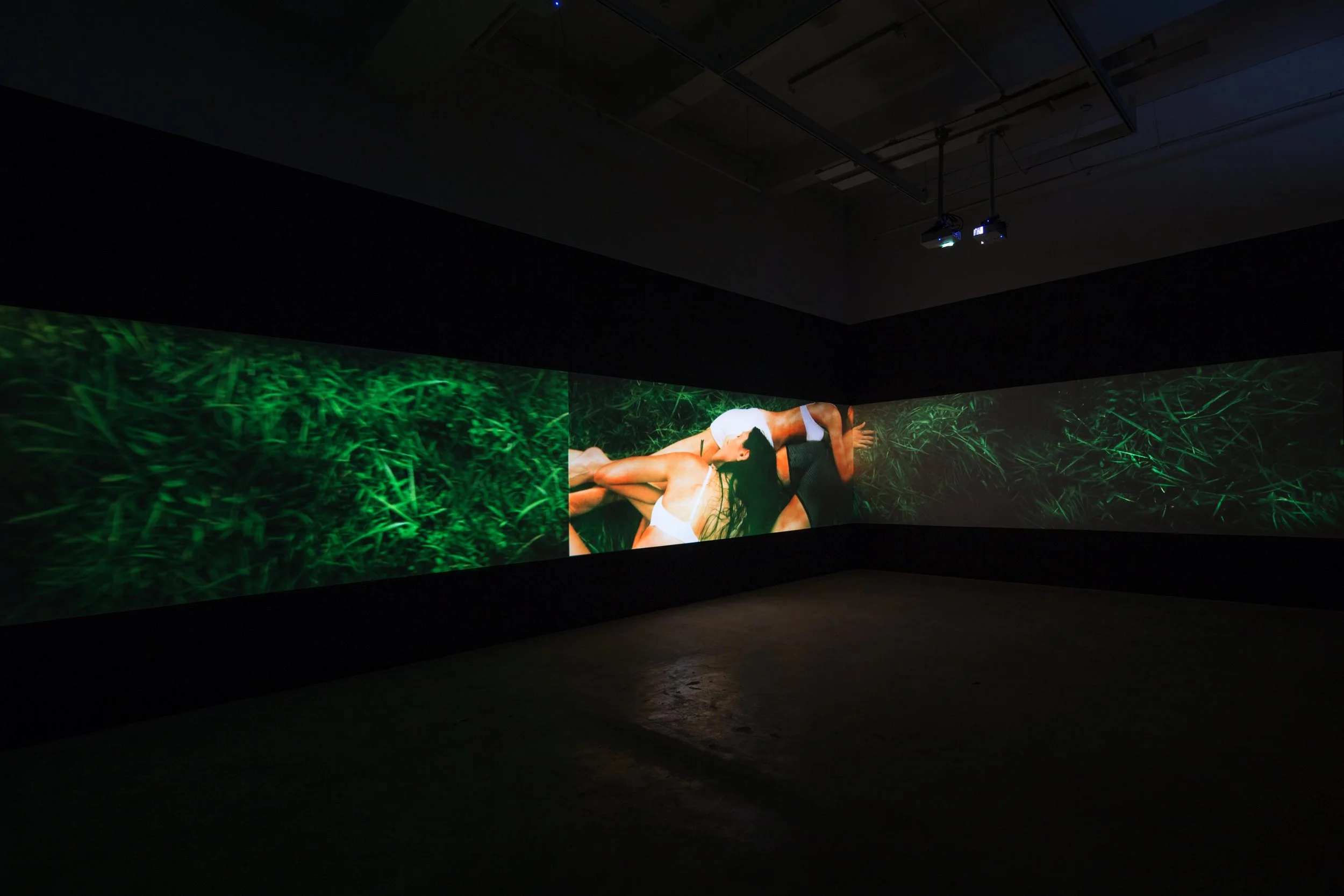
My work evolves around two axes, symbolism and the essence of image, which explicitly shows my state at the time. The work in this exhibition is of the latter. There is the familiar scene of people lying on a grass field, set as an ideal, as our bodies recall the condition and feelings, and images like these do not contain any symbolism, but evoke an imagination of the senses. When I was creating this image, I imagined that “humans” were born wild, like galloping animals on an open field, and when you meet others, you grab them and run, and in the end we became a group of sprinting animals. Despite the sun and winding paths, or injuries, we continue to move forward, and it is the destiny of “man.”
HSU Fong-Ray:
This dialectic of existence seems to follow you like a shadow, to the point where you use images as body, or your subjects emphasize bodily expression, and rebel against certain realities from the start. How do you interpret this?TSENG Yu-Chin:
I am actually thinking about eliminating people from my work! I insist on the system and trajectory of images, so try to express matters over a number of works. I think that is how we think as humans, constant and incessant. From Shivering Wall, Manic Summer, Scenery other End, to Din Asthma, I’ve always been in this process of reiteration. Shivering Wall highlights our internal state from the position of an external scene; Manic Summer is a burning existence of the “self”; Scenery other End throws the body into a scene of reality; and Din Asthma portrays an internal collision. My work often has repeating mental trajectories. To me, the body is proof, evidence that cannot be undone. In the journey of life, your body, wrinkles, and hair becomes evidence, the trace of your journey. Although there are different readings, I am now trying to eliminate the body from some of my works. The body may be evident, but it leaves behind: to leave the moment of the body. I have many works that convey things that are left, sounds, and spaces after people depart, and I try to address that state of absence. In fact many of my works repeat this, time draws on and reflects my present thinking.HSU Fong-Ray:
This reiteration and churning, backward and forward, the presence and absence of the body—You talk about the trajectory of the mind, but what do you find in your reiterations?TSENG Yu-Chin:
I think repetition is something that happens in life. If you have never doubted anything, that would be pathetic. It means that you haves been trained by the system to have never doubted and continue to follow their scheme. Reiteration is not hesitance; it is not digging a hole, but the trace of a person’s actions and mind in dialectic. I also started with theatre and film, so I am a firm believer of “the work must adhere to aesthetics.” I don’t think my body is beautiful, and my appearance may be too violent and direct, so I would rather set an event, atmosphere, or room, to allow observation.HSU Fong-Ray:
What makes you think you are not beautiful?TSENG Yu-Chin:
Well, I’m not good looking (laughs), so whenever I am filming images, every time I see myself, I feel uncomfortable and would stop editing. Under this circumstance, I find actors in my place so there is space for transformation. Everyone is a complex combination. If I use my own body, it feels very indulgent. When a tragic actor stands on stage and talks about himself for 10 minutes, you feel his pain, but if he goes on for 2 hours you would want him to shut up! I am very familiar with this scenario, and those things become complaints for the audience. If you separate yourself from your body, there are many characters, and when you allow them to speak, like the occurrence of theater and an event, or schizophrenia, that is a very normal existence to me. When I make my work, I expand the role, and throw them into the scene. Can you say that the actor represents me? Yes! Does he not represent me? You could also say that! Because once they have been thrown into the mix, they start to converse. It is just that most people don’t see it this way. I think it is wrong to view video differently from how we read films. You can talk about so many details in film, why can’t you do that with video? Many films are discussed based on a segment or section, and why can’t my work be discussed like that? I find that very odd.HSU Fong-Ray:
Are you saying that image in film and art is different, similar or the same thing?TSENG Yu-Chin:
I find many of our discussions of images in Taiwan start from documentary or documentation, while academics are also constructed from reportage. But when you talk about films, that distinction is immediately dissolved. We seem to be trained and instinctive and cannot help but connect video works with traditional visual education, as if a video must document, and its authentic or false presentations prompts questions like: “What are you documenting?” “What are you trying to discuss?” “What are you trying to show?” “What is your truth?” But to me that is not all there is to image. It may simply reflect the state of the director or society, but does so with abstraction—and why can’t video works do just that? Why can’t moving images do that? You can! But nothing is obvious in Taiwan; it still comes back to documentation. Like my child series Who is listening?, I am confused when people talk about educational systems or psychological analysis of children. People see the video as a documentary that must be “packed,” discussing the authenticity of the video, but that truth has nothing to do with the creator. What is the connection between their discussion and truth in society? Someone even mentioned child abuse to me. But not unlike my teenage series, people only take things at face value, seeing “drugs,” I cannot help but think I would be much better off if it were only that simple.Taiwan is especially lacking in this area. Of course this affects our ways of viewing, but they also understand that images are manipulated but insist on asking, “What are you trying to express?” Which now that I think about moving images, video, and film…Film can elaborate on a concept over the course of 2 hours, while you need to pack a scene or event into 30 minutes for a moving image, complete with concept and gratification. You can see how film posters and photo stills are so important; they represent the spirit of an event or a work. Video works are concentration; they pull you into a sensory state, like the images that flash before your eyes when you are about to die. I think this is where they are similar or different.HSU Fong-Ray:
Can you elaborate on the part about the connection to truth?TSENG Yu-Chin:
It’s education! Images still emphasize documentary qualities, and in the Taiwan educational system you remove the abstract thinking, from news to documentaries, how images intervene society, or arrange a story. Many students start by documenting things that have nothing to do with them, and that becomes their work. I think this is a uniquely Taiwanese phenomenon. You simply “cannot” and “will not” talk about personal experiences, so your subject must be proven by real events or confirms your place. In the end, expressions become dependent on external documentation, something that is discussed with no self. The educational system tells you: “You are insignificant, you have a more important mission in society.” What is my mission? It’s strange because missions are borne internally. How could a mission be cast and applied to you? I think we are still at this point in our thinking. When you make anything a little more personal, someone will say, “That’s just him!” or “It’s just whining!” We are afraid of personal aspects but we want to be a part of a group. That is nearly impossible. You have to be within the crowd to be discussed, to safely correspond, and not consummate yourself before your communicate with others.
HSU Fong-Ray:
You just spoke about the hesitance many people have in speaking about personal experience. I think many creators still start from here, but their communication has a common framework, but that might only be part of it. Returning to education, I think the decision to start from the self, finding external things rather than starting from ourselves has a lot to do with the condition of our discussion. Objectivity is like an event; it has the state of a medium that is used to review or critique because it is established on an objective reality. But there are many issues surrounding subjectivity. Is it truth? How do we discuss reality? What is the truth you are talking about?
TSENG Yu-Chin:
I think we should set aside subjectivity and objectivity, because nothing is objective. Even the choice of item that you choose to prove yourself is a subjective choice. I used to often say when an artist talks about himself or herself, you should try to extend time as much as possible. Like the slogan from Philharmonic Radio, “the trends of today are the classics of tomorrow.” This is an interesting slogan, and aren’t most artists painting themselves, their family and lovers? Isn’t that a discussion of the status of life from the expanse of time? Was it not the social climate at the time? What about his brush strokes or the world he saw? Then why can’t we “see art” that way, why can’t we see the details, or imagine the artist in his own time? Why is an artist only worthy of discussion after he dies, or becomes history? Artists nowadays are seen as given, that personal status has nothing to do with you. Why not expand on our perceptions? Instead of being discussed after we are all dead?HSU Fong-Ray:
Then I might live to be 100! Expanding is a microscopic way of working, or it might be that we need to discuss artists outside of the circumstance that they are in. So when your work is the opposite approach, it becomes muttering, rather than being direct, effective, and swift in connecting to society.TSENG Yu-Chin:
This world has been tamed by capitalism! You need to be discussed accurately, efficiently, and swiftly. But if you think about it, a lot of thinking and feelings take time, and require creators to cumulate and give back to the world. But we want instant gain. A lot of people believe they have all the time in the world; the only unknown is the future. But when the future can be predicted by scientists or imagined through films, people are like gods, free to interpret everything. Artists are lowly in this context, because his work takes time. The stuff he talks about is not a solution or invention, he provides a mental state that registers and gives back. Many things become systematic because of the development of technology. We seem to know the entire past and future of mankind, and art does not amount to anything.HSU Fong-Ray:
That is true. We rely on documents and information for the prediction of the past and present. But you also mentioned using films to construct the future. Do you see the possibility of images moving through time?TSENG Yu-Chin:
A lot of developments in technology are about supply and demand. That status is like being able to control the future, but as humans we are vested in responsibility and consumption, and we happily accept this because we believe that “the future is in our hands.” But art contains the ability to move, but on the other hand it is indiscernible, because it speculates its time and social climate. Its puncture is a puncture in the present, but only because the creator has slowed down.I believe that creators should slow down when it comes to viewing, so that audiences disrupt the training of current systems and consumerist patterns of capitalism. The work should draw contemplation and feeling, but not through the sole effort of the artist. One person, no matter art, literature, or politics, cannot create a school of thought on their own. We create it together. We need to slow down, and see what we produce and what needs to change. That is the way principles are established. Rather than the idolization of an individual and treating them as god, we cannot return to this primitive state in believing that idols are new. Creations are points in the present, slowing down for the audience to sense and feel, and consider what they have done for this life and for the world. Returning to viewing, very few viewers can react with their own personal experiences due to the influences of these elements, education, the system, and consumption.Some creators also record under the veil of arts, but instead of trying to slow down, they speed up to show how fast they are, and this does not help in creating a history of viewing. It is hard to eliminate things when you are viewing, because viewing is complex. As long as you have a cell phone or Internet, anything can be solved or consumed, with ample time! Under this circumstance we should be cautious of creating works that merely cram the body.HSU Fong-Ray:
What is the relationship between slowing down and time?TSENG Yu-Chin:
I have always liked the term “gaze.” We often forget the act of gazing, being in relation to life, living and staying in the present through art. Our live are incredibly short. You thought time went slow as a child, but once you are older, you find that the world and society rushes by. You don’t even think about slowing down. This is the scariest part of human society. When your life is dedicated to capitalist society, you slow down when you have no worth. What is the meaning in that?I am not objecting to the capitalist state that we are in, because we are monopolized by it, but why do we choose to live like this? How is it possible to consider our existence only when we are worthless? This is what system, economy, and education have brought us. Of course there is an even larger disparity, the ones on top move up while the ones on the bottom fall even lower. It is apparent in Taiwan, many things are passed down through the generations, and we accept this in silence. This also happens in art, the de-selfing phenomena that I have been speaking about. So when someone says, “That’s just him!”, it shows that we have been tamed. But if we were in an environment that encourages thinking, it would alter the conversation: “I am interested in what you are thinking.” “Why does this resonate with me?” “Is there something we can do?” The self-enslavement of this country is that there are many things we do not discuss publicly, or we arrogantly reject doing so as long as we are safe and happy. I don’t want to spell it out…but that is self-enslavement! Saying it out loud only affirms its existence! I can doubt, no?
5. Interview with Wu I-YehHSU Fong-Ray:
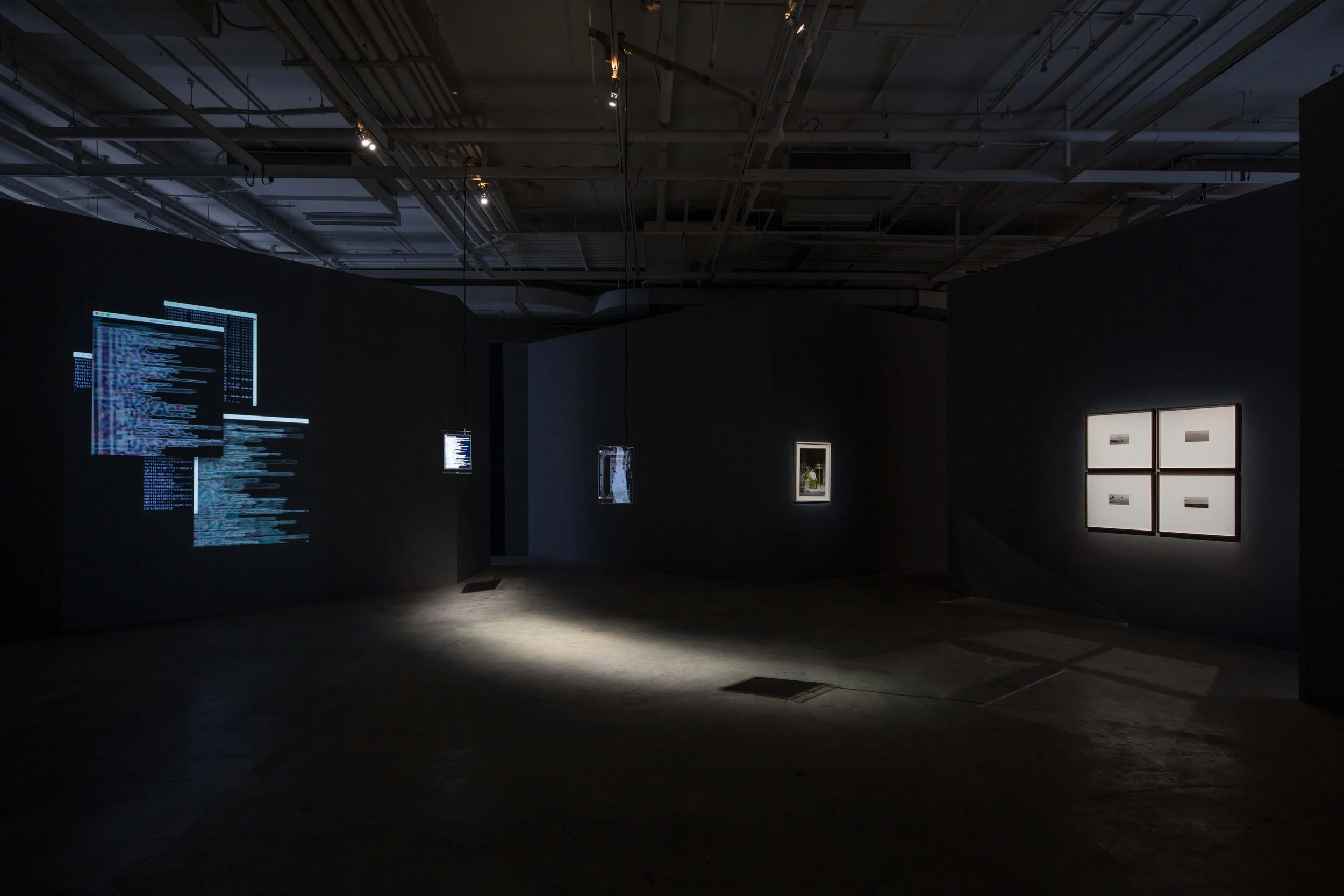
You studied theater in college. How did you find yourself in computer art when you went to study at Goldsmiths?
WU I-Yeh:
I’ve always been interested in computer art. An important part of stage design is the practical needs of the script, for instance the functionality of blocking and sets. After coming to contact with experimental theater, I realized that there were a lot of different mediums like digital imagery and mechanical installation, which seemed fun and I wanted to try this kind of work.
HSU Fong-Ray:
It seems that after Machine Whisper (2010), you’ve been experimenting with the technical aspects of these different mediums, while recent works In The Future and Falling focus on images. Can you comment on this transition?WU I-Yeh:
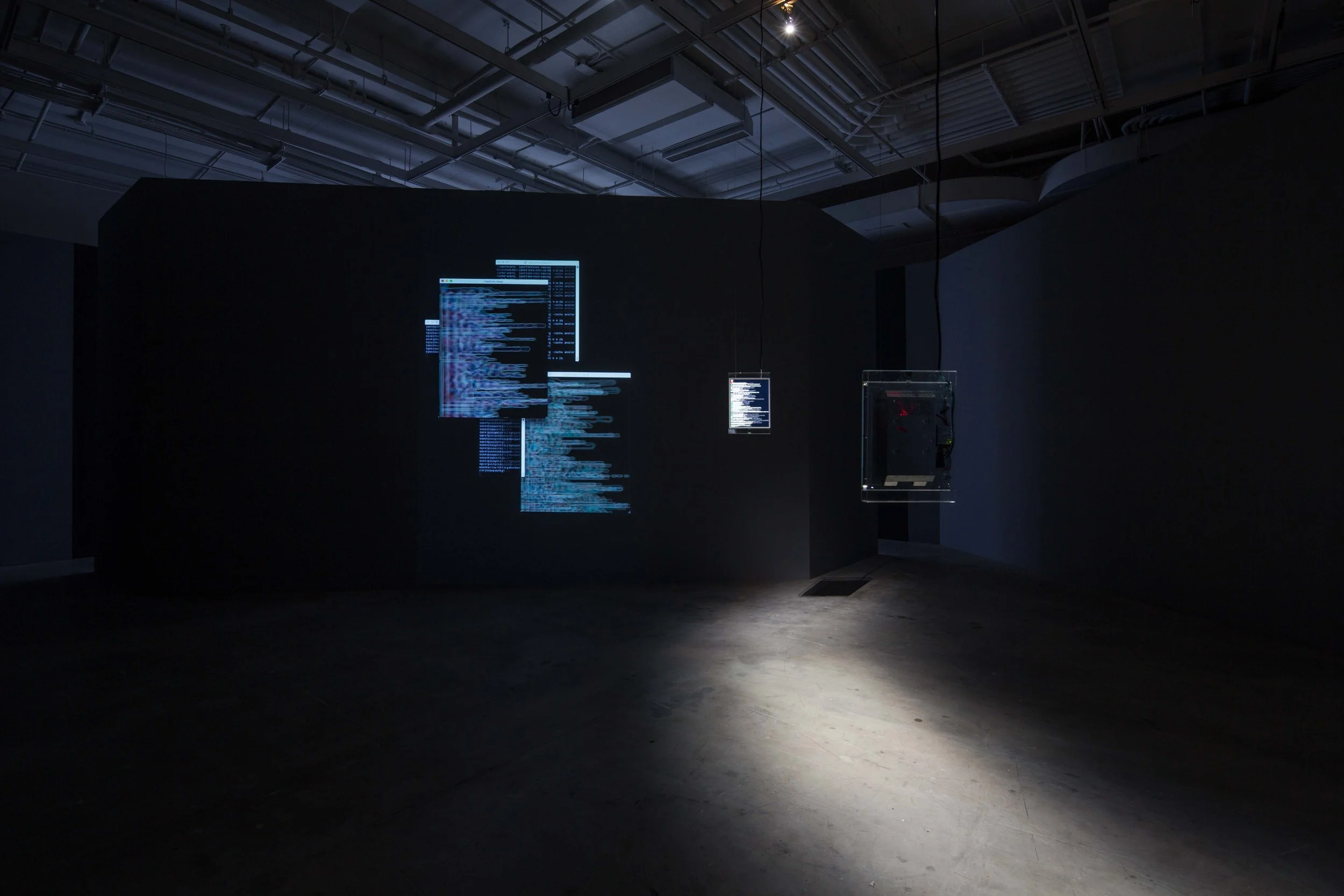
I’ve actually always been experimenting, not only in images, but simple coding, sound, and installation. I don’t make the distinction between moving images or video. I still focus on what I want to talk about and find ways to express that. In The Future is a descriptive image and its ways of looking are much more simple, which returns to the content of the image. As you mentioned, Machine Whisper or some of my other works, are linked to the medium and technology that I work with at the time. I spend a lot of energy thinking about how to use the properties of the medium to say what I want to express.
HSU Fong-Ray:
Can you describe that state for us?
WU I-Yeh:
Take Machine Whisper for instance, I wanted to imitate the reception and transmission of information between humans and replace this process with machines. This reminded me of the game of “Chinese whispers,” where the message becomes indiscernible after being passed along so many times.
Although a lot of the technology is readily available, it is still actually very time-consuming to have a machine process a simple message, and there are a lot of complex procedures and uncertainty in the transmission. Maybe this is closer to what I mean.HSU Fong-Ray:
Do you see the documentary image that you have included in this version as a document? As an answer or evidence in response to the two infinitely postponed installations?WU I-Yeh:
I’ve also been thinking about that. Recently I’ve noticed that in the presentation of moving images, I will choose to place an object or screen shot from the footage, or even create an installation space that is similar to the image. This no doubt provides more angles and sensory standpoints to interpret the work. But I don’t have an answer. I am only experimenting…like the images created by Machine Whisper, in its non-descriptive way. I’m not saying how it would be better, but rather why do so many creators try so many different ways to come close, or expand our views of the work? I might not be trying to prove that an image once existed, but rather collecting all the images produced by the installation, and viewing those separately provides a different framework to read the work.HSU Fong-Ray:
For you, are the images in this iteration of Machine Whisper more focused on movement or time?WU I-Yeh:
They are all connected. For me the length and transformation of time in images is a way of that images move, which might even become a flashing frequency. The older versions may appear more uniform in motion, while the switch of the circuit, which has a tac-tac-tac clicking sound gives off the feeling of an infinite loop, or what you said as a constant inquiry. I’ve replaced the initial circuit in this new iteration, so I’m trying to see what kind of different variations can be created.HSU Fong-Ray:
This sounds like the reproduction of images framed by frequency is not only about production, but rather could be different depending on the time frame. How would you describe the content and appearance of this image?WU I-Yeh:
I only know when I finish making. My imagination is never as truthful as the real thing. What’s funny is that the image that is created might not the thing that I want to discuss, but after a few exhibitions I’ve realized that it is the most direct and perceptible part, and this makes me wonder what images can be created.HSU Fong-Ray:
I’m curious about your theater training and how you relate to visual space. You mentioned before, that this training seems to surface in your recent work, even influencing your decisions on presentation. What is the process behind this?WU I-Yeh:
Falling, for example, was exhibited at National Taiwan Museum of Fine Artsand was an image-space recreated from an image, which was then merged with the real space that viewers were situated in. The sliding of images and the breaking noise on the floor created a viewing error. This state has become a starting point for me to think and examine, but of course every work is different.HSU Fong-Ray:
What about the new version of Machine Whisper?WU I-Yeh:
I find it really interesting. When you recreate a work, sometimes it will be different from the original version, or what you are concerned with changes, so you need to find a balance between the original intent of the work and what is on your mind at the present.This new version of Machine Whisper focuses on the details of image, so besides the installation, there is a documentary image. An important part of my recreating this work would be how to express what you want to express and exhibit rich ways to see the work.
HSU Fong-Ray:
Of course, I think the state that you mentioned still exists, but with this image, it reinforces your initial inquiry and becomes an affirmation. You seem to have consciously forced the work to face its presentation, in the sound, representation of image, and space of viewing—I think this is the differentiation you have in working with reproductions.
WU I-Yeh:
That’s true, because there are many different properties in this medium when it is recreated. I didn’t realize that sound had such a presence in the original iteration, or how the speed between changing images has its own frequency. But in its reproduction, when these images are presented again, I want to work with this properly.Images attract me. The message and sensations created from content, narrative, and the programming of a scene, for instance in movies, the film Birdman is an image, but why is it so strong? I am more curious of what you see in my images.HSU Fong-Ray:That is a great point. Though we are here to talk about images, this particular work does not start from an image. But our ways of inquiry are not singular. When an image is created, it has many paths, some might develop directly, while others work around the corner, and this kind of production process is of course relevant to all our conversations. Though image is a supporting actor in the initial version of Machine Whisper, it still connects to the method in which contemporary images are produced and presented, and this has never been a singular path. Our conversation returns to the query that the exhibition would like to present to its viewers: In the programming of the work, this infinite loop of questions is defined within bookends, like our initial conversation, your work will be in the middle of the space and the fluid arrangement of the venue will bring the viewers back to this work—from beginning to end, and back to this inquiry, which is what the exhibition needs. I believe there is a huge difference in thinking when you first started with images, and your current arrangement in returning to image. And so the majority of instant feedback will elevate the precision of our inquiries, and return to the exhibition, which is exactly what we need.