For a Better Tomorrow
Artist︱ WU Chi-Yu, LIN Yu-En, CHEN Po-I, TENG Chao-Ming
Curator︱ HSU Fong-Ray
Date︱ 2016.12.03 - 2016.12.30
Venue︱ inCube Arts, 314 W 52nd St #1, New York, NY 10019
Organized by︱ inCube Arts
Curatorial Statement
Ask not what your country can do for you — ask what you can do for your country.
— John Fitzgerald Kennedy (1917–1963)
The 35th President of the United States
To use this famous quote as the opening of this curatorial essay is not an attempt to instigate nationalist ideological debates over political governance. On the contrary, it is to reveal how, in his critique of John F. Kennedy, American neoclassical economist Milton Friedman (1912–2006) with his idea of the “free man” and absolute freedom that it entails, defied democratic functioning in the name of economic freedom; how biopolitics verged on absolute control; how the neoliberal definition of “freedom” is distorted, to satisfy the desire for economic expansion, by political parties and corporate conglomerates into a weapon to disintegrate a nation and its democratic mechanisms, in turn constraining, trampling, and annihilating human freedom.
In this era of globalization deeply immersed in political turmoil and economic volatility, we are confronted with a choice between economy and democracy, which, long portrayed as two opposing scenarios, have become the source of transnational conflicts in their ebbs and flows. And disasters are precisely what the neoliberalists look to for the source of economy, as well as the perfect propaganda for neoliberal ideology. Canadian author Naomi Klein exposes in her book The Shock Doctrine (2007) the penetrating truth about disaster capitalism, which favors a free market and the enforcement of privatization policies by drastic means, all disguised as an act of democracy. What follows after the “short-term pain” as vested interests claim, is not a whole new world, but a miserable predicament of the general public.
We could use Kennedy’s quote as a point of historical reference for analyzing the intrinsic ideas within on two levels. The first level is denationalization and deprivation of administrative power: neoliberalism encourages the suspension of the rightful sovereignty of the nation through a distortion of liberty and control, picturing democratic mechanisms as a threat to individual freedom from the State. This threat, for the “free man,” is an extension of such mechanisms as public policies, social welfare, and social mobility, which facilitate the redistribution of resources. The “free man” believes that a country is the collective of individuals that comprise it, and denies the possibility that this collective could transcend individual consciousness and become the Other. The government is seen by the “free man” as a means to an end, an instrument. The “free man” does not bear any mission for the country, nor does he acknowledge any goals or ideals of the country. The only thing that matters to the “free man” is to demand deregulation of the government, to ensure an economic expansion in the ostensible name of freedom. This not only aggravates wealth inequality but also corrodes the decision-making mechanisms of democracy, allowing a handful of the capitalist class to appropriate the power from the entire working class. Here Kennedy’s famed quote is a prerequisite for the legitimate existence of the “free man,” who in the context of a country, confronts varying imaginary enemies of freedom, seeking to protect vested interests through lies, threats, and consumptions, all in an empty promise of a better tomorrow.
Now as the idea of the country has been shelved, and the government turns into a battleground where power is procured through the competition of capital, the Kennedy quote transforms from a target of attack into — on the second level — an embodiment of “exclusion as a peremptory tool of modernization.” This quote becomes a neoliberal slogan as soulless propaganda that spreads in the developing countries and the Third World. The logic behind the quote is not one of dialectics; it aims to conceal the preposterous nature of the “freedom” asserted by the “free man,” and the monstrosity of the appetency to plunder. It beguiles the people into thinking that the effacement of history and of the democratization process on the part of the corporatism advocates is to “redeem” the structure of modernization, that it is something that has to be done, and that the people must have faith in order for “us” as a country to ride out the storm.
But the truth is, who the “us” really refers to is the neoliberal 1% that exploits 99% of the resources, manipulating 99% of the people into believing that this is “collective karma” of our times. In the end, the State completely malfunctions, morphing into a shell for corporatists to absorb capital. After the pillaging of public resources has been justified, and control of the media’s overbearing influence on consumerism has been asserted, the corporatists shift their focus from shelving the notion of the country to the numbing of public awareness. They lure the excluded into thinking that this is all predestination, while they hold on to the American dream or the Chinese dream, holding on to the belief that the freedom defined by the “free man” equals human freedom, even if the two kinds of freedom are founded upon completely different bases, even if they are of disparate origins, as long as the people stay compliant and callous, then this peremptory tool of exclusion allows corporatism to persist.
With the Kennedy quote as their point of departure, the four participating artists in this group exhibition reexamine from a critical and historical angle the changing neoliberalism and its ripple effects in the age of globalization. The responses of the artists when confronted with these crises and conflicts lie precisely in the realm of contemporary art as a form of social intervention and practice. The critical discourse herein is not merely an appropriation or creation of artistic symbols or methods. It is also a remapping of self-disciplines and boundary limits in the world of art, an investigation of artistic production in society, an epitome of subjectivity in the context of reality. For it is in the unique dialectic between art and the contemporary living system, and their interrelated influences that the political dynamic of art is rooted.
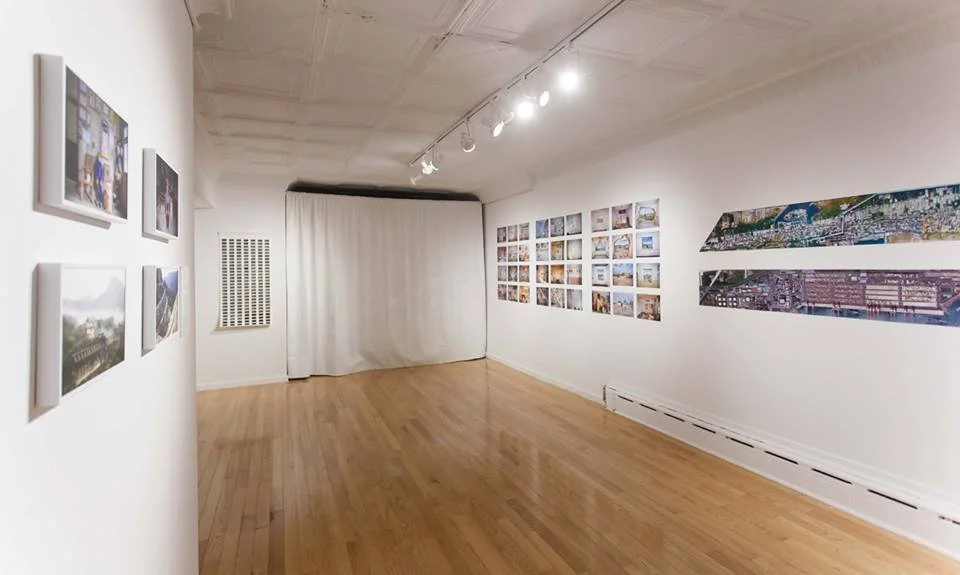
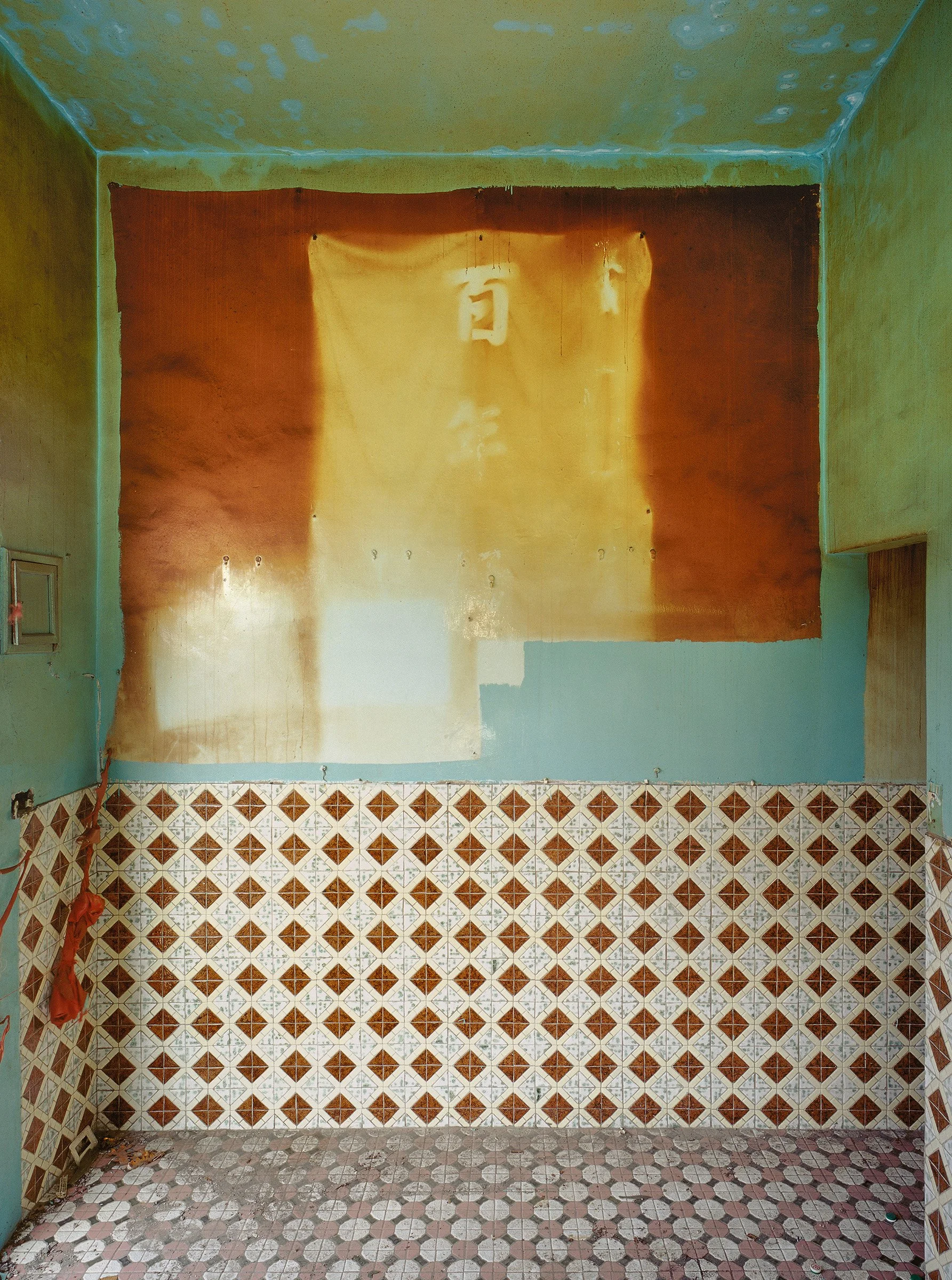
In Records of the Relocation of Hongmaogang Village (2006–2008), Chen Po-I reexamines abandoned homes of the villagers who were forced to move out because of the government-spearheaded demolition of Hongmaogang, a fishing village in Kaohsiung, Taiwan. Through photography, this project documents objects that were left behind in the house, traces of objects in their absence, as well as the view of the adjacent menacing industrial parks from the broken windows. In the dispassionate camera lens of the artist and his collection of forsaken objects, a high-modernist ideology of the government is manifested. It is easily discernible how the government formulated a village relocation program and corresponding regulations in the purported name of economic development; how they enforced an economic movement of “demolish and rebuild” sugarcoated in their neoliberal logic, maximizing their control of public administrative power. Behind this iron fist a vacant promise loiters: Imagine a brighter future.
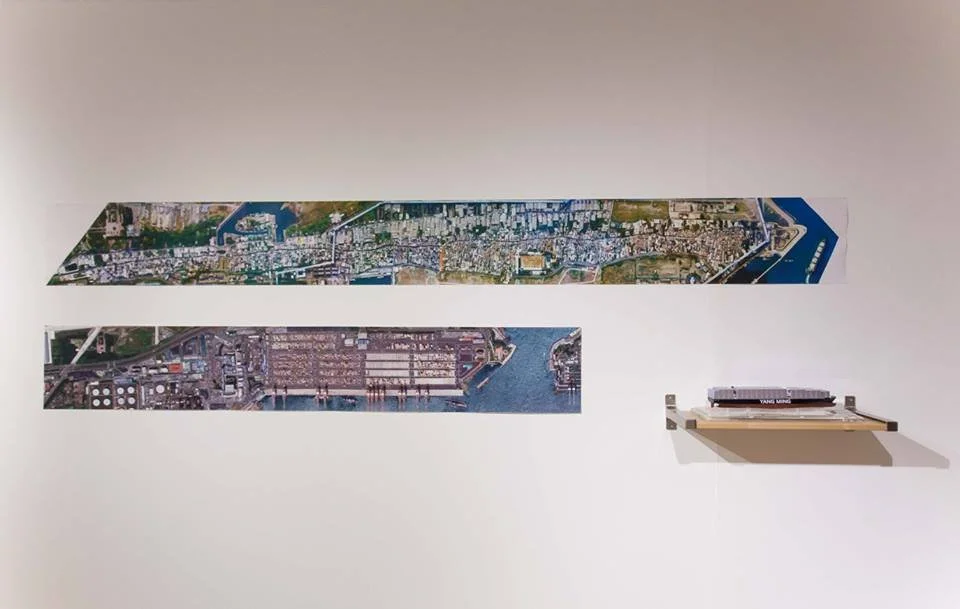
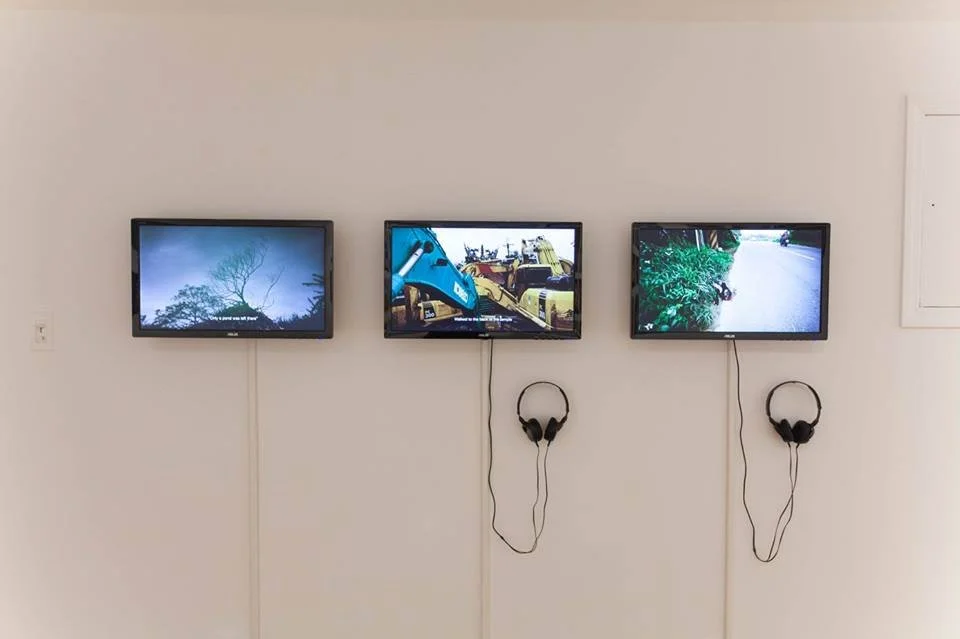
Set against the backdrop of transportation development, Wu Chi-Yu’s video work Tu-di Temple (2013) delineates the absurd landscape of a foregone village as the Taiwanese government’s land expropriation program took its toll. After the entire village had been leveled to the ground, the various Tu-di Temples scattered around the village were curiously well preserved, leaving Tudigong with nothing but an uninhabited land. Through the portrayal of Tudigong Wu Chi-Yu meticulously fabricates a fantasy of what was and what had been, pondering population displacement while questioning the price we pay in the name of better state infrastructure.
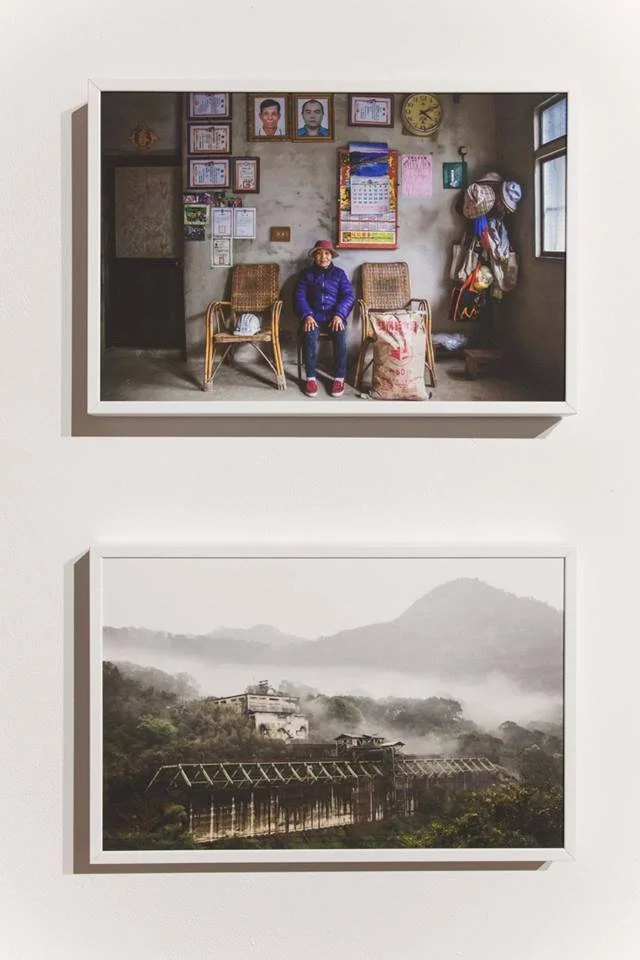
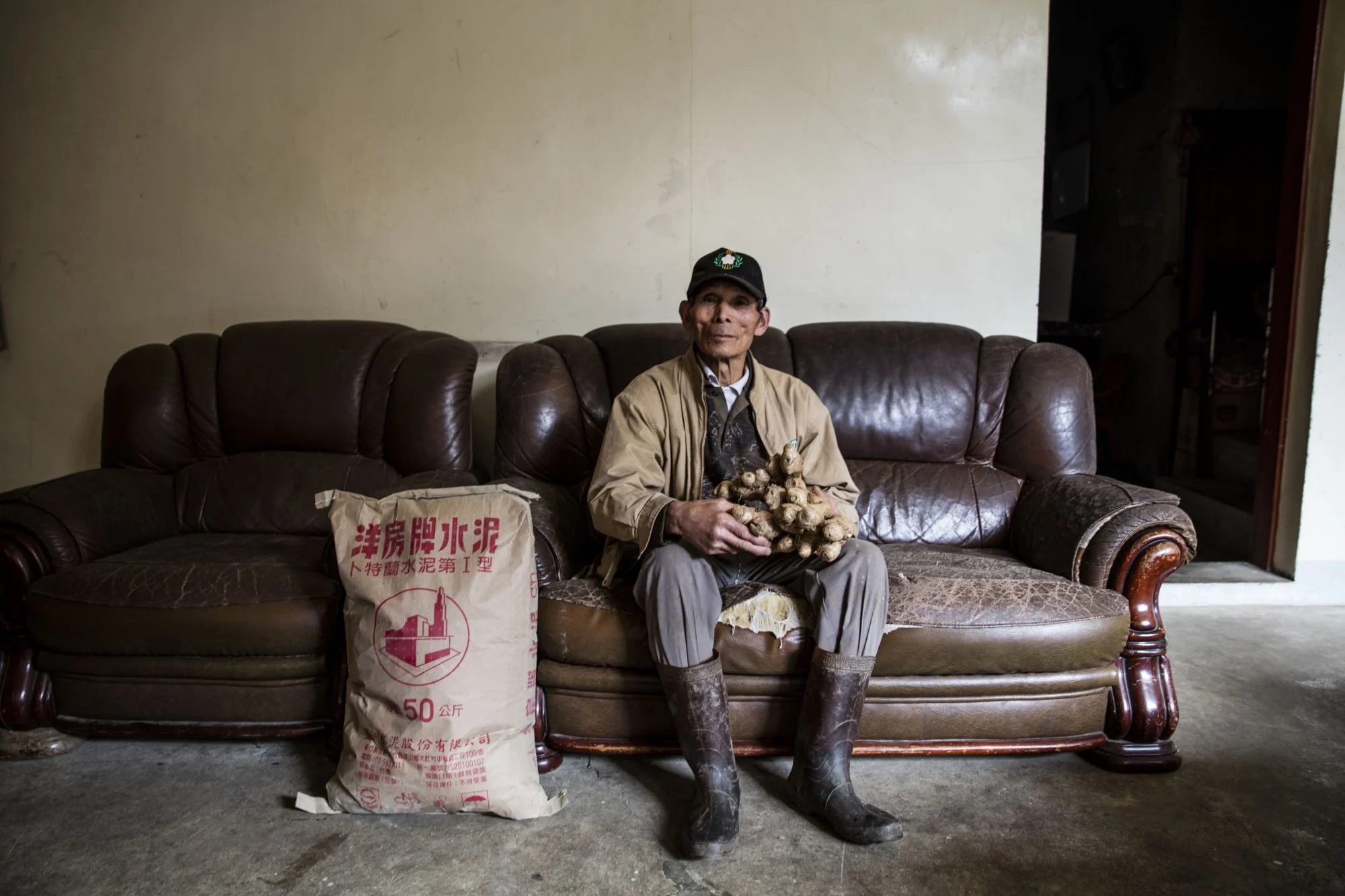
Lin Yu-En’s photography work The Cement Bags We Traded for with Homes and Fields (2016) is titled after a news story he did as a photojournalist. The story traces back to 1995 when the Taiwanese government announced a policy of eastward relocation of the cement industry. The quarries of western Taiwan, as a result, were closed after the mineral rights expired in 2003. Thirteen years later, however, the Asia Cement Corporation began plans to resume operations at its Guanxi factory and two neighboring quarries located in the township in Hsinchu, Taiwan. Mining in western Taiwan seems soon to be revived. This ominous resurgence not only jeopardizes forest conservation, but also wreaks havoc on the lives of residents around the mining areas. Segueing between photography and text, Lin Yu-En scrutinizes as a third-party watchdog this mining disaster in the making and its precarious dangers.
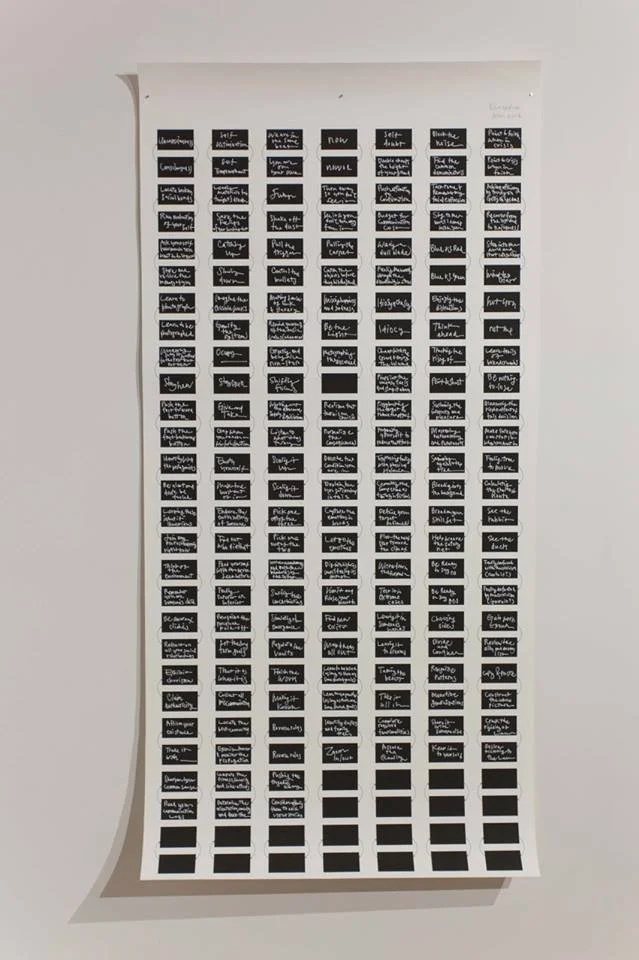
Teng Chao-Ming’s installation piece State Diagram (2012, 2016) underlines the historical context and conditions of art that this exhibition investigates, in the dialectic between structure and agency. In an environment where art is nurtured to achieve globalization, avant-garde art that used to be our beacon as the other, gradually transforms into a biopolitical inner censorship, feeding into an internalized Other.
A seemingly ironic slogan, “For a better tomorrow” is intended to underline the status quo where we are faced with a structural problem haunted by neoliberalism. The intervention of art turns out to be a catalyst, accentuating the previously neglected issues and phenomena in public discussion, and allowing the oversimplified and consumerized subject to manifest its paradoxical nature and complexity. We must be aware how the global public domain is silenced in media manipulation by multinational corporations, where the ability to initiate public discourse and to form a consensus is debilitated. But at the same time, the repression of reality is breeding a greater force of resistance in contemporary art. Via the reality portrayed through this exhibition, it is hoped that the artistic domain becomes part of the public domain, focusing attention on the political-economic structure, ideological paradigm shifts, and the state of man, all highlighted in diverse art forms. For this is not only a manifestation of democratic ideals, but also an emancipation of the artistic domain, furthering art’s role in knowledge production on global and local levels.